

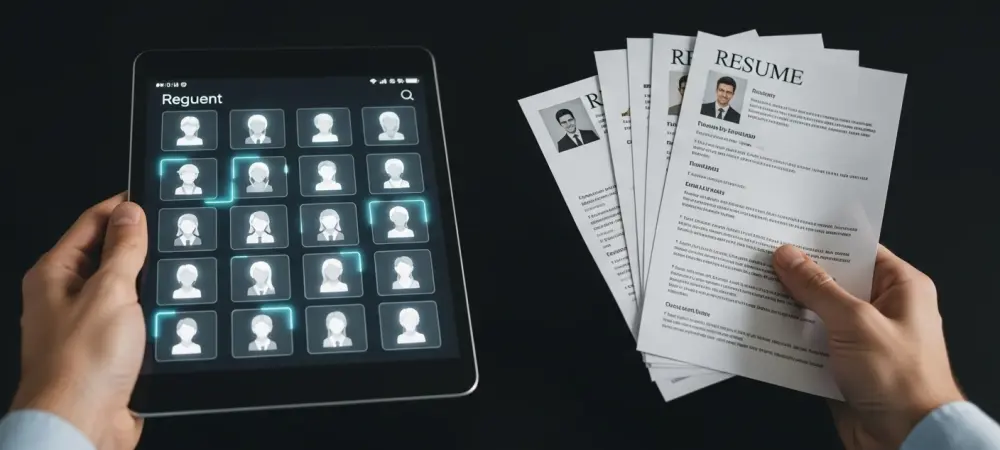
The Paradox of Plenty Why More Applicants Are Making Hiring Harder
In today’s competitive job market, an abundance of applications should theoretically make it easier for companies to find the perfect hire. However, a revealing new study suggests the opposite is true. The research, which surveyed 500 Australian hiring managers, uncovered a startling paradox: 93% are finding it difficult to distinguish exceptional talent from the crowd. This article explores the two primary forces driving this trend—a surge in overqualified candidates and the widespread use of AI-generated resumes—and examines what it now takes for genuine top-tier candidates to break through the noise.
The Shifting Landscape of Modern Recruitment
The recruitment process has undergone a dramatic transformation over the past two decades. What was once a manual system of paper resumes and in-person networking has evolved into a high-volume digital ecosystem dominated by online job boards and automated applicant tracking systems (ATS). This shift was intended to create efficiency, but it has brought unforeseen consequences. The ease of applying online has led to an explosion in application numbers for any given role, while the recent advent of sophisticated AI writing tools has armed candidates with the ability to generate perfectly optimized, yet often generic, application materials. This new landscape has created a formidable challenge for hiring managers, forcing them to sift through a sea of uniformity to find authentic, standout talent.
Navigating the New Hurdles in Talent Identification
The Double-Edged Sword of Overqualification
One of the most significant challenges complicating the hiring process is a sharp increase in overqualified applicants. According to the study, 82% of employers have seen a rise in candidates applying for roles for which they are overqualified, a trend most pronounced in the tech sector (87%). While these individuals bring a wealth of experience, hiring managers often view them with caution. The primary concern is that a role that underutilizes their skills will lead to boredom, disengagement, and a high likelihood of turnover once a more suitable opportunity arises. This places recruiters in a difficult position, forcing them to weigh the immediate benefits of deep experience against the long-term risks of a poor job-person fit.
The Blurring Effect of AI-Generated Applications
Compounding the problem is the rise of artificial intelligence in resume creation. An equal number of employers (37%) cited AI-generated resumes and sheer application volume as the top barriers to effectively screening candidates. AI tools excel at optimizing applications with industry-specific keywords and professional formatting, but in doing so, they often strip away the individuality that helps a candidate stand out. This homogenization of resumes makes it incredibly difficult for recruiters to assess genuine skills, personality, and potential. The result is a pile of applications that look impressive on the surface but lack the unique voice and tailored substance that signal a truly exceptional candidate.
Uncovering Hidden Potential Beyond the Buzzwords
The challenge extends beyond just identifying technical skills. The study highlights that a significant number of applications fail to provide visibility into crucial soft skills or cultural fit (31%), often because they are too generic or lack tailored, role-specific details (35%). AI-crafted resumes can list “problem-solving” or “adaptability” as skills, but they cannot effectively demonstrate them through authentic, experience-based storytelling. Consequently, hiring managers are finding they must look past the polished, keyword-optimized language to uncover the human qualities that predict long-term success, such as genuine alignment with company values, critical thinking, and a proactive attitude.
The Future of Standing Out in a Saturated Market
As technology continues to level the playing field for application quality, the methods for identifying top talent are set to evolve. We can expect companies to increasingly rely on multi-stage interviews, practical skills assessments, and behavioral questions designed to probe beyond the resume. For candidates, the focus must shift from simply optimizing a document to building a compelling professional narrative. Success will depend less on keyword stuffing and more on demonstrating tangible achievements, clear communication, and a deep, authentic understanding of a company’s mission and needs. In this new era, authenticity will become the ultimate differentiator.
Actionable Strategies for Recruiters and Job Seekers
Based on the study’s findings, a clear path forward emerges for both sides of the hiring desk. For job seekers, the key is to counteract the generic nature of AI. Candidates can stand out by meticulously tailoring their experience to the role (33%), ensuring their application materials are clear and concise (33%), and providing concrete evidence of adaptability and problem-solving skills (33%). For recruiters, the strategy involves refining the screening process to look for these specific attributes. This means designing interview questions and assessments that reveal a candidate’s alignment with company culture (31%) and their genuine understanding of the industry (27%), thereby moving beyond the superficial polish of a modern resume.
Redefining Talent in the Age of Artificial Intelligence
The core takeaway from the study is that the very tools designed to streamline the job application process may be inadvertently obscuring the best candidates. In an environment saturated with high application volumes and AI-generated uniformity, the definition of a top applicant is fundamentally changing. It is no longer about having the most polished resume but about demonstrating the authentic, human-centric qualities that AI cannot replicate: tailored expertise, clear communication, and genuine cultural fit. As this trend continues, both employers and job seekers must adapt, prioritizing substance over style and authenticity over automation to make the right connection.