

Ling-yi Tsai is a seasoned HRTech expert with decades of experience helping organizations navigate the complex intersection of technology and operational change. Her background in HR analytics and talent management systems has made her a leading voice in how companies transition from manual, legacy processes to streamlined, compliant safety cultures. Today, we sit down with her to explore the devastating consequences of undocumented safety systems, the personal liability of corporate officers, and the critical importance of prioritizing low-cost maintenance in high-risk industrial environments.
This discussion delves into the transition from informal safety cultures to rigorous, documented frameworks, examining how businesses can avoid the trap of “verbal-only” instruction. We explore the specific red flags of long-term manual workarounds for heavy machinery and the legal implications for directors who fail to exercise personal due diligence. Finally, the interview outlines a path forward for organizations looking to rebuild trust and safety after a catastrophic workplace failure.
Many industrial environments rely on verbal safety instructions and informal “handshake” agreements. What are the specific legal dangers of maintaining an undocumented safety system, and how does a lack of written risk assessments impact a company’s liability when a worker is injured by heavy machinery?
When a safety system exists only in people’s heads, it effectively does not exist in the eyes of the law. In the recent case involving a vehicle storage yard, the court explicitly labeled the company’s approach as “informal and undocumented,” which is a death knell for a legal defense. Without a written risk assessment for the 800-kilogram gates, the employer had no way to prove they had identified the specific hazards of manual operation, such as the failure of end stops. This lack of documentation meant they couldn’t demonstrate they had fulfilled their primary duty of care, leading to a guilty plea when a worker was pinned for three agonizing minutes under a massive steel structure. Relying on verbal instructions creates a vacuum of accountability where no one can verify if the training was accurate, consistent, or even provided at all.
When heavy industrial gates weighing nearly 1,800 pounds are operated manually for years due to a broken powered system, what red flags should management look for? What specific metrics or inspection criteria should be used to determine if a manual workaround has transitioned from a temporary fix to a permanent hazard?
The most glaring red flag is the passage of time—once a temporary fix persists for nearly two years, it has officially become a standard operating procedure without any of the necessary safeguards. Management should have been alerted by the sheer physical demand placed on workers who were opening and closing 11-meter-long, 2-meter-high gates by hand every single day. A critical metric would have been the absence of a “competent person” assessment; if no expert was brought in to certify that manual operation was safe, the system was inherently compromised. In this instance, the failure to move beyond verbal instructions after the powered system broke in June 2020 should have triggered an immediate review of the yard’s Safe Work Method Statements. When a fix is delayed month after month, the risk doesn’t just stay the same; it compounds as the equipment wears down in ways it wasn’t designed for.
Essential safety upgrades, such as welding new end stops, can sometimes cost less than $600. Why do these low-cost fixes often slip through the cracks for years, and what step-by-step process can leaders implement to ensure that minor maintenance issues are prioritized before they lead to catastrophic injuries?
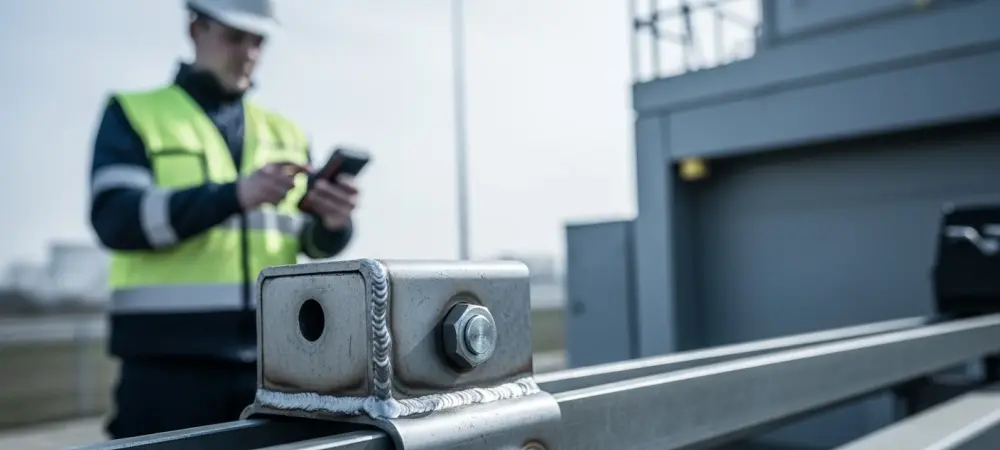
It is a tragic irony that the fix in this case cost a mere $517, yet the delay resulted in a 53-year-old man suffering a fractured pelvis and internal injuries. These low-cost items often slip through because of a “normalization of deviance,” where managers get used to the broken system and assume that because no one has been hurt yet, no one will be. To fix this, leaders must implement a rigorous maintenance log where every reported fault is assigned a mandatory “stop-work” or “repair-by” date that cannot be overridden without a formal risk assessment. They should also compare the negligible $517 for end stops against the much higher $6,985 cost of full restoration to see that partial safety is often an affordable, immediate bridge. Finally, there must be a clear reporting line that bypasses immediate supervisors so that budget-conscious managers cannot hide small but critical repair needs.
In businesses where a single director oversees multiple entities, how is personal due diligence measured differently from corporate responsibility? What practical actions must an officer take to demonstrate they are personally exercising oversight rather than just assuming their managers have the situation under control?
In this case, the director was an officer for both the transport and the employment entities, which meant he carried a double burden of responsibility. Personal due diligence is measured by active inquiry—the court found that while COVID lockdowns in 2020 and 2021 made repairs difficult, there was no real evidence of effort to fix the gates once restrictions lifted in October 2021. To demonstrate oversight, an officer must do more than just sign checks; they need to personally review safety audit reports and follow up on outstanding maintenance issues. They should be asking for documented proof that safe work methods are being followed on the ground, rather than assuming their managers are handling the 800-kilogram hazards correctly. If an officer cannot show a paper trail of their own questions and directives regarding safety, they are personally exposed to prosecution.
After a serious incident involving pelvic fractures and internal injuries, what are the best practices for rolling out a new monthly inspection program? How can a company successfully transition from an “informal” culture to one grounded in documented safe work method statements without losing employee trust?
The transition must begin with a raw and honest acknowledgment of the failure—recognizing that the previous “informal” way of working led to rib and vertebrae fractures for a colleague. Implementing a documented monthly inspection program requires providing workers with easy-to-use tools, such as digital checklists, so that documentation feels like a support rather than a chore. Management needs to show that they are investing in the system, much like the company eventually did by restoring the powered gates and welding those crucial end stops. Trust is rebuilt when workers see that their reports lead to immediate action, proving that the company values their lives more than a $517 repair bill. By involving the staff in drafting the new Safe Work Method Statements, the company transforms the culture from one of “verbal orders” to one of shared, documented responsibility.
Do you have any advice for our readers?
My strongest advice is to never let a “temporary” workaround outlive the week it was implemented without a written risk assessment. We often see companies that are willing to spend thousands on new equipment but hesitate to spend a few hundred on the small, unglamorous safety components like end stops or sensors. Remember that in a courtroom, your “good intentions” and “verbal reminders” are invisible; only your signed assessments and maintenance logs provide a shield. If you find yourself saying “we’ll get to it after the busy season,” you are essentially gambling with your employees’ lives and your company’s future. Safety is not a project with a completion date; it is a continuous, documented habit that must be visible at every level of the organization.