

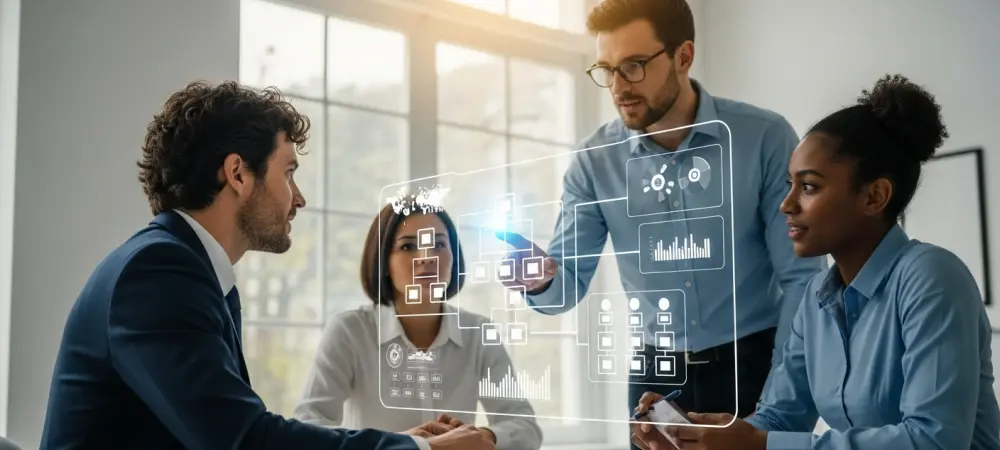
The traditional organizational chart, with its neatly defined silos for human resources and information technology, is rapidly becoming an artifact of a bygone corporate era, replaced by an urgent and undeniable convergence that is fundamentally rewriting the job description for every people leader. This is not a distant future scenario; it is the current reality unfolding within forward-thinking organizations. The core identity of the human resources professional, long centered on being the definitive “people expert,” is undergoing a profound and permanent transformation. To remain relevant and strategically valuable, these leaders must now become fluent in the language of systems, data, and artificial intelligence, evolving into a new hybrid of a people-and-tech strategist. The question is no longer if this change will happen, but how quickly leaders can adapt to a world where HR and IT are becoming two sides of the same coin.
Is Your HR Department Becoming a Tech Department
A provocative question is circulating in C-suite conversations with increasing frequency: is the HR department morphing into a specialized branch of the tech department? This inquiry, once theoretical, now reflects a tangible shift in operational reality. The responsibilities of a Chief Human Resources Officer (CHRO) or Chief People Officer (CPO) have expanded far beyond culture, coaching, and conflict resolution. Today, these leaders are expected to engage in deep, strategic discussions about AI investment, automation ethics, and data analytics. Their ability to contribute meaningfully to these conversations directly impacts their influence and the success of their workforce strategies.
This evolution signals the end of the “people expert” as a standalone concept. The modern people leader must now possess a dual expertise, understanding the intricate nuances of human behavior while also grasping the technical architecture that underpins the modern workplace. The expectation is no longer simply to partner with the IT department but to think like a technologist. This involves understanding how different systems integrate, how data can be leveraged for predictive workforce planning, and how AI can augment human capabilities across the entire employee lifecycle, from talent acquisition to performance management and succession planning. Without this technical acumen, HR leaders risk being relegated to a purely administrative function, adjacent to the critical strategic decisions being made about the future of work.
The Ticking Clock Navigating an Era of Unprecedented Disruption
The barrier separating human resources and information technology is not merely blurring; it is actively dissolving under the immense pressure of technological acceleration. The once-distinct domains of managing people and managing systems now share a common foundation built on data, automation, and digital platforms. This convergence is driven by the shared goal of creating a more efficient, agile, and intelligent organization. HR needs technology to deliver personalized employee experiences and data-driven insights, while IT needs HR’s guidance to ensure that technology is implemented in a way that is ethical, equitable, and enhances the human experience at work rather than diminishing it.
This integration is happening against the backdrop of a staggering and unprecedented rate of skill disruption. Projections indicate that up to 70% of the skills required for any given job are expected to change by 2030, a dramatic increase from the roughly 25% shift observed over the previous decade. This “70% mandate” represents a critical challenge and a ticking clock for every organization. HR functions that fail to build a robust, tech-enabled strategy for large-scale reskilling will not only fall behind but will also put their entire organization at a competitive disadvantage. The mandate is clear: leverage technology to anticipate skill gaps, facilitate continuous learning, and build a workforce that is resilient and adaptable enough to thrive amidst constant change.
The New Leadership Profile from Soft Skills to Systems Thinking
The essential skillset for the modern people leader has been fundamentally redefined, demanding a move far beyond traditional HR fundamentals. While empathy, communication, and emotional intelligence remain important, they are no longer sufficient. The new baseline for effectiveness is a profound literacy in technology and artificial intelligence. This means leaders must be able to not only understand how AI tools work but also evaluate their strategic applications, assess their ethical implications, and articulate their value proposition to the broader organization. This tech fluency is the key that unlocks a seat at the table where the most critical decisions about the company’s future are being made. Alongside this technical knowledge, cultivating a personal and organizational “growth mindset” is paramount. This mindset fosters the resilience and adaptability necessary to navigate the continuous cycle of learning and unlearning that defines the modern workplace, encouraging experimentation and viewing challenges as opportunities for innovation.
This evolving skillset points toward an inevitable future where the partnership between HR and IT deepens into a unified function. This integration is a natural consequence of their increasingly aligned priorities. Both departments are focused on a handful of critical, overlapping objectives: executing large-scale skilling initiatives, promoting organization-wide AI literacy, automating manual processes to free up human potential, and developing a sophisticated data strategy for workforce planning. The strategic reframing of technology’s role is central to this convergence. Instead of viewing technology, particularly AI, as a tool for replacement, leading organizations see it as a means of augmentation. The goal is not simply to cut costs by eliminating jobs but to enhance human capabilities, creating a collaborative environment where employees are empowered by technology to perform higher-value work.
Voices from the Vanguard Evidence of the Transformation in Progress
The evidence of this transformation is no longer anecdotal; it is a clear and consistent theme in high-level business discussions. Adam Gregory, a senior director at LinkedIn, has observed a dramatic shift in his conversations with HR leaders over the past year. Where discussions once centered on talent retention and culture, they are now dominated by technology and AI. This reflects a fundamental change in the CHRO’s responsibilities, which now include shaping the organization’s technological future. This consensus from industry leaders points to a tech-partnered future where the most successful HR professionals will be those who are not just comfortable with AI but are actively leading the conversation on its strategic implementation and ethical deployment.
In some pioneering organizations, this convergence has already led to a radical rethinking of the traditional reporting structure. A small but growing number of companies are experimenting with a new model where the Chief Technology Officer (CTO) assumes full responsibility for the HR function. While not yet a widespread practice, the emergence of this structure is a powerful signal of the direction in which the industry is heading. These early adopters recognize that people strategy and technology enablement are so deeply intertwined that separating them into different functions creates unnecessary friction and strategic misalignment. Examining these cases offers a glimpse into a future where the distinction between the people function and the technology function may cease to exist altogether, replaced by a single, integrated department responsible for optimizing the human-technology interface across the entire organization.
A Leader’s Playbook for the Tech Infused Workplace
To navigate this new landscape, people leaders must champion change through visible, demonstrative leadership. It is no longer enough to set an expectation for technological adoption; leaders must embody it. This means personally experimenting with AI tools, using them to streamline their own workflows, and openly sharing their experiences and learnings with their teams. When leaders demonstrate a proactive and curious approach to AI, they shift the narrative from one of fear and uncertainty to one of opportunity and empowerment. This “lead by example” approach is crucial for framing AI not as a threat to be managed, but as a collaborative partner that can unlock new levels of creativity and productivity.
Beyond personal example, leaders are responsible for architecting a future-ready workforce. This requires harnessing data to map skills adjacencies and identify viable, non-linear career paths for employees whose roles may be impacted by automation. By using sophisticated skills taxonomies and talent intelligence platforms, HR can move from a reactive to a proactive stance, anticipating future needs and building the capabilities to meet them. This data-driven approach is essential for creating a culture of internal mobility and continuous reskilling, where employees see a clear path for growth within the organization. This strategic workforce planning ensures that as technology evolves, the workforce evolves with it, creating a resilient and agile organization prepared for the challenges and opportunities ahead.
The evidence examined in this discussion pointed to an undeniable trend where the roles of people leaders and technology strategists are converging at an accelerating pace. This was not a change confined to a few innovative firms but a broad, industry-wide evolution driven by the relentless advancement of artificial intelligence and the urgent need for new workforce skills. The arguments presented showed that the traditional identity of an HR professional was becoming insufficient, supplanted by a new model of leadership that demanded deep technological fluency and a systems-thinking mindset. The transformation was already underway, with C-suite conversations shifting and organizational structures beginning to reflect this new reality. Ultimately, the future for people leaders depended on their willingness to embrace this merged identity, stepping up not just as stewards of company culture but as architects of a human-technology partnership.