

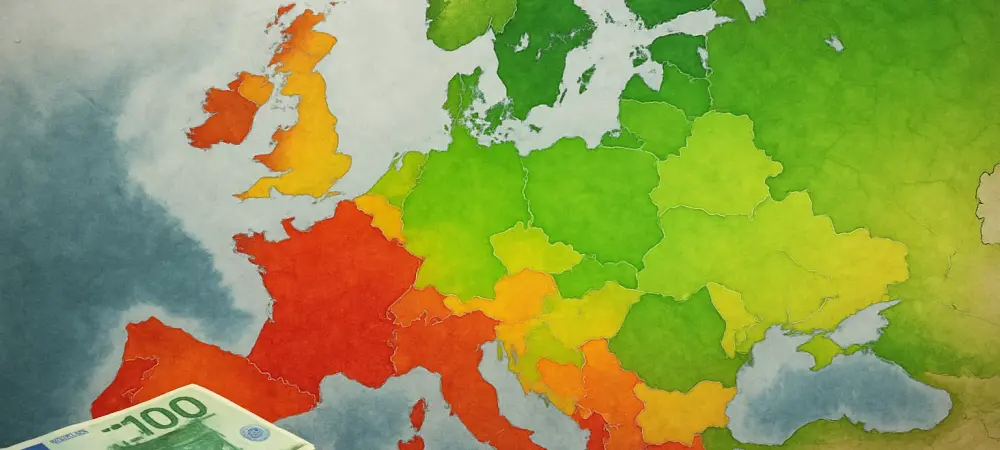
Beyond the Averages: Unpacking Europe’s Economic Fault Lines
Fresh data from Eurostat for 2024 has cast a sharp light on a persistent and dramatic economic reality across the European continent: a profound salary divide that cleaves East from West. While headline figures point to an average annual salary of nearly €40,000 in the European Union, this number masks a chasm of inequality. An employee in Luxembourg, for instance, earns over five times more than their counterpart in Bulgaria. This article delves into the latest figures, exploring not only the stark nominal differences in pay but also the more nuanced picture that emerges when adjusting for the cost of living. By examining the underlying economic structures and labor market dynamics, we can begin to understand the forces shaping this divide and what it means for the future of European economic cohesion.
A Tale of Two Continents: The Historical Roots of the Salary Gap
Today’s salary disparities are not a recent phenomenon but are rooted in decades of divergent economic history. The post-war economic boom in Western Europe fostered the growth of high-value industries, robust social welfare systems, and powerful labor unions that institutionalized strong wage-setting mechanisms. This period of sustained growth allowed for the accumulation of capital and the development of advanced infrastructure, creating a virtuous cycle of high productivity and high wages. In contrast, many nations in Central and Eastern Europe underwent painful economic transitions in the late 20th century, shifting from state-controlled systems to market economies. This transformation often involved deindustrialization and the rise of sectors with lower productivity and value-add, such as basic services and agriculture. These foundational differences in economic development created a structural gap in productivity and wage-setting power that continues to define the European labor market today.
The Great Divide: A Deep Dive into the Numbers and Their Drivers
The Chasm in Nominal Pay: More Than Just Euros and Cents
On paper, the salary landscape in Europe is a study in contrasts. The 2024 EU average annual salary stands at €39,808, yet this figure is heavily skewed by a handful of high-earning nations. At the top of the pyramid, Luxembourg leads with an astonishing average of €82,969 per year. It is followed by a cluster of Western and Northern European countries, including Denmark, Ireland, Belgium, Austria, and Germany, all reporting averages above €50,000. These figures reflect economies that have successfully positioned themselves at the forefront of global finance, technology, and specialized manufacturing, commanding premium wages for their skilled workforces. At the opposite end of the spectrum, the divide is just as stark. Bulgaria sits at the bottom with an average annual salary of just €15,387, while countries like Greece and Hungary also report figures below the €20,000 mark. This creates a staggering 5.4-fold difference between the highest and lowest earners, illustrating a deep economic fissure running through the heart of the Union.
Economic Structures and Labor Power: The Forces Behind the Figures
Experts identify a confluence of factors driving this vast compensation gap. A nation’s economic structure is a primary determinant; economies concentrated in high-value-added sectors like finance, technology, and advanced manufacturing can sustain significantly higher wages. Conversely, economies more reliant on agriculture or lower-skilled services naturally have lower pay scales. Foreign direct investment often flows toward lower-wage countries for manufacturing, but the highest-value research and development activities frequently remain in the West. Beyond industry composition, the role of labor market institutions is critical. In many Western European countries, strong trade unions, comprehensive collective bargaining agreements, and high statutory minimum wages create a floor for earnings and give workers significant negotiating power. In much of Central and Eastern Europe, however, historically lower unionization rates and higher unemployment levels have weakened workers’ bargaining positions, contributing directly to the suppression of wage growth.
The Great Equalizer? How Purchasing Power Changes the Picture
While nominal figures paint a dramatic picture, they don’t tell the whole story. When salaries are adjusted for national price levels using the Purchasing Power Standard (PPS), the landscape shifts considerably. This metric, which accounts for the cost of living, significantly narrows the compensation gap, reducing the ratio between the highest and lowest salaries from 5.4 to just 2.5. Although Luxembourg remains in the top spot, the relative positions of other countries change. Romania, for example, jumps from 22nd in nominal terms to 13th in PPS, as its lower cost of living gives employees greater purchasing power. This demonstrates that a salary in Bucharest stretches much further than an equivalent amount in Berlin or Paris. In contrast, Estonia’s higher local prices diminish the value of its wages, causing it to fall from 16th to 22nd. This adjusted view reveals that while the divide persists, the real-world experience of that divide is less severe than raw numbers suggest, with Greece, Slovakia, Hungary, Bulgaria, and Estonia ranking lowest after accounting for purchasing power.
Forecasting the Future: Convergence or Continued Division?
Looking ahead, the trajectory of Europe’s salary gap is a key question for the continent’s economic future. Projections based on recent growth rates suggest the EU’s average nominal salary will continue its upward trend, reaching approximately €41,600 this year. While this indicates overall wage growth, it does not guarantee a narrowing of the East-West divide. For true convergence to occur, economies in Central and Eastern Europe would need to sustain higher rates of wage growth than their Western counterparts over a prolonged period. This will depend heavily on their ability to transition toward higher-value industries, boost productivity, and strengthen labor market institutions. Challenges like the “middle-income trap” and persistent “brain drain” of skilled workers from East to West could impede this progress. Without targeted policy interventions and strategic investment, the risk remains that the current economic fault lines will persist for years to come.
Navigating the Divide: Key Takeaways for Policymakers and Professionals
The data presents several crucial takeaways for different stakeholders. For professionals and job seekers, the analysis underscores the importance of looking beyond nominal salary figures; a lower salary in a country with a low cost of living may offer a higher quality of life than a higher salary in an expensive city. For businesses, the salary gap highlights both opportunities for cost-effective expansion into Eastern Europe and the challenge of creating equitable compensation strategies across a diverse continent. For EU and national policymakers, the report is a stark reminder that economic integration is incomplete. Addressing the divide requires a multi-pronged strategy focused on fostering investment in high-productivity sectors in lower-wage countries, supporting fair wage-setting mechanisms, and ensuring that the benefits of the single market are more evenly distributed.
The Enduring Reality of Europe’s Economic Geography
Ultimately, the latest Eurostat data confirmed that Europe’s economic geography was still defined by a clear and deeply entrenched East-West salary divide. While adjusting for purchasing power softened the edges of this disparity, it did not erase it. The analysis revealed that the gap was a reflection of deep-seated structural, economic, and historical differences that could not be overcome overnight. As the European Union navigated complex geopolitical and economic challenges, closing this internal economic chasm was not just a matter of statistics—it was fundamental to the bloc’s long-term promise of shared prosperity and social cohesion. True integration required a sustained commitment to building an economy that worked for everyone, regardless of which side of the old Iron Curtain they called home.