

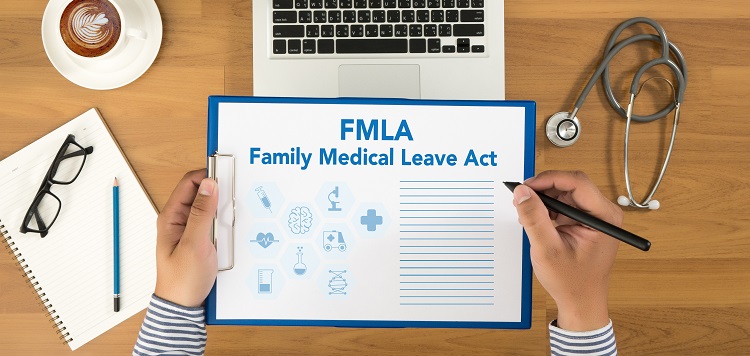
In 1993, the United States government enacted the Family and Medical Leave Act (FMLA). This federal law requires employers to provide eligible employees with up to 12 weeks of unpaid, job-protected leave per year for specific family or medical reasons. However, not all employers are subject to the FMLA’s provisions. In this article, we will explore the criteria for an employer to be considered “covered” under the FMLA, and other factors that employers should know.
Defining a “Covered Employer” under FMLA
Under the FMLA, a covered employer is one that employs 50 or more individuals for 20 or more workweeks within the current or previous calendar year. Therefore, a company that has fewer than 50 employees does not have to provide FMLA leave, even if the employee fulfills other eligibility criteria.
Conditions for a company to be considered “covered” under FMLA
To be considered a “covered employer” under the FMLA, an employer must meet certain conditions. If there were 50 or more employees for 20 weeks of the current or prior calendar year, the employer is covered under the statute. This means that if the business has reached the 50-employee threshold, it has 75 days to prepare to abide by FMLA guidelines.
Understanding a corporation as a single employer under FMLA
The FMLA describes a corporation as a single employer, and all the employees at all of its locations count toward the 50-employee threshold for FMLA coverage. For example, if a corporation has two locations and hires 30 people at each location, the corporation is considered a covered employer under the FMLA.
Exploring the concept of an “integrated employer” and its effect on FMLA coverage
In some cases, separate businesses may all be considered parts of a single employer if they qualify for what is known as an “integrated employer.” The integrated employer test, as applied by the Fourth Circuit, is whether the employers are “completely disregarded in jointly determining employee coverage.” What this means is that if two companies jointly control or share the same group of employees, those two entities may be integrated employers. In this situation, both employers are responsible for counting the employee for FMLA purposes, even if only one of them has the employee on its payroll.
Examining how a company takeover affects FMLA obligations
When an employer takes over a covered employer, it must comply with FMLA regulations. The employer becomes responsible for providing leave to employees who worked at the previous company and meet FMLA eligibility criteria. The employee’s job is also protected under such a takeover, and the new employer is obligated to return the employee to the same or an equivalent position following the leave.
Identifying factors to determine if a new employer is a successor under FMLA
Factors used to determine whether a new employer is a successor under FMLA include whether the new employer continues the same business operations and provides similar products or services. The continuity of the customer base, work schedule, and other pertinent factors may also play a role in determining if the new employer is a successor.
Understanding the Family and Medical Leave Act and the criteria for FMLA coverage is essential for employers to comply with the law, protect their employees, and maintain the quality of their workplace. Employers should also consult with their legal advisors or turn to Tom D’Agostino, whose wealth of experience and expertise in employment law and disability law make him a great resource for employers.