

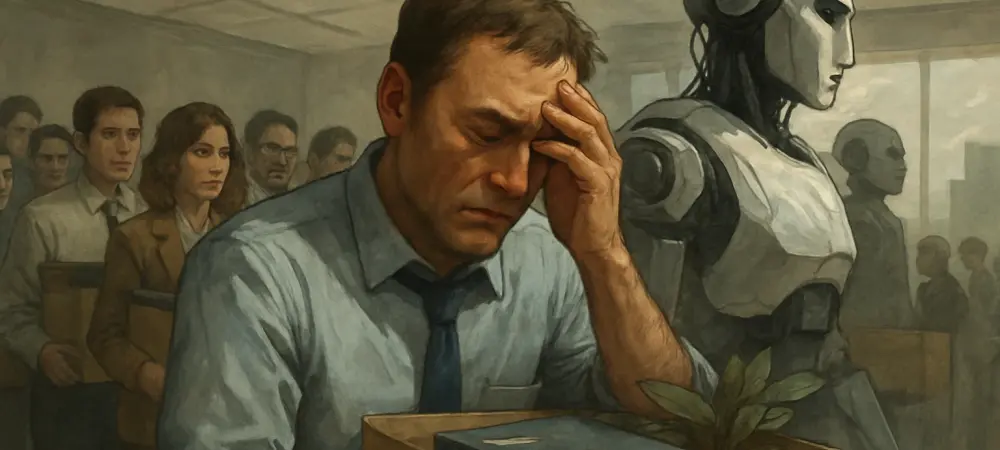
Setting the Stage: A Corporate Conundrum
In the fast-paced corporate landscape of 2025, mass layoffs continue to dominate headlines, sending ripples of uncertainty through industries worldwide. A staggering number of job cuts, particularly in tech and retail sectors, have left millions questioning the stability of their careers. While artificial intelligence (AI) often takes the blame for displacing workers, a deeper market analysis reveals a different narrative. This examination aims to dissect the root causes behind these workforce reductions, focusing on systemic issues rather than technological scapegoats. By delving into current trends and historical patterns, the purpose here is to provide clarity on why layoffs persist and how businesses and employees can adapt to an ever-shifting economic environment.
Diving Deep: Market Trends and Layoff Drivers
The Overhiring Epidemic: A Strategic Misstep
A critical trend shaping the current market is the aftermath of aggressive hiring sprees that swept through industries during the digital boom of recent years. Companies, riding high on optimistic growth projections, expanded their workforces at a breakneck pace, often without sustainable financial backing. This phenomenon, widely recognized as overhiring, has left many organizations with bloated payrolls they can no longer support amid tightening budgets. Major tech firms, for instance, which added thousands of roles in a short span, have since slashed jobs to correct these imbalances. The financial strain is evident as balance sheets reflect overextended labor costs against declining revenues, painting a clear picture of strategic oversight rather than tech-driven disruption.
Economic Pressures and Corporate Corrections
Beyond overhiring, broader economic factors are intensifying the layoff wave across sectors. Rising inflation and interest rate hikes have squeezed corporate budgets, forcing leaders to prioritize cost-cutting over expansion. Sectors like retail and manufacturing, heavily reliant on consumer spending, face declining demand, prompting workforce reductions to maintain profitability. Data from industry reports highlight a correlation between economic slowdowns and increased layoffs, with small- to medium-sized enterprises particularly vulnerable due to limited cash reserves. This trend underscores a reactive approach in corporate strategy, where short-term financial survival often overshadows long-term workforce planning, leaving employees exposed to sudden cuts.
AI as a Distraction: Reframing the Narrative
While AI and automation remain hot topics in market discussions, their role in mass layoffs is frequently overstated. Analysis shows that these technologies are more often tools for efficiency rather than direct causes of job losses. In industries like logistics and customer service, AI streamlines operations but rarely replaces entire teams, contrary to popular belief. Instead, the real issue lies in human decision-making—specifically, the failure to align hiring with realistic demand forecasts. Case studies of tech giants reveal that layoffs often target roles created during overhiring phases, not positions displaced by machines. This insight shifts the focus toward accountability in boardrooms rather than fear of technological inevitability.
Future Projections: Navigating the Evolving Landscape
Leaner Structures and Hiring Caution
Looking ahead, market projections suggest a pivot toward more conservative hiring practices as companies learn from past excesses. Firms across tech, finance, and beyond are expected to adopt leaner organizational structures, emphasizing flexibility over mass recruitment. This shift is driven by a need to mitigate financial risks in an unpredictable economy, with many businesses likely to rely on data analytics for precise workforce planning. From 2025 to 2027, industry forecasts predict a rise in temporary and contract-based roles, allowing organizations to scale labor costs with market fluctuations. Such trends signal a broader redefinition of employment, prioritizing adaptability over permanent headcount growth.
Regulatory and Economic Influences
Another factor shaping the future of work is the evolving regulatory landscape surrounding labor practices. Governments worldwide are tightening policies on severance, rehiring, and employee protections, which could impact how companies approach layoffs. Simultaneously, economic indicators point to continued volatility, with potential recessions looming on the horizon. Industries dependent on global supply chains, such as manufacturing, may face amplified challenges, leading to further workforce adjustments. These combined pressures suggest that businesses will need to balance compliance with cost management, while employees may encounter new safeguards—or obstacles—in navigating job transitions.
Technology’s Role in Workforce Evolution
As markets evolve, technology will undoubtedly play a significant part, though not as the villain often portrayed. AI and automation are projected to augment rather than replace human roles, particularly in sectors like healthcare and education, where personal interaction remains irreplaceable. Emerging data indicates that companies investing in upskilling programs can integrate technology without widespread job cuts, fostering a hybrid workforce model. This trend offers a glimpse of a balanced future, provided corporate leaders prioritize strategic integration over reactive downsizing. The challenge lies in ensuring that innovation supports rather than undermines employment stability.
Reflecting Back: Lessons Learned and Paths Forward
Looking back, the analysis of mass layoffs in 2025 reveals that overhiring, compounded by economic pressures, stands as the primary driver behind workforce reductions, far outweighing the impact of AI. The market trends of aggressive expansion followed by sharp corrections paint a cautionary tale for industries worldwide. Strategic missteps, rather than technological inevitability, emerge as the core issue, with data underscoring the need for sustainable growth models. For businesses, the takeaway is clear: adopt cautious hiring practices and leverage analytics for precise forecasting. Employees, meanwhile, are encouraged to stay vigilant for early warning signs and prioritize continuous skill development. Moving forward, fostering collaboration between policymakers, corporations, and workers to build resilient labor markets becomes the next critical step, ensuring that lessons from this era shape a more stable and equitable future.