

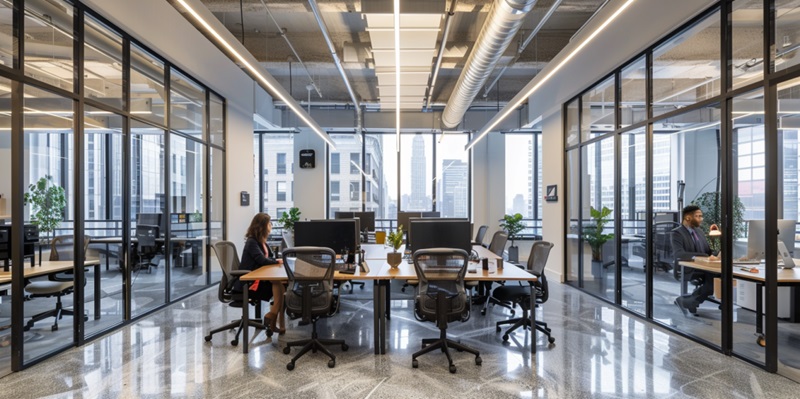
The way we work has undergone a dramatic transformation, feeding into the design and management of workspaces. The JLL 2024 Global Occupancy Planning Benchmarking Report has shed light on these changes, highlighting the steady ascent of hybrid work arrangements and the necessary shifts in occupancy planning that organizations need to undertake.
Integration of Hybrid Work Policies
Understanding the Hybrid Shift
The emergence of hybrid work has prompted companies to break from traditional office designs, which centered around permanent seating arrangements for employees. Instead, there is a pivot toward creating more dynamic work environments. This approach caters to both in-office work and the remote aspects of the job. Real-time data has become a linchpin in this process, as 77% of organizations are now depending on accurate utilization data to inform their space usage decisions.
Planning with Data
The rise in tracking and utilization of workplace data underscores the importance of understanding the ebb and flow of office occupancy. This intelligence allows organizations to dynamically adjust their space, ensuring that resources are not sitting idle and that employees can find suitable work settings when they are in the office. A substantial 72% of companies use this data in their planning processes, taking into account the varying patterns of employee presence to design a hybrid work environment that is both flexible and efficient.
Advancement of Workplace Technologies
Technological Enhancement
With the increasing adoption of hybrid work, it has become clear that technology is a key enabler. Investments in IT upgrades and advanced conferencing technologies are facilitating smoother transitions between in-office and remote work. These enhancements are not merely about connectivity; they’re also about creating an environment where collaboration is as seamless virtually as it is physically.
The New Metrics of Space Utilization
The workplace landscape has been drastically reshaped, influencing the development and governance of work environments. Insights from the JLL 2024 Global Occupancy Planning Benchmarking Report expose these evolutions, particularly noting the rise of hybrid work models. Hybrid work is becoming increasingly prevalent, prompting companies to rethink their space utilization. As this trend continues, traditional office usage patterns are being disrupted, calling for organizations to adapt their occupancy strategies. The report underscores the need for businesses to realign their workspace management to accommodate this shift toward more flexible working arrangements. In doing so, companies must balance the dynamics of remote and in-office work to optimize their real estate portfolios. The integration of hybrid workplaces is crucial, as it allows businesses to ensure employee productivity and satisfaction while also being cost-effective and efficient in their space allocation.