

Modern professionals frequently find themselves trapped in a sensory paradox where the very environment designed to foster teamwork becomes a relentless source of distraction and cognitive fatigue. While the open-office concept was championed as a catalyst for spontaneous innovation, the reality for most employees is a daily struggle to maintain mental clarity amidst a sea of ringing phones and cross-talk. This auditory friction has transformed the workplace into a battlefield for attention, where the simple act of thinking deeply has become a luxury rather than a standard.
The High Cost of the Modern Open-Office Soundscape
The persistent hum of a bustling floor was long regarded as the signature sound of a high-performing team. However, this acoustic density often functions as a biological stressor that compromises the brain’s ability to process complex information. When every keyboard click and distant conversation competes for a sliver of concentration, the “active” office environment shifts from a collaborative hub into a significant barrier to high-level output.
In contrast to the intended benefits of transparency, the lack of physical boundaries allows sound to travel unchecked across vast floor plans. This creates a chaotic atmosphere where the “flow state”—that elusive peak of productivity—is interrupted every few minutes. The hidden cost of these interruptions is measured not just in lost time, but in the mental exhaustion that follows the constant effort to re-focus on a task.
Why Auditory Wellness is Redefining the Modern Workspace
Organizations are increasingly recognizing that the office must offer something the home environment cannot: a curated sanctuary for deep work. The transition back to physical workspaces has revealed that noise management is no longer a peripheral concern but a fundamental requirement for employee retention. In an age where cognitive endurance is a company’s most valuable asset, providing a quiet space is a strategic necessity for maintaining a competitive edge.
The shift toward auditory wellness reflects a broader understanding of employee needs. It is no longer enough to offer a desk and a chair; the environment must actively support the neurological requirements of the task at hand. When silence is prioritized, the office transforms into a destination where meaningful work actually happens, rather than a place where employees simply endure the noise until they can leave.
Deconstructing the Barriers to Concentrated Work
The evolution of office design has often prioritized visual aesthetics over acoustic functionality, leading to a “collaboration paradox.” In these spaces, the absence of walls does not necessarily lead to more talking; instead, it often drives people to wear noise-canceling headphones as a digital barrier against their colleagues. This retreat into personal audio bubbles signifies a failure of the physical environment to provide the necessary conditions for both social and solitary work.
Science further validates these frustrations by labeling workplace noise as a physiological trigger. Excessive ambient sound increases cortisol levels, which keeps the body in a subtle state of “fight or flight.” This heightened stress response makes it significantly harder for the brain to recover from interruptions, meaning that a thirty-second distraction can derail a complex analytical project for nearly half an hour.
Expert Insights on the Power of Strategic Silence
Industry leaders now argue that the most resilient offices are those that mimic the quietude of a private library or a high-end retreat. By balancing social interaction with structural solitude, companies can ensure that silence is viewed as a vital component of organizational success. Case studies have demonstrated that when employees are granted the permission and the physical place to work in total silence, the quality of their creative output increases exponentially.
Moving toward a “people-first” design means acknowledging that different tasks require different acoustic profiles. While brainstorming sessions benefit from a lively atmosphere, the analytical and creative heavy lifting of a business requires a protected environment. This shift in perspective views silence not as a lack of activity, but as a deliberate tool for sharpening the mind and producing superior results.
Practical Strategies for Creating a Quiet Office Culture
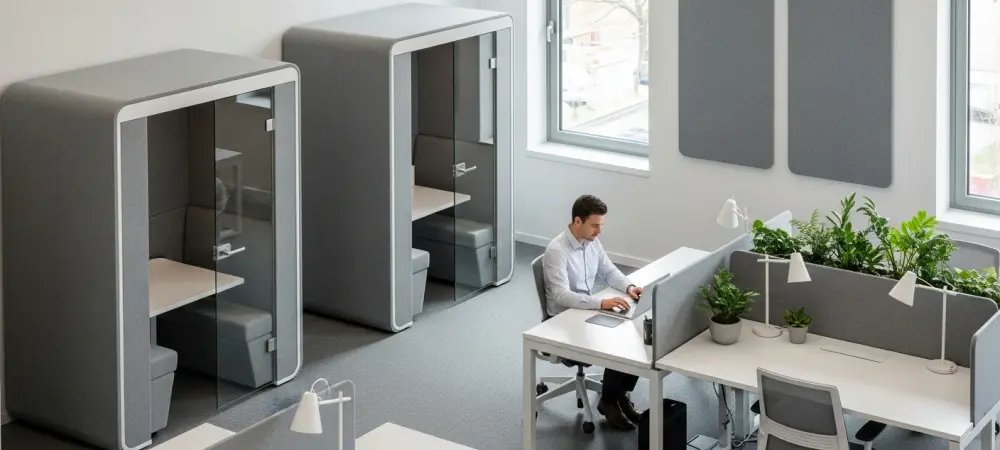
Creating a quiet culture involves more than just a change in behavior; it requires a structural overhaul of the physical space. Organizations are beginning to invest in soundproof pods and partitioned zones that are physically isolated from the main traffic flow. These “no-noise” retreats provide a true escape, allowing employees to step away from the communal buzz to tackle deep-focus tasks without the fear of being interrupted by a passing colleague.
Furthermore, leadership must model this quiet mindset by establishing clear expectations for volume in communal areas. When managers advocate for a “quiet-first” approach, they signal that uninterrupted concentration is a respected and protected resource. This cultural shift, combined with high-tech acoustic flooring and sound-absorbing furniture, effectively dismantles the “echo chamber” effect that plagues modern floor plans. Forward-thinking firms have realized that the next phase of workplace evolution depends on the intentional management of sound. Designers began integrating acoustic-grade materials that dampen footsteps and chatter, turning the office into a functional tool for the mind. This transition ensured that the workspace remained a viable destination for excellence, proving that the most powerful ideas often emerged from the quietest rooms.