

Maintaining a seamless balance between rapid industrial production and stringent safety adherence is no longer optional for modern firms aiming to protect their most vulnerable assets. In the high-stakes environments of warehousing, maintenance, and field operations, the pressure to meet aggressive delivery targets often creates a paradoxical situation where the very people driving the company’s success are placed at the greatest risk. When safety training is viewed as a hurdle to overcome rather than a foundational pillar of operation, the consequences frequently manifest as rising injury rates and costly legal liabilities. The core of this challenge lies in the “at-risk” window—the critical period between a new hire joining the team and the moment they receive comprehensive safety certification. For many deskless workers, this gap is where accidents are most likely to occur, as they navigate heavy machinery and hazardous materials without the full benefit of formal guidance. Addressing this friction requires a strategic shift in Human Resources, moving away from a simple check-the-box mentality toward a model that integrates safety directly into the workflow. Ensuring workforce continuity depends on the realization that a safe employee is ultimately a more productive one.
The Hidden Friction Between Production Deadlines and Safety Compliance
The tension between the ticking clock of a production deadline and the administrative requirements of safety compliance creates a persistent conflict for floor managers. When a warehouse is understaffed and orders are piling up, the temptation to rush a new employee onto the floor before they have mastered OSHA protocols is immense. However, this shortsightedness often leads to operational delays far more severe than those caused by a training session. A single workplace incident can halt production for days, trigger exhaustive investigations, and damage employee morale across the entire organization.
Human Resources departments must serve as the bridge between the urgency of the production line and the necessity of risk mitigation. By aligning safety benchmarks with performance goals, HR can ensure that supervisors prioritize training as a method of protecting the long-term output of the team. When safety becomes a non-negotiable metric for success, the friction between speed and security begins to dissolve, paving the way for a more resilient and reliable workforce.
Understanding the Unique Physical and Temporal Barriers of Deskless Roles
Unlike office-based employees who can easily dedicate an hour to an online webinar at their desks, deskless workers operate in environments that are physically and temporally demanding. These roles often involve rotating shifts, night work, and travel between remote sites, making it difficult to coordinate traditional classroom-based learning. When HR attempts to force these workers into a one-size-fits-all training schedule, the result is often low engagement and poor information retention. The logistical nightmare of pulling a dozen technicians off a critical maintenance project for a centralized lecture frequently leads to training being postponed indefinitely.
Recognizing these barriers is the first step toward creating a training program that actually works for the people it is meant to protect. Deskless employees need learning solutions that respect their time and the physical nature of their work. If an organization treats safety education as an isolated, once-a-year event, it fails to account for the dynamic hazards that change with every new project or job site. Workforce planning must therefore incorporate training as a flexible, ongoing process that adapts to the shifting schedules and locations of the field staff, ensuring that education is accessible exactly when and where it is needed most.
Digitizing Safety: Standardizing OSHA Training Across Distributed Sites
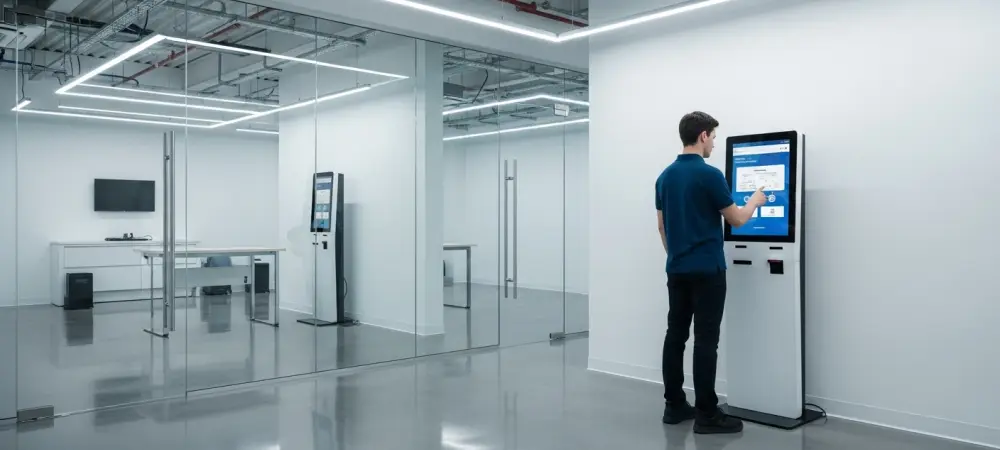
The adoption of digital learning platforms has revolutionized the way organizations manage OSHA certification for a distributed workforce. By moving training to an on-demand digital format, HR can provide immediate access to essential safety protocols the moment a worker is onboarded. This eliminates the “at-risk” window by allowing employees to complete their initial safety modules via mobile devices or site-based kiosks before they ever step into a high-hazard zone. Digital accessibility ensures that even the most remote field technician receives the same high-quality instruction as someone working at the central headquarters.
Furthermore, standardization is a major benefit of the digital shift, as it removes the inconsistencies that often plague fragmented, site-specific manual training. In a traditional setup, the quality of safety education might depend entirely on the experience and mood of a local supervisor. This uniform approach not only simplifies the task of maintaining compliance across multiple regions but also provides HR with real-time data to track completion rates and identify potential knowledge gaps before they lead to accidents.
Moving Beyond Completion to Cultivate Real-World Competence
While obtaining a digital certificate is a necessary step, HR leaders must distinguish between mere completion and genuine competence. A worker might pass an online quiz about forklift safety, but that does not necessarily mean they can safely navigate a crowded warehouse under high pressure. To bridge this gap, forward-thinking organizations are adopting a blended learning model. This strategy combines the theoretical knowledge gained through digital modules with hands-on, practical demonstrations on the shop floor. It ensures that the abstract rules of OSHA standards are translated into the concrete physical movements required for safe operation.
Supervisors play a critical role in this transition by reinforcing digital lessons through daily “toolbox talks” and site-specific inductions. These short, focused interactions keep safety top-of-mind and allow workers to ask questions about the unique hazards of their specific environment. By encouraging a culture where employees feel empowered to voice concerns and demonstrate their skills under supervision, the organization transforms safety from a static requirement into a living practice. This ongoing engagement ensures that safety behaviors are not just memorized for a test but are integrated into the muscle memory of the workforce.
Actionable Frameworks: Role-Based Training and Global Compliance
The implementation of role-based training matrices proved to be a decisive factor for organizations seeking to optimize their safety budgets while maximizing protection. Instead of overwhelming every employee with generic information, HR leaders developed targeted modules that addressed the specific risks associated with different job titles. Maintenance technicians focused on complex lockout/tagout procedures and confined space entry, while warehouse personnel concentrated on manual handling and rack safety. This tailored approach ensured that training remained relevant and engaging, which directly contributed to a notable decline in near-miss incidents and minor injuries.
Success also depended on the ability to navigate a complex landscape of global and regional regulations without sacrificing local relevance. Companies operating on an international scale moved beyond basic OSHA compliance to incorporate standards like the Health and Safety Executive guidance in the United Kingdom or specialized maritime protocols. The strategic use of flexible training providers allowed these firms to maintain high standards regardless of geography. By analyzing historical incident data and worker feedback, organizations refined their safety strategies to be more proactive. This evolution in HR practices helped establish a culture where safety was no longer a burden of the past but a foundational element of future growth.