

The transformation of human resources from a back-office administrative function to a powerhouse of corporate strategy is no longer a luxury but a fundamental requirement for survival in the current business climate. While traditional personnel management once relied on intuition and manual record-keeping, modern enterprises are discovering that their most valuable competitive edge lies within the data generated by their own workforce. This shift represents a move toward a more intelligent, evidence-based approach where every hire, every training hour, and every performance review contributes to a larger organizational goal.
From Paper Trails to Power Plays: The HR Evolution
The days of HR being confined to filing cabinets and manual spreadsheets are rapidly disappearing as businesses realize that their workforce data is their most underutilized competitive advantage. While many organizations still struggle with fragmented records and reactive problem-solving, a new wave of integrated technology is redefining the department’s role. By centralizing intelligence into a unified ecosystem, companies are discovering that human resources can do more than just manage people—it can drive the entire corporate strategy toward sustainable growth.
This evolution is characterized by a departure from the “gatekeeper” mentality toward a “business partner” model. Instead of simply enforcing policy and processing payroll, HR professionals now utilize sophisticated platforms to forecast talent needs and optimize labor costs. This transition allows the department to participate in high-level executive discussions with the same analytical rigor as finance or operations, ensuring that human capital decisions are perfectly aligned with the broader mission of the enterprise.
The High Cost of Fragmented Workforce Data
In a fast-paced global economy, the limitations of traditional, siloed HR systems have become a significant liability for growing enterprises. Data silos lead to inconsistent reporting, slow response times, and a complete lack of visibility into real-time workforce dynamics. When leadership cannot accurately track attendance patterns, performance metrics, or overhead costs in one place, they are forced to make critical decisions based on intuition rather than evidence. This operational friction often results in high turnover, lost productivity, and missed opportunities for organizational growth.
Moreover, the hidden costs of manual data entry and reconciliation are staggering, often draining the budget through administrative bloat and human error. When information is scattered across different software modules or physical folders, the risk of compliance failures increases exponentially. Organizations that fail to bridge these gaps find themselves reacting to crises rather than anticipating them, which ultimately weakens their market position and diminishes employee morale over time.
Centralizing Intelligence: The Odoo HRMS Dashboard
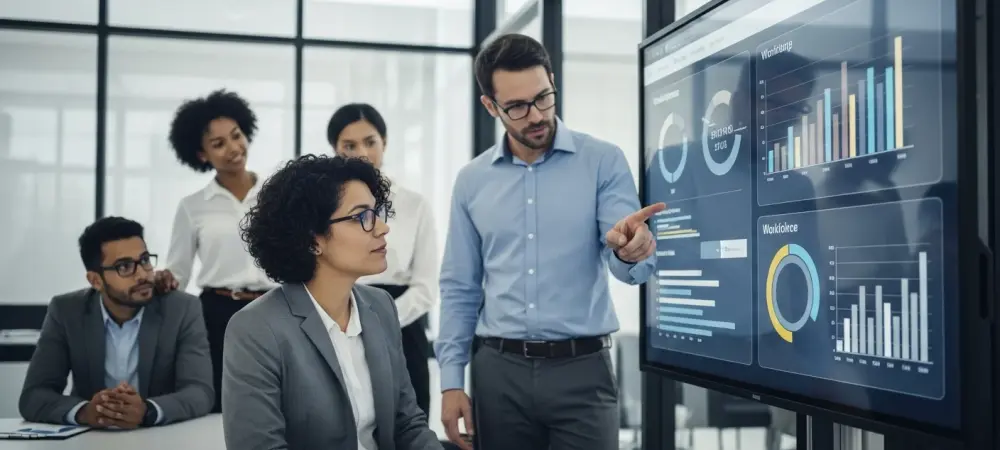
The integration of visual analytics allows managers to monitor attendance, leave patterns, and performance in a single interface, providing a 360-degree view of workforce dynamics. This centralized hub moves the department beyond manual record-keeping by utilizing real-time insights that inform high-level business goals directly. By eliminating information silos, the system ensures consistency across various departments and geographical locations, creating a single source of truth that is accessible to all stakeholders simultaneously.
Scalability remains a cornerstone of this modern approach, as the system is designed to support the agility of a startup while maintaining the robust requirements of a global corporation. Whether a company is managing ten employees or ten thousand, the unified data environment allows for seamless transitions as the business expands. This technical flexibility ensures that the HR infrastructure grows in tandem with the company, preventing the common problem of outgrowing software every few years.
Driving Measurable Outcomes: Advanced Analytics
The recent launch of the advanced Odoo HRMS Dashboard highlights a shift toward proactive management where automation minimizes human error and significantly lowers overhead. By embedding intelligence into the core of the Odoo suite, the platform provides a technical bridge between day-to-day operations and long-term strategic foresight. Industry experts suggest that organizations utilizing such integrated analytics are better positioned to identify negative trends before they escalate into systemic inefficiencies, effectively turning the HR department into a profit-protecting engine.
These analytics do more than just report on the past; they provide a predictive lens through which leaders can view their future workforce. For instance, by analyzing historical turnover data alongside engagement metrics, managers can intervene before key talent departs. This level of foresight transforms HR from a reactive cost center into a proactive guardian of organizational stability, ensuring that the company remains resilient in the face of market fluctuations.
Strategies: Implementing a Data-Driven HR Framework
To successfully transition to this new model, organizations must focus on automating routine administrative tasks to free up HR professionals for high-impact initiatives like talent development and employee engagement. Leveraging live data visualization through customizable reporting tools allows team leaders to present workforce trends to stakeholders in a way that is clear, actionable, and visually compelling. Integrating modular ecosystems further ensures a seamless transition by connecting new dashboards with existing modules like payroll, recruitment, and appraisals.
Fostering a culture of data accuracy is equally important, as internal teams must be trained to rely on centralized dashboards to maintain a single source of truth for all personnel-related decisions. When every manager trusts the data provided by the system, the speed of decision-making increases, and the quality of those decisions improves. This cultural shift, combined with the right technical tools, creates a robust framework where human resources can finally fulfill its potential as a primary driver of corporate success.
As businesses looked toward the future, the integration of Odoo HRMS redefined how they perceived human capital. The focus shifted toward developing continuous feedback loops and utilizing AI-driven insights to personalize the employee experience. Organizations that adopted these strategies found themselves better prepared for the complexities of a globalized economy. By prioritizing data integrity and technological synergy, they secured a path where workforce management became the cornerstone of their long-term competitive strategy.