

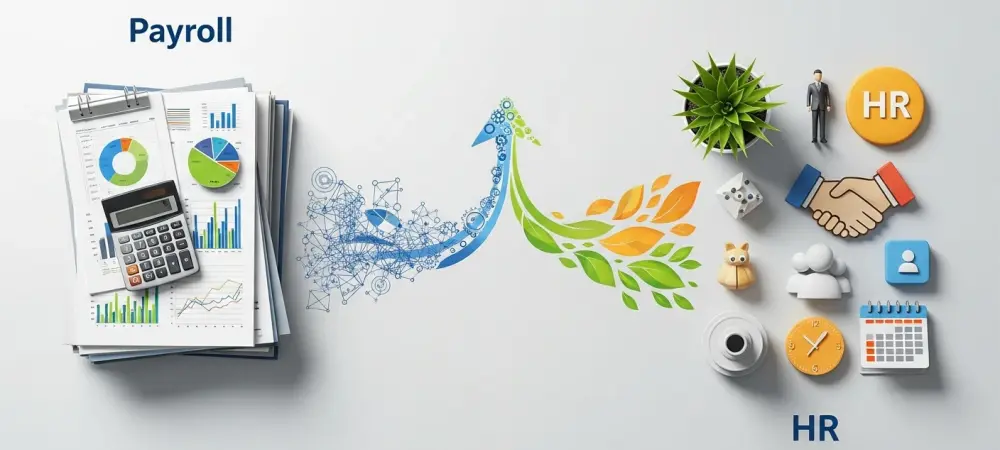
The transition from a tight-knit founding team to a rapidly growing workforce frequently exposes the structural weaknesses inherent in manual administrative workflows that once seemed sufficient. As businesses navigate the competitive landscape of 2026, the reliance on fragmented spreadsheets and disconnected software modules has become a significant liability, often leading to costly clerical errors and regulatory non-compliance. Modern organizational success now hinges on the adoption of integrated, cloud-based ecosystems that unite payroll and human resources into a single, cohesive engine for growth. These sophisticated platforms do not merely automate tasks; they provide the essential data backbone required for complex tax management and genuine employee engagement. By moving away from siloed operations, executive leadership can redirect focus from mundane paperwork to high-level strategic initiatives. The shift toward digital transformation represents more than an upgrade in technology; it is a fundamental reimagining of how a company manages its most valuable asset—its people. In an era where agility is paramount, an integrated approach ensures that the administrative infrastructure expands naturally alongside the business, preventing the friction that often accompanies rapid scaling.
Laying the Groundwork for Growth
Establishing a Compliant Foundation: Startup Needs
Startups and micro-businesses often find themselves trapped in a cycle of administrative maintenance that drains resources away from innovation and market penetration. Entry-level payroll packages have emerged as a vital bridge for these smaller entities, offering a professionalized alternative to the high costs of hiring a full-time in-house accounting department. These systems provide automated tax calculations and filing services, ensuring that even a small team can navigate the complexities of local and federal tax laws without fearing the financial penalties associated with accidental non-compliance. Access to 24/7 professional assistance within these platforms allows business owners to resolve queries instantly, maintaining operational momentum during critical growth periods. This foundation of stability is essential for survival, as it establishes a reliable framework for managing labor costs from the very first hire. By offloading these technical burdens to a specialized cloud provider, entrepreneurs can maintain a lean operational profile while ensuring that their financial reporting remains transparent and accurate for potential investors or creditors.
Establishing a Compliant Foundation: Proactive Compliance
As an organization moves beyond the initial survival phase, its administrative requirements naturally evolve toward proactive risk management and advanced error detection. Transitioning to a more enhanced service tier introduces sophisticated algorithms capable of identifying payroll inconsistencies or data anomalies before they escalate into systemic problems. This stage marks a critical turning point where the objective shifts from simply issuing paychecks to fostering a structured environment for organizational expansion. Integrated systems at this level began incorporating automated labor law updates, ensuring that the company remains in lockstep with shifting regulations across multiple jurisdictions. This technological safeguard is particularly crucial for companies expanding their footprint into different states or regions, where regional tax codes can vary significantly. By centralizing these functions, the business gains a holistic view of its compliance health, reducing the likelihood of audits and allowing the leadership team to focus on talent development. This proactive stance on compliance acts as a catalyst for growth, providing the peace of mind necessary to scale without the fear of hidden regulatory traps.
Strengthening Human Capital Management
Enhancing the Employee Experience: Digital Onboarding
When a company reaches a specific headcount threshold, the manual tracking of employee life cycles becomes entirely unsustainable and prone to significant human error. Integrated human resource management systems solve this by creating a seamless journey from the initial job offer to the final onboarding stages, merging traditional payroll functions with comprehensive HR support. This unified workflow ensures that new hires are integrated into the company culture efficiently, with all necessary documentation and tax forms completed through a single digital portal. For the business owner, this setup serves as a vital safety net, guaranteeing that all regulatory requirements are met while providing a professional and welcoming experience for the newcomer. The reduction in friction during the onboarding process is directly correlated with higher employee satisfaction and faster time-to-productivity for new team members. By digitizing these administrative touchpoints, the organization eliminates the need for redundant data entry, allowing HR staff to spend more time on mentorship and culture-building rather than paper shuffling.
Enhancing the Employee Experience: Benefits Strategy
Scaling a business effectively in the current competitive labor market requires more than just a competitive salary; it necessitates a sophisticated and comprehensive benefits strategy. Advanced payroll and HR packages enable mid-sized companies to offer the same level of healthcare options, retirement plans, and wellness programs typically associated with large corporations. These benefits are integrated directly into the payroll workflow, simplifying the deduction process and providing employees with clear visibility into their total compensation packages through self-service portals. Access to dedicated HR advisors further empowers these businesses to navigate complex issues such as leave management and performance evaluations with professional precision. This capability transforms a small or mid-sized company into a formidable employer of choice, capable of attracting and retaining high-tier talent that might otherwise seek opportunities at larger organizations. The ability to provide a high-level corporate experience without the overhead of a massive internal HR department allows the company to remain agile while building a loyal and motivated workforce.
Optimizing Operational Workflows
Maximizing Speed and Accuracy: Operational Efficiency
In an environment where a business handles high volumes of employee data and operates under tight financial deadlines, operational efficiency becomes a top priority. Modern payroll solutions emphasize the use of “two-click” entry systems and automated preprocessing reports that allow managers to verify payroll data for accuracy before the final submission. This delicate balance between speed and precision serves as a final barrier against financial discrepancies, ensuring that the payroll process remains a streamlined and predictable part of the business routine. Automation at this level removes the “human element” from repetitive calculations, which is where most errors typically originate in manual systems. By providing real-time validation of hours worked, overtime rates, and tax withholdings, these platforms prevent the costly rework associated with correcting pay period mistakes. This level of operational rigor is not just about saving time; it is about establishing a culture of accuracy that permeates every financial transaction within the organization. When the administrative engine runs smoothly, it builds trust with the workforce and ensures that financial resources are allocated exactly where they are intended.
Maximizing Speed and Accuracy: Professional Oversight
Higher-tier professional packages augment automated platforms by assigning dedicated payroll and HR specialists to handle specific accounts, adding a crucial layer of human expertise to the digital framework. This personalized approach is particularly beneficial for businesses with complex labor costs, such as those that need to track expenses across multiple projects, departments, or geographic locations. These specialists provide tailored advice on job costing and tax notice resolutions, ensuring that the company’s specific financial nuances are addressed with professional care. Automating backend tasks like payroll tax filings and compliance notices frees up company leadership to focus on broader strategic objectives and long-term planning. For organizations operating in industries with high regulatory oversight, having a dedicated expert to monitor changes and provide guidance is an invaluable asset that mitigates risk. This hybrid model of advanced automation and expert human oversight allows a company to maintain a high degree of control over its operations while leveraging the scale and efficiency of a global service provider.
Driving Enterprise Success
Utilizing Real-Time Analytics: Enterprise Solutions
For large-scale operations, the focus of administrative management shifts toward comprehensive enterprise suites that incorporate time tracking, attendance management, and sophisticated custom analytics. These enterprise solutions are engineered for organizations where data-driven decision-making is paramount to maintaining a competitive advantage in a crowded market. By digitizing every interaction within the employer-employee relationship, businesses can gain unprecedented visibility into labor costs and operational output. Advanced time and attendance modules integrate directly with payroll, eliminating the need for manual data imports and reducing the risk of time theft or buddy punching. This high level of integration allows managers to monitor workforce deployment in real-time, identifying areas where resources might be underutilized or where overtime costs are spiraling out of control. The result is a more responsive and efficient organization that can adjust its labor strategies on the fly to meet changing market demands. At this stage of maturity, the payroll and HR platform is no longer just a back-office tool; it is a central nervous system for the entire company.
Utilizing Real-Time Analytics: Strategic Growth
Custom reporting tools within these advanced platforms allow executives to evaluate complex performance metrics in real-time, providing deep insights that were previously hidden within disparate spreadsheets. These analytics help identify long-term trends in workforce productivity, employee turnover, and financial efficiency across different divisions of the organization. By understanding the true cost of labor relative to project outcomes, leaders can make more informed decisions about hiring, promotions, and strategic investments. This level of transparency is essential for maintaining accountability and driving continuous improvement throughout the enterprise. Furthermore, the ability to generate detailed reports for board meetings or regulatory filings at the touch of a button saves hundreds of hours of manual labor annually. The integrated platform becomes a strategic asset that informs the long-term direction of the company, providing a factual basis for organizational changes. In the modern business environment, the companies that successfully harness this data are the ones that maintain their lead and continue to scale sustainably even during economic shifts.
Navigating the Path to Implementation
Choosing the Right Management Model: Cloud vs. Traditional
When business leaders decide to implement a new management system, they must carefully weigh the immediate costs of high-level expertise against the long-term scalability of cloud-based technology. While traditional accounting firms and dedicated HR consultants offer personalized guidance, their service models often come with high monthly fees and billable hours that may not scale efficiently as the workforce grows. Modern cloud-based models offer a powerful hybrid solution, combining the granular control of in-house management with the automated power of an external software provider. This scalability is a key advantage for companies that experience seasonal growth or are planning aggressive expansion strategies. By selecting a platform that offers both technological robustness and access to human expertise on demand, organizations can achieve a level of administrative sophistication that was once reserved only for the largest corporations.
Choosing the Right Management Model: Implementing Change
The consensus among successful organizations was that manual payroll management represented a significant and unnecessary liability that could jeopardize the entire business. Moving away from paper-based systems and disconnected software was recognized as the most effective way to scale, as it prioritized automation, accuracy, and employee empowerment. The risk of human error in manual data entry often resulted in financial penalties, unhappy employees, and wasted executive time that could have been spent on core business functions. Leaders who adopted integrated platforms early found that the initial investment was quickly offset by the reduction in administrative overhead and the elimination of costly compliance mistakes. These platforms also provided a level of data security and disaster recovery that manual systems simply could not match, protecting sensitive employee information against modern cybersecurity threats. Ultimately, the transition to an integrated system became a fundamental requirement for any business aiming to maintain its competitive edge and ensure long-term stability in a rapidly evolving economy.
Choosing the Right Management Model: Final Implementation Steps
Executives who successfully navigated the transition to integrated systems followed a clear path of evaluation and phased implementation to ensure minimal disruption to their daily operations. They prioritized systems that offered the highest degree of interoperability, ensuring that payroll, human resources, and time-tracking data flowed seamlessly between different business functions. By conducting thorough audits of their existing workflows before switching, these organizations identified specific pain points that the new technology was intended to solve. Training programs were established to ensure that both management and staff were fully comfortable using employee self-service portals, which maximized the adoption rates of the new tools. Business leaders also maintained a focus on future-proofing their choice by selecting providers that demonstrated a commitment to continuous technological innovation and regulatory responsiveness. The successful integration of these systems ultimately allowed companies to spend more time on their actual mission and less time on the complexities of workforce administration.