

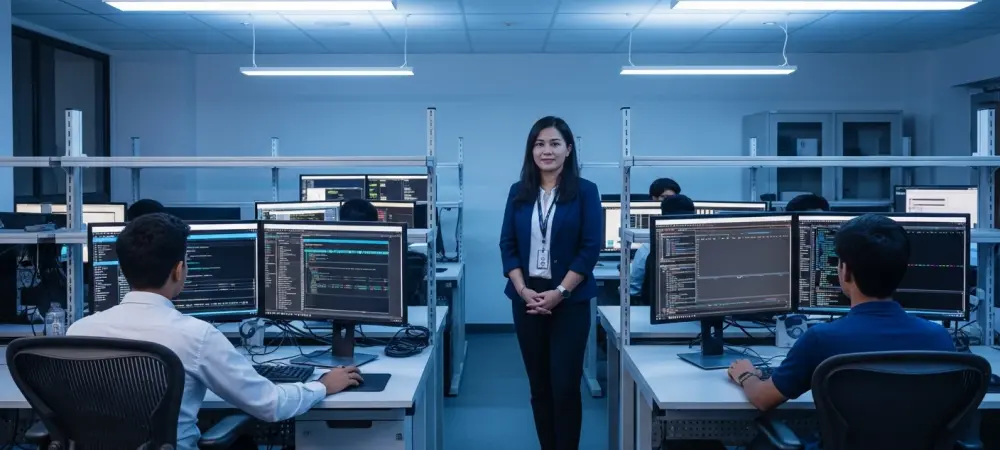
Ling-yi Tsai is a seasoned HRTech expert with decades of experience helping organizations navigate the complex intersection of technology and talent management. Her deep understanding of recruitment ecosystems and HR analytics makes her a pivotal voice as higher education shifts away from traditional mass-hiring models toward more specialized, high-impact talent strategies. We will explore the strategic diversification of recruiter networks, the logistical evolution of campus curricula through AI labs, and the shifting dynamics of compensation in an increasingly specialized labor market.
Many institutes are expanding their recruiter bases by nearly 30% to include startups, consulting firms, and BFSI companies. How does this shift affect student preparation, and what specific steps are required to build relationships with these specialized organizations compared to traditional mass recruiters?
When schools like the Poornima Group onboard 25% to 30% more recruiters, it completely changes the “vibe” on campus from a generalist mindset to a specialist one. Students can no longer rely on a one-size-fits-all resume; they have to sharpen their storytelling to appeal to a consulting firm’s logic or a startup’s need for agility. Building these relationships requires a “white-glove” approach where placement officers act more like account managers, carefully matching student portfolios to the specific technical needs of a BFSI firm or a niche tech shop. It is a high-touch process that involves constant feedback loops and a deep understanding of the unique culture each small-to-mid-sized firm brings to the table, moving far beyond the old “set it and forget it” model of mass IT drives.
Educational institutions are increasingly investing in dedicated facilities like AI labs to move beyond general coding. What are the logistical challenges of integrating these emerging technologies into the daily curriculum, and how do you ensure that students meet the technical requirements for high-stakes AI roles?
Setting up a dedicated AI lab, as seen at Dayananda Sagar, is a massive undertaking that goes beyond just buying hardware; it requires a total reimagining of the daily schedule. The real challenge is the “speed of change,” where a curriculum designed in the summer might be outdated by the winter, forcing faculty to integrate real-time industry projects into the core learning path. To ensure students are ready for high-stakes roles at companies like TCS or Infosys, colleges are shifting toward a “lab-first” pedagogy where theoretical concepts are immediately applied to training models or data sets. This hands-on intensity is the only way to move a student from basic coding to the level where they can be deployed into AI roles immediately after their initial corporate training.
While volume hiring has decreased, some top-tier salary offers have surged significantly, reaching as high as 53 lakhs. What does this gap between average and peak offers signal about current industry demands, and what specific technical or soft skills are driving these premium compensation packages?
The jump from a 32-lakh peak to a staggering 53-lakh offer at some institutes signals a “flight to quality” where companies are willing to pay a massive premium for rare, specialized talent. This gap exists because the market is no longer looking for “warm bodies” to fill seats; it is hunting for architects of the future who possess a mix of advanced analytics and high-level problem-solving skills. These premium packages are rarely driven by coding alone but rather by a student’s ability to communicate complex data insights to stakeholders and manage the ethical implications of the tech they build. It creates a bifurcated campus experience where the “average” salary might hover around 9 lakhs, while the top performers are being recruited like professional athletes for their specialized intellectual capital.
Transitioning from a reliance on final-year placement drives to a focus on internships and pre-placement offers is becoming a standard tactic. What are the long-term trade-offs of this approach for the college, and how can students effectively manage the pressure of proving their value during these trial periods?
Moving toward an internship-heavy model is a brilliant move for placement stability, but it requires students to essentially “audition” for their jobs for three to six months instead of just one afternoon. The trade-off for the college is that they must manage a year-round placement cycle rather than a single seasonal burst, which can be exhausting for administrative staff and faculty. Students feel a visceral pressure to be “always on,” knowing that every line of code or meeting contribution could determine whether they receive a coveted pre-placement offer. To survive this, they have to develop a professional stamina early on, learning to treat their internships not as a learning phase but as the first true chapter of their career where they must prove their ROI daily.
New recruiters, including international organizations and niche startups, now account for up to 20% of the hiring pool at several campuses. How do you vet these first-time partners for stability, and what practical strategies help students pivot their career expectations toward these less traditional employers?
When 15-20% of your hiring pool consists of first-time visitors like Orange Business or Escorts Kubota, the vetting process must be rigorous, focusing on the company’s funding history, growth trajectory, and mentorship culture. We have to sit students down and show them that a “name brand” isn’t the only path to a successful life; often, a niche startup offers more hands-on responsibility in six months than a giant firm offers in two years. This pivot involves a lot of emotional coaching, helping students see the beauty in a “high-impact” role where they aren’t just another employee ID number but a core part of a lean team. By highlighting the 10% increase in placement numbers at schools like Amity, we can prove to students that diversification is their best insurance policy in a shifting economy.
What is your forecast for the engineering placement landscape over the next three years?
I predict a permanent shift toward “micro-specialization” where the traditional, massive IT hiring waves of the past become a smaller, secondary part of the ecosystem. We will see the average salary continue its steady climb—much like the rise from 8.5 to 9 lakhs we’ve recently seen—but the real story will be the explosion of “core+tech” roles in industries like BFSI and manufacturing. Colleges will increasingly function as R&D hubs for their partner companies, with students being “pre-hired” as early as their sophomore year through deep-link internship programs. Ultimately, the successful engineer of 2028 will not just be a tech expert, but a cross-disciplinary consultant who can navigate the logistics of global business as easily as they can train a machine learning model.