

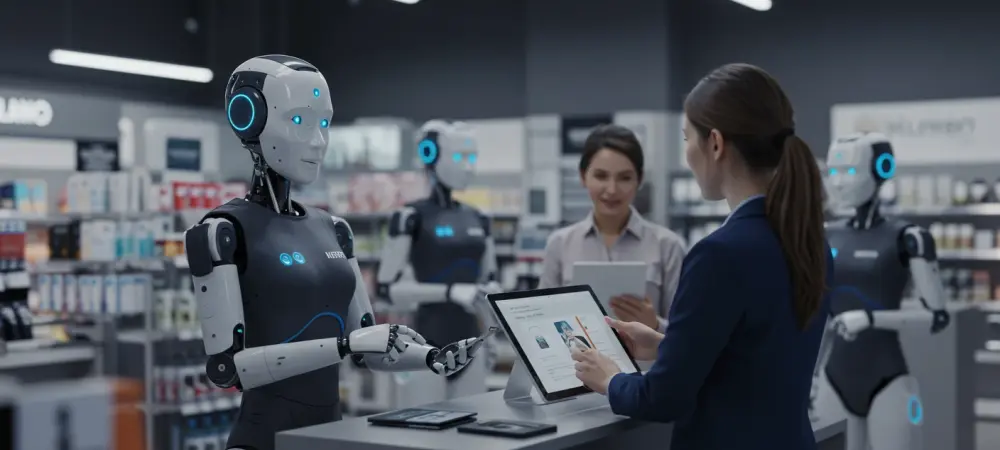
Setting the Stage for Workforce Innovation
In an era where the global frontline workforce—comprising 2.7 billion workers across retail, hospitality, healthcare, and delivery—fuels essential industries, the challenge of managing this vast segment has reached a critical juncture, with high turnover rates and costs nearing $10,000 per retail employee loss as reported by industry research. Fountain, a leading AI-native platform, has introduced Frontline OS, a revolutionary operating system poised to reshape how businesses hire, onboard, and retain these indispensable workers. This market analysis delves into the trends, data, and projections surrounding this groundbreaking technology, examining its potential to address systemic inefficiencies and redefine workforce management on a global scale. The stakes are high, and understanding this shift offers vital insights for industries grappling with labor challenges.
Market Trends and Technological Shifts
The Persistent Challenges in Frontline Sectors
Frontline industries have long faced structural hurdles, including rapid employee turnover and labor-intensive hiring processes. Retail chains, for instance, often struggle to fill shifts during peak seasons, while healthcare providers in rural regions contend with persistent staffing shortages. These issues are compounded by outdated management systems that fail to match the sophistication available to desk-based employees, leaving frontline operations fragmented and inefficient. Data indicates that businesses lose significant revenue due to unfilled positions, with some sectors reporting up to 80% annual turnover. This persistent gap in technology adoption has created a ripe opportunity for platforms like Frontline OS to step in and bridge the divide with modern, scalable solutions.
Rise of AI in Workforce Management
A defining trend in the current market is the integration of artificial intelligence into workforce management, particularly for high-turnover industries. AI-driven tools are increasingly seen as essential for automating repetitive tasks such as screening applicants or scheduling shifts, thereby reducing operational bottlenecks. Frontline OS leverages this trend through its AI assistant, Fountain Copilot, which uses advanced models to handle complex processes via natural language inputs. Early adoption metrics reveal workflow deployments accelerating by up to five times, signaling a shift toward automation as a core strategy. This trend is not merely a passing phase but a fundamental change, as businesses recognize AI’s capacity to cut costs and enhance scalability across diverse sectors.
Demand for Unified Systems in Diverse Markets
Another notable market movement is the growing demand for integrated platforms that consolidate multiple workforce functions into a single ecosystem. Unlike traditional tools that operate in silos—separating hiring, scheduling, and analytics—modern solutions aim to provide a seamless experience. Frontline OS exemplifies this by combining applications for engagement, automation of workflows, intelligence through analytics, and AI agents for task execution. Such unification addresses the varied needs of urban retail hubs and rural healthcare facilities alike, offering adaptability across regions. Market analysis suggests that platforms reducing implementation time by 60%, as seen with this system, are likely to gain traction among small and large enterprises seeking efficiency without complexity.
Data Insights and Performance Metrics
Quantifiable Impact on Operational Efficiency
Diving into specific data, the introduction of Frontline OS has yielded measurable outcomes that highlight its market potential. Screening times for new hires have been reduced by as much as 98%, a critical advantage in industries where speed determines competitiveness. Additionally, internal metrics indicate a 50% improvement in employee retention among early adopters, addressing one of the most costly aspects of frontline management. These figures point to a transformative impact, particularly for sectors like food and beverage, where rapid staffing adjustments are often necessary during high-demand periods. The ability to streamline operations without increasing overhead positions this platform as a game-changer in cost-sensitive markets.
Adoption Rates and Scalability Projections
Looking at adoption trends, initial uptake of AI-driven workforce tools shows promising growth, especially among mid-sized businesses in hospitality and delivery. Reports from current users of Fountain Copilot reveal zero support tickets for hiring processes, indicating a high level of user-friendliness and reliability. Projections for the next few years, from 2025 to 2027, suggest that scalable platforms could capture a significant share of the market, potentially becoming standard in over 30% of frontline-dependent industries. This scalability is crucial for global enterprises managing diverse workforces, as it allows for customization without sacrificing efficiency. The data underscores a clear trajectory toward widespread integration of such technologies.
Competitive Landscape and Market Positioning
In the competitive arena, Frontline OS stands out by offering a holistic solution at a time when fragmented tools still dominate. While gig economy platforms have introduced digital hiring aids, they often lack depth in retention and analytics—areas where this new system excels. Market positioning is further strengthened by its accessibility, with a reported 60% reduction in implementation hours making it viable for smaller players. However, challenges remain, including the need to educate non-tech-savvy managers on AI functionalities. As competitors scramble to match these capabilities, the platform’s early-mover advantage could solidify its foothold, reshaping expectations for workforce tech in the coming years.
Future Outlook and Industry Projections
Evolving Role of Agentic AI
Peering into the horizon, the role of agentic AI in workforce management is expected to expand, with systems potentially adapting in real-time to labor market fluctuations or regulatory shifts. Innovations could include predictive models that anticipate staffing needs based on seasonal trends or economic indicators. For industries like delivery, where demand spikes unpredictably, such advancements would be invaluable. The market is likely to see increased investment in AI research tailored to frontline needs, pushing the boundaries of automation beyond current limits. This evolution promises not only operational gains but also a redefinition of how frontline roles are perceived and supported.
Economic Drivers and Adoption Accelerators
Economic factors, such as rising wages in competitive sectors like retail, are poised to accelerate the adoption of cost-efficient platforms. Businesses facing shrinking margins will likely turn to automation to offset labor expenses, with projections indicating a doubling of AI tool usage in frontline sectors by 2027. Additionally, evolving labor laws across regions may necessitate systems that automate compliance reporting—a strength of Frontline OS. As economic pressures mount, the market will favor solutions that balance affordability with impact, creating fertile ground for widespread technological integration. This alignment of economic need and innovation suggests a robust growth path for such platforms.
Potential Disruptions and Market Risks
Despite the optimism, potential disruptions loom on the horizon, including resistance to technology adoption among traditional industries. Concerns over data privacy and AI decision-making in human-centric roles could slow implementation in sectors like healthcare, where personal interaction remains paramount. Market risks also include the possibility of over-reliance on automation, potentially alienating workers if not balanced with human oversight. Nevertheless, the trajectory indicates that solutions addressing these concerns through transparency and training will likely mitigate risks, ensuring sustained market relevance. Navigating these challenges will be critical for long-term success in a dynamic landscape.
Reflecting on Strategic Implications
Looking back, the analysis of Frontline OS and its role in workforce management reveals a pivotal shift in how industries tackle longstanding inefficiencies. The data paints a clear picture of enhanced speed, reduced costs, and improved retention, while market trends underscore a growing reliance on AI and unified systems. For businesses, the strategic implications are profound, pointing toward a need to integrate such technologies to remain competitive. Moving forward, companies should prioritize pilot programs in high-impact areas like hiring, coupled with robust training to ease transitions. Additionally, staying attuned to evolving economic and regulatory landscapes will be essential to maximize benefits. These steps offer a roadmap for harnessing innovation, ensuring that frontline workers—often the backbone of essential services—receive the technological support they deserve.