

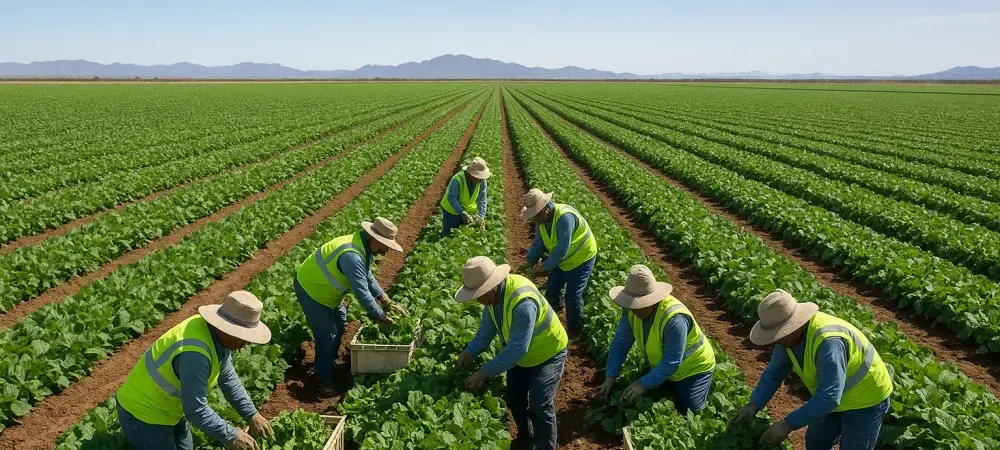
The current patchwork of state-level regulations means a farm worker’s right to overtime pay depends entirely on whether they are harvesting in Washington, New York, or Arizona. Representative Adelita Grijalva of Arizona recently reintroduced federal legislation intended to eliminate the agricultural exemption from the Fair Labor Standards Act, a policy that has excluded these workers since 1938. This bill, co-sponsored by Senator Alex Padilla, proposes a multi-year phase-in plan that acknowledges the financial pressures on the farming industry. Starting with a 55-hour threshold in 2027, the standard would gradually decrease to the traditional 40-hour workweek by 2030, with specific accommodations for smaller farming operations to prevent economic destabilization. By bringing agricultural labor in line with nearly every other sector in the United States, the legislation seeks to rectify a historical injustice that has left a critical portion of the workforce without basic financial protections for nearly a century.
Regional Realities: The Landscape of Agricultural Labor
The Disparities in State Protections
The lack of a uniform federal standard has resulted in a fragmented landscape where labor protections vary wildly based on geographic location. In states like California and Washington, lawmakers have already recognized the need for equity, establishing a 40-hour overtime threshold that ensures harvesters receive time-and-a-half pay for extended work. These states serve as proving grounds for the feasibility of such regulations, yet their isolated implementation creates economic distortions within the domestic market. Farming operations in states with higher labor standards often find themselves at a competitive disadvantage compared to those in states that maintain the federal exemption. This discrepancy encourages a “race to the bottom” where states might resist labor reforms to keep production costs low and attract large-scale agricultural business. Without a cohesive national policy, the fundamental rights of farm workers remain subject to the political climate of individual state capitals rather than a unified vision.
In many other agricultural hubs, particularly throughout the South and parts of the Midwest, the absence of state-level overtime laws means that workers are frequently required to work 60 or 70 hours a week during the peak season for a flat hourly rate. This practice is especially prevalent in regions that adhere strictly to federal guidelines, which have historically treated agriculture as an industry that requires total flexibility at the worker’s expense. While proponents of these exemptions argue that the seasonal nature of farming makes a standard workweek impractical, the lack of overtime pay places the burden of economic volatility on the most vulnerable participants in the supply chain. The proposed federal legislation aims to bridge this gap by establishing a national floor for labor standards, ensuring that a worker’s time is valued equally across the entire country. By removing the incentive for states to undercut one another on labor protections, the act seeks to create a more ethical marketplace.
The Local Impact on Arizona’s Workforce
Arizona’s agricultural landscape provides a poignant example of how the lack of federal overtime mandates affects local workforces in high-intensity production zones. The state is a primary producer of the nation’s winter vegetables, particularly in the Yuma region, which is often called the “Winter Salad Bowl” of the country. During the peak harvest months, the demand for labor is immense, and thousands of workers log grueling hours in the fields to ensure that fresh produce reaches grocery stores nationwide. However, because Arizona follows the current federal guidelines, these workers do not receive any additional compensation for the hours they put in beyond the standard 40-hour threshold. This creates a significant financial strain on families who rely on these intense periods of work to sustain themselves throughout the year. The physical toll of harvesting crops in demanding environments is rarely reflected in the workers’ paychecks, leading to a persistent cycle of economic precariousness.
The situation is further complicated for the many Arizona farm workers who must manage a difficult and daily cross-border commute. A substantial portion of the workforce resides in Mexico and travels through ports of entry like San Luis every morning long before dawn. These workers often face long wait times and significant travel distances before they even begin their shifts in the fields. When they are finally on the job, the pressure to meet high-volume quotas in a short window of time adds another layer of physical and mental exhaustion. Denying these individuals overtime pay despite the excessive hours they contribute during the harvest season is viewed as a failure of the current labor system. Advocates argue that the volatile nature of the work—where hours can skyrocket during the winter and vanish during the summer—makes the case for overtime pay even stronger. Providing time-and-a-half compensation would offer a necessary financial buffer for workers who navigate these seasonal extremes.
Labor Stability: Navigating Visas and Economic Survival
The Legal Battles Over Seasonal Pay
The H-2A visa program has recently emerged as a primary battleground in the struggle over agricultural wages and labor stability. This program, which allows farmers to hire foreign nationals for seasonal work when domestic labor is unavailable, is often at the center of complex legal disputes regarding wage floors. In recent years, the executive branch has made several attempts to reduce the minimum wages paid to H-2A workers, arguing that such cuts are necessary to keep American farms competitive. However, these efforts have been repeatedly blocked by federal courts after labor organizations successfully argued that lowering wages would harm both foreign and domestic workers. These legal battles highlight a fundamental tension in government policy, where the desire to lower food prices often comes at the direct expense of the laborers’ financial security. While the courts have provided a temporary defense, the uncertainty surrounding these regulations continues to create an unstable environment for thousands of people.
Beyond the legal technicalities, the debate over the H-2A program underscores the ethical challenges of maintaining a reliable labor supply in a physically demanding industry. Many growers contend that the H-2A program is their only viable option because domestic workers frequently avoid agricultural jobs due to the strenuous nature of the tasks and the lack of career advancement. This reliance on a guest-worker program creates a dynamic where workers have limited bargaining power and are often hesitant to report unfair conditions or demand better pay. Critics argue that by maintaining exemptions from overtime and attempting to cut base wages, the industry is effectively depressing the labor market and discouraging innovation. If the Fairness for Farm Workers Act is passed, it would apply to all workers, including those on H-2A visas, thereby creating a more level playing field. This ensures that the program is used to address genuine labor shortages rather than as a means to bypass standard labor protections.
Balancing Industry Viability and Worker Rights
Opposition to the mandate is largely driven by concerns regarding the long-term economic survival of domestic farming operations in an increasingly globalized market. Organizations like the Arizona Farm Bureau maintain that the inherent nature of agriculture—characterized by perishable crops and unpredictable weather—makes a rigid 40-hour workweek fundamentally incompatible with farm management. They argue that when a crop is ready for harvest, it must be picked immediately to prevent spoilage, often requiring workers to stay in the fields until the job is finished. The added cost of overtime pay during these critical windows could prove prohibitive for many farmers who are already operating on razor-thin profit margins. Furthermore, domestic growers face stiff competition from international producers in countries like Mexico and Peru, where labor costs are lower and regulations are far less stringent. Industry advocates warn that forcing American farms to pay overtime could lead to higher grocery prices. The transition toward a more equitable labor structure in agriculture ultimately required a shift in how the nation valued the people responsible for its food supply. Policymakers recognized that the historical justifications for excluding farm workers from overtime were no longer compatible with modern standards of human dignity. To support this evolution, the federal government implemented technical assistance programs that helped farmers adopt new technologies to increase efficiency and manage labor costs. These initiatives encouraged the use of automated harvesting aids and improved logistics software, which allowed many operations to maintain productivity while adhering to the new 40-hour threshold. The successful integration of these reforms proved that economic viability did not have to come at the expense of worker rights. By securing overtime pay, the industry stabilized its workforce and ensured that agricultural labor was seen as a respected profession. These steps collectively strengthened the domestic food system.