

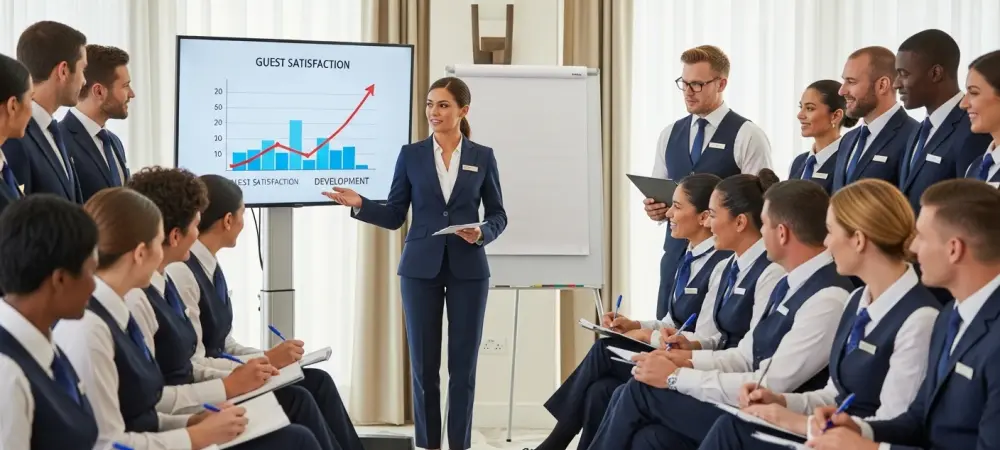
Travelers checking into a high-end resort or dining at an upscale establishment often find themselves marveling at the architecture and high-tech amenities while overlooking the complex psychological and professional training that makes the human experience seamless. While marble floors and automated check-in kiosks provide a sense of luxury, the lasting impression of a brand is almost always forged through the quality of interpersonal interactions. In the modern hospitality landscape, long-term success is no longer about maintaining the physical property alone; it is about the aggressive cultivation of human potential at every level of the organization. Moving beyond basic job orientation to provide comprehensive, longitudinal career development for every staff member has become the essential foundation for operational stability. This strategic investment serves as a catalyst for guest loyalty, transforming a standard transaction into a memorable connection that technology simply cannot replicate.
Strategic Distinctions: Training Versus Professional Development
Identifying the fundamental difference between teaching a specific task and fostering long-term professional growth is the first step toward operational excellence in any service-oriented field. Basic training ensures that an employee understands how to operate a property management system or properly set a formal table, both of which are mandatory for the daily functioning of a business. However, strategic development is a much broader and more significant process that equips employees with the cognitive tools to solve complex problems and prepares them for future leadership responsibilities within the corporate hierarchy. By shifting the focus from rote memorization of procedures to the development of critical thinking skills, organizations allow their staff to understand the broader context of their roles. This deeper level of comprehension enables employees to see themselves not just as workers performing a job, but as vital contributors to a larger vision of service. By prioritizing long-term development over simple task completion, a business moves away from a culture of following rigid scripts to one where employees are empowered to make autonomous decisions. This shift is particularly essential because human interactions are inherently unpredictable and rarely follow a pre-determined manual, especially in high-stakes service environments. A highly developed workforce possesses the mental framework required to adapt quickly and gracefully when unexpected challenges arise, such as a localized logistical failure or a sudden change in guest preferences. Instead of waiting for a manager to intervene, a developed staff member can leverage their training to resolve the issue on the spot, creating a sense of seamless efficiency. This empowerment not only improves the speed of service but also fosters a sense of ownership among the staff, leading to higher levels of professional pride and a more authentic connection with every visitor.
Service Excellence: Building Confidence Through Emotional Resilience
Many service professionals often feel overwhelmed by the emotional demands and high-pressure scenarios of their roles, but targeted coaching can provide the resilience needed to handle these burdens. When employees feel supported by their leaders and fully understand the underlying purpose behind their specific duties, they naturally project a sense of professional calm and competence. This confidence is palpable to the guest, who feels more secure and satisfied when interacting with a staff member who is clearly in control of the situation. Coaching programs that focus on emotional intelligence and stress management allow workers to maintain their composure during peak hours or during difficult interactions. This psychological preparation is just as important as technical skill, as it ensures that the service remains consistent regardless of external stressors. Ultimately, a confident employee is the most effective brand ambassador a company can have in the field.
The most memorable moments for a traveler usually occur during the resolution of a complex problem rather than during a standard, frictionless transaction that follows the expected protocol. Developing the “human touch” allows staff members to use empathy and creative thinking to turn potential frustrations, such as a delayed room or a lost reservation, into positive highlights of the trip. In an era where automation handles most routine tasks, these personal connections remain the primary way for a hospitality brand to differentiate itself from the competition. Training that emphasizes active listening and emotional resonance helps staff members identify the unexpressed needs of a guest, allowing them to provide personalized service that feels thoughtful rather than robotic. By investing in these soft skills, an organization ensures that its human capital remains its most valuable asset, creating a barrier to entry that competitors cannot easily cross.
Workforce Stability: Addressing Retention Through Growth Opportunities
Modern professionals across all sectors prioritize growth opportunities and are significantly more likely to remain with an employer that offers a transparent path for career advancement. Investing heavily in the skills and certifications of current staff members helps to drastically reduce the high turnover rates that have historically plagued the hospitality industry for many decades. Keeping experienced employees within the organization ensures that valuable institutional knowledge and cultural nuances are preserved, rather than being lost to the competition during a resignation. When a business demonstrates a commitment to the personal and professional success of its people, it creates a reciprocal sense of loyalty that stabilizes the entire operation. This stability is essential for maintaining a high standard of service, as tenured employees are better equipped to mentor new hires and maintain the quality standards that the brand has established. A robust and well-funded development program creates a reliable leadership pipeline by actively grooming front-line workers for future supervisory and executive management positions. Promoting from within the organization is far more cost-effective than external hiring, and it ensures that the new leaders have a deep, practical understanding of daily operations and guest expectations. This internal mobility creates a cycle of growth that benefits the employees through increased wages and status, while the business gains leaders who are already aligned with the corporate culture. Furthermore, seeing colleagues rise through the ranks serves as a powerful motivator for the rest of the team, proving that hard work and skill development lead to tangible rewards. By focusing on internal talent, a company can build a resilient management structure that is capable of navigating the complexities of a rapidly changing global market while maintaining service excellence.
Practical Implementation: Sustainable Strategies for Human Capital
Leaders who prioritized the psychological and professional maturity of their teams realized that the path to superior satisfaction required a fundamental shift in capital allocation. They established mentorship programs that paired seasoned veterans with junior associates, ensuring that the art of hospitality was passed down through direct, personalized instruction. These organizations also implemented regular “stay interviews” to understand the evolving career aspirations of their staff, allowing for the customization of training modules to match individual goals. By integrating advanced feedback loops, managers gathered real-time data on employee engagement, which they used to refine their coaching strategies and improve workplace morale. These actions proved that the most effective way to elevate the guest experience was to first elevate the employee experience, treating human development with the same rigor as property maintenance.
The organizations that achieved the highest satisfaction scores also pioneered the use of digital portfolios for every team member, tracking skill acquisition with the same precision as revenue. This data-driven approach allowed management to identify high-potential individuals early and provide them with the resources needed to excel in more demanding roles. Furthermore, the integration of cross-departmental training ensured that the staff maintained a holistic view of the guest journey, from the initial booking to the final departure. By dismantling the silos between front-of-house and back-of-house operations, leaders created a more cohesive and supportive work environment. The results of these efforts were measured not only in guest reviews but also in the tangible increase in operational efficiency and the significant reduction in recruitment costs. Those who embraced this human-centric philosophy set a new standard for excellence that transformed the entire hospitality sector.