

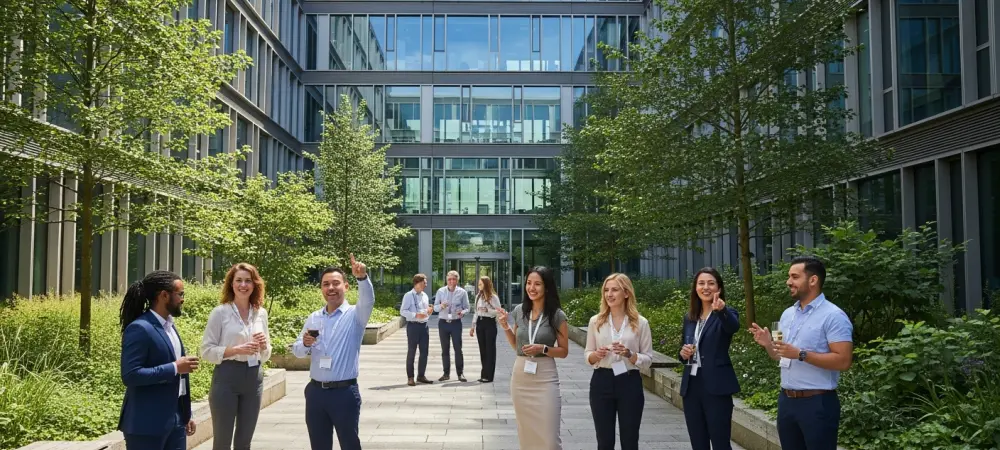
Recent industry surveys indicate that over sixty percent of the global workforce currently feels no personal connection to their employer, a statistic that highlights a massive failure in traditional retention methods. While the initial reaction of many executives is to simply raise salaries or increase year-end bonuses, these financial levers are increasingly proving to be temporary fixes for a much deeper structural problem. The modern professional landscape, dominated by digital interaction and rapid career pivoting, has left many workers feeling isolated and undervalued as human beings. Consequently, the role of corporate social events has shifted from a peripheral perk to a central pillar of organizational stability. These gatherings provide the vital “social glue” that transforms a group of disparate contractors into a unified team with a shared sense of purpose. When employees feel part of a genuine community, they are significantly less likely to leave for a slightly higher offer from a competitor that lacks a visible or welcoming internal culture.
The Financial Limitations of Transactional Loyalty
Moving Beyond a Transactional Relationship
Relying solely on monetary incentives to maintain a stable workforce is a strategy that inherently lacks sustainability because there will always be a competitor willing to offer a higher sign-on bonus. This transactional approach to employment creates a mercenary mindset among staff members, where loyalty is sold to the highest bidder rather than earned through mutual respect and engagement. When the relationship between a firm and its employees is purely financial, the emotional desire to stay is non-existent, leaving the organization vulnerable during economic downturns or competitive hiring cycles. Organizations that fail to invest in the social and psychological aspects of the workplace often experience higher turnover rates, which leads to increased costs related to recruitment and training. True retention requires building an environment where employees feel a sense of belonging that cannot be quantified in a salary breakdown or a standard benefits package alone.
Measuring the Impact on the Bottom Line
The economic implications of a disengaged workforce are staggering, with current estimates suggesting that low engagement costs the global economy several trillion dollars in lost productivity every single year. Conversely, companies that successfully foster a high-energy, socially connected culture often see a double-digit increase in profitability compared to their less-integrated counterparts. This financial boost is driven by factors including lower absenteeism, higher quality of work, and a significant reduction in the costs associated with frequent staff turnover. When employees feel socially supported, they are more resilient in the face of stress and more collaborative when tackling complex projects, leading to faster innovation and efficient problem-solving. Social events act as a catalyst for this connectivity, breaking down departmental silos and encouraging the cross-pollination of ideas. By treating social engagement as a measurable metric, leadership can justify the spending.
Culture and the Modern Hybrid Workforce
Strengthening Retention Through Shared Identity
A company’s internal culture is not merely a collection of values on a website; it is the daily lived experience of its employees and a primary driver of long-term professional trust. Corporate events serve as a critical venue for reinforcing this culture, provided that these gatherings are authentically aligned with the organization’s core principles rather than being performative. When leadership utilizes these social opportunities to demonstrate a genuine commitment to their staff’s well-being and personal growth, they create a physical manifestation of the brand identity. This shared identity acts as a stabilizing force, anchoring employees to the firm during periods of industry volatility or internal change. By fostering an environment where employees feel seen, heard, and valued through inclusive social initiatives, companies can transform their workplace into a strategic asset. A strong, cohesive culture remains the most effective defense against the costs of high staff turnover.
Addressing the Challenges of Remote Isolation
The shift toward remote and hybrid work environments has introduced a significant erosion of affective commitment, which is the psychological bond that traditionally ties an employee to their employer. Without the daily rhythm of office life and the spontaneous interactions that occur in a shared physical space, many workers report a growing sense of social isolation that eventually leads to job dissatisfaction. This lack of connection is particularly damaging for newer team members who have never had the opportunity to integrate into the corporate community in a meaningful way. Structured, in-person social events serve as a vital countermeasure to this digital disconnect, providing the face-to-face interaction required to build trust and rapport among colleagues. By bridging the gap between digital efficiency and human interaction, organizations create a more resilient workforce that is less prone to the job-hopping trends that plague the modern remote-first landscape.
Sustainable Integration: Strategic Frameworks for Long-Term Commitment
The transition toward a more socially integrated corporate model required a fundamental shift in how leadership perceived the value of non-work-related interactions. Forward-thinking organizations moved away from sporadic, mandatory activities and instead implemented consistent, diverse social calendars that catered to the varied interests of their workforces. These initiatives focused on inclusivity and psychological safety, ensuring that every employee, regardless of their background, felt comfortable participating and contributing to the community. By embedding social connection into the core strategy, companies successfully bridged the gap between remote efficiency and human necessity, creating a resilient culture that survived the challenges of the digital era. The retention of talent became a natural byproduct of a workplace that prioritized the human experience as much as the bottom line. Managers who listened to their teams found that loyalty was cultivated through genuine care.