

The traditional corporate recruitment landscape often resembles a high-stakes endurance test where the sheer volume of applicants overwhelms even the most seasoned human resource professionals. In a world where a single job opening can trigger an avalanche of several thousand resumes within hours, the classic method of manual screening has reached a definitive breaking point. Organizations are no longer just looking for a faster way to sort through PDF files; they are seeking a paradigm shift that allows for deep, qualitative assessment without the physical limitations of human hours. The strategic integration between Eightfold AI and Oracle Fusion Cloud Recruiting marks a pivotal moment in this evolution, introducing “agentic interviewing” to bridge the gap between massive applicant pools and precise talent identification.
The End of the Recruitment Bottleneck
The bottleneck in modern hiring is rarely a lack of interest but rather the inability of organizations to process that interest with consistent quality. When recruiters are forced to skim resumes in six seconds or less, the potential for error and the exclusion of non-traditional yet highly qualified candidates skyrockets. This systemic pressure often leads to a “speed over substance” mentality, where the primary goal is simply to clear the queue rather than to find the absolute best fit for a role. By embedding autonomous interviewing capabilities directly into the enterprise workflows of the Oracle Fusion Cloud, companies can finally move past these administrative hurdles. This shift allows for an “infinite” screening capacity, where the system treats the thousandth applicant with the same level of analytical rigor as the first. This eliminates the fatigue-induced inconsistencies that plague human-led high-volume hiring, ensuring that no diamond in the rough is overlooked due to a recruiter’s packed schedule or an overflowing inbox.
The High Cost of Inconsistent Candidate Evaluations
Relying on subjective resume reviews and unstructured initial screenings creates a significant financial and cultural drain on modern enterprises. Traditional methods are frequently susceptible to unconscious biases, where a candidate’s educational pedigree or previous employer might outweigh their actual functional skills. These inconsistencies do not just lead to poor diversity outcomes; they result in high turnover rates and millions of dollars in lost productivity when a “paper-perfect” candidate fails to perform in the actual work environment.
Furthermore, the slow pace of manual evaluation often results in “candidate ghosting,” where top-tier talent accepts offers from more agile competitors while waiting for a response. The inability to provide immediate, meaningful engagement during the early stages of the hiring cycle damages an employer’s brand and pushes the most sought-after professionals away. To remain competitive, organizations must move toward data-driven models that can quantify skills and potential accurately, transforming human capital management from a reactive chore into a strategic advantage.
Scaling Talent Intelligence: Autonomous Interviewing
The partnership between Eightfold and Oracle represents a departure from simple automated chatbots toward a sophisticated Talent Intelligence Engine. This AI Interviewer is specifically designed to conduct deep functional and coding assessments that mirror the complexity of real-world job tasks. Instead of asking generic behavioral questions, the system analyzes a candidate’s specific technical proficiencies and career trajectory in real-time. This allows large-scale organizations to evaluate thousands of candidates simultaneously across various time zones and languages without adding a single hour to the recruiter’s workload.
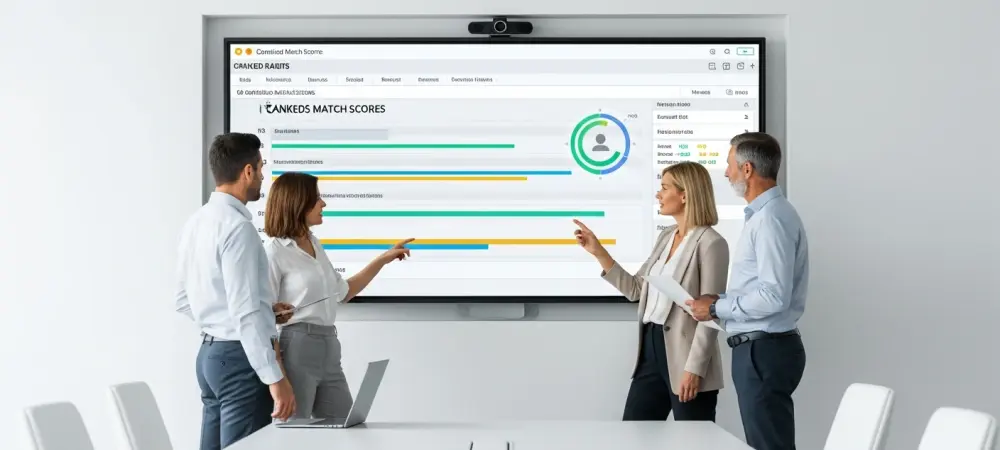
This technology operates within the Oracle Cloud Infrastructure, providing a secure and unified environment where candidate data flows seamlessly into existing management systems. Because the AI evaluates every individual against the exact same set of rigorous, skill-based criteria, the result is a highly objective “match score.” This score provides hiring managers with a transparent, data-backed justification for why a candidate should move forward, effectively replacing the “gut feeling” of traditional screening with empirical evidence of capability and growth potential.
Balancing Algorithmic Precision: Human Judgment
A vital aspect of this technological leap is the “human-in-the-loop” framework, which ensures that technology serves as an assistant rather than a replacement. While the AI handles the mechanical and repetitive stages of the interview journey—such as technical vetting and initial skill verification—the final decision-making power remains firmly in human hands. This collaborative approach allows recruiters to bypass the mundane tasks of basic screening and focus their energy on the final stages of the process, where cultural nuance and personal connection are paramount. Expert analysis indicates that this structured separation of duties significantly mitigates bias. By allowing the AI to focus strictly on objective data points and functional skills, organizations can build a more diverse and capable workforce. Once the AI has filtered the pool down to the most qualified individuals, recruiters can dedicate their time to high-value interactions, such as negotiating offers and selling the company vision. This compressed timeline not only improves the “time-to-fill” metrics but also elevates the overall quality of hire by ensuring that every finalist has already passed a rigorous, standardized test.
Navigating the Shift: An Infinite Workforce Strategy
To fully realize the benefits of AI-driven interviewing, organizations had to rethink the role of the recruitment department entirely. Transitioning from administrative screeners to strategic talent advisors required teams to embrace unified cloud solutions that simplified the procurement and deployment of advanced intelligence tools. By leveraging Oracle Universal Credits to access Eightfold’s specialized services, enterprises successfully consolidated their tech stacks, reducing the friction typically associated with adopting new enterprise software. This streamlined infrastructure allowed recruiters to spend less time managing software and more time interpreting the deep insights provided by the Talent Intelligence Engine. The move toward an “infinite workforce” strategy effectively removed the physical and temporal limits of the hiring process. Companies began utilizing autonomous screening to create a continuous pipeline of talent, ensuring that the organization was always prepared for growth regardless of market volatility. This shift did not just optimize a business process; it fundamentally changed the candidate experience by providing immediate feedback and a fair, skills-based evaluation to every person who applied. Leaders who adopted these autonomous systems early established a new standard for corporate agility, proving that the future of talent acquisition resided in the seamless fusion of specialized artificial intelligence and high-level human strategy.