

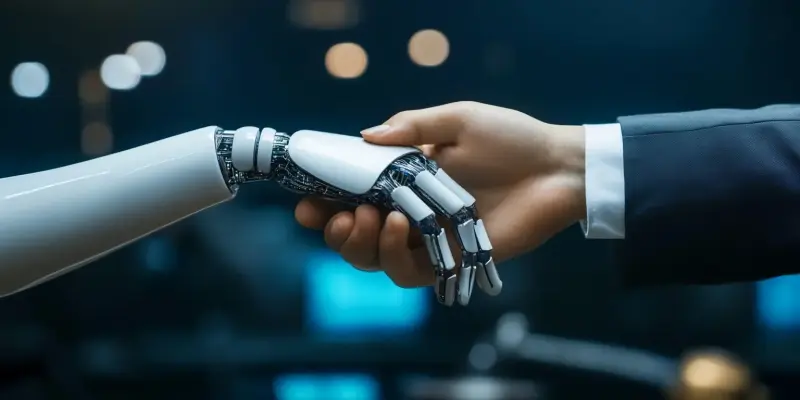
In today’s fast-paced corporate environment, inefficient and error-prone HR recruitment processes can result in significant financial losses and missed opportunities for growth. Traditional hiring methods often fail to identify the best candidates due to reliance on basic resume screening and subjective interview decision-making. This has created a demand for more advanced solutions that can reduce the uncertainties and biases involved in recruitment. A promising development in this arena is the application of AI-driven compatibility analysis, such as that offered by SoulMatcher’s pioneering technology, which initially gained recognition in the matchmaking industry.
Transforming Recruitment with AI
SoulMatcher’s AI technology leverages sophisticated algorithms to assess psychological compatibility between candidates and the roles they seek, thereby fundamentally transforming the recruitment process. By adapting its matchmaking algorithms for HR, SoulMatcher HR (SM HR) addresses critical challenges, such as team incompatibility, inefficient workload management, and low employee engagement. This not only streamlines operations but also significantly lowers the financial and time costs typically associated with hiring. Companies that have integrated SM HR have experienced a drastic reduction in recruitment-related errors and an increase in employee satisfaction and retention rates.
A collaboration with GetTransfer.com demonstrated the practical benefits of SM HR. By expanding the candidate pool from 1,000 to 3,000 and reducing the number of group interviews from 1,000 to 50, the system showed remarkable efficiency. Furthermore, employee adaptation success rates improved from 40% to 60%, highlighting the role of SM HR technology in optimizing both hiring processes and company culture. This project showcased the AI’s capacity to identify suitable candidates more effectively, ensuring better team cohesion and productivity, which are often missed by traditional recruitment methods.
Recognition and Future Implications
SoulMatcher’s AI-driven compatibility analysis provides a more comprehensive and objective evaluation of potential candidates, ensuring a better fit for both the company and the employee. This cutting-edge approach enhances the efficiency of the hiring process and significantly improves the quality of hires, ultimately contributing to overall corporate success. The recognition and implementation of such advanced technological solutions hold the potential to revolutionize HR recruitment processes across various industries.