

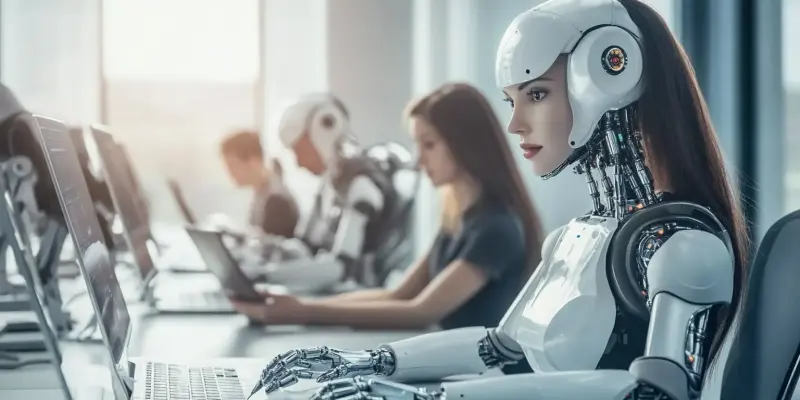
Artificial intelligence (AI) is no longer a futuristic concept; it is transforming workplaces across industries today. From making administrative tasks more efficient to enabling creative workflows and transforming team collaboration, AI is revolutionizing how businesses operate. The real challenge now lies in determining if employees are equipped to leverage this technology to its full potential. Preparing employees to work with AI is now a vital part of sustaining organizational competitiveness and driving innovation.
The Transformative Role of AI in the Workplace
AI is significantly altering workplace dynamics, as it streamlines administrative tasks and opens up avenues for more creative workflows. By automating routine processes, AI frees employees to focus on higher-value activities that require human intelligence and innovation. This leads to not only enhanced productivity but also greater job satisfaction as employees can engage in more meaningful work. Ultimately, companies that effectively integrate AI into their operations stand to witness substantial improvements in performance.
Moreover, AI is fostering improved team collaboration and optimizing industry-specific operations. AI tools can analyze large datasets to provide valuable insights that teams can use to make data-driven decisions. This fosters a more cohesive working environment where each team member can contribute effectively. For instance, in sectors like healthcare, finance, and manufacturing, AI applications are tailored to meet the unique needs of these industries, significantly improving efficiency and effectiveness in those fields.
Employee Willingness to Learn
The increasingly evident benefits of AI have sparked a growing eagerness among employees to engage in learning opportunities related to this transformative technology. Many workers recognize the potential of AI to not only augment their roles but also to future-proof their careers. This eagerness to upskill and reskill is a positive sign that employees are ready to take on the challenges of an evolving job market. However, this willingness must be matched by adequate support and resources from their employers.
Employees need access to comprehensive, high-quality training programs that help them develop the necessary skills to work effectively with AI. This includes both technical aspects, such as AI programming and understanding machine learning models, and soft skills like critical thinking and problem-solving, which are vital when working in AI-driven environments. Providing such programs will enable employees to confidently transition into roles that require AI proficiency, thereby increasing their value to the organization.
The Training Gap
Despite the enthusiasm of employees to learn about AI, there is a notable gap in the training provided by employers. Many organizations acknowledge the importance of upskilling their workforce to better utilize AI technologies, but they often lack the confidence and understanding required to implement effective training programs. This gap poses a significant challenge as untrained employees may struggle to adapt to AI technologies, impeding organizational progress.
Without proper training, the risk of ineffective AI implementation increases, leading to suboptimal outcomes and possibly even resistance among employees towards adopting new technologies. Therefore, businesses must recognize the pressing need to bridge this training gap. Investing in AI training not only prepares the workforce for future technological advancements but also mitigates the risk of falling behind competitors who are faster to adapt to AI innovations.
Practical Use of AI in HR
Human Resources (HR) departments have been among the early adopters of AI, leveraging its capabilities for various critical functions. In recruitment, for instance, AI algorithms can analyze resumes and applications far more quickly and accurately than human recruiters can, identifying the best candidates for a given role. This streamlines the hiring process and ensures that top talent is brought into the organization. Additionally, AI can be used in performance analysis to track employee progress and productivity, offering insights that can inform performance reviews and development plans.
Furthermore, AI tools are invaluable for identifying skill gaps within the workforce and tailoring training and development programs to address these. With AI-enabled systems, HR departments can offer personalized internal communications, ensuring that employees receive relevant information and support tailored to their specific needs. These applications not only improve workforce management but also demonstrate the immediate and tangible benefits of integrating AI into HR functions.
The Need for Ethical AI
As AI becomes increasingly integrated into the workplace, ensuring its ethical usage is paramount. Companies must establish clear guidelines and practices to prevent biases and ensure fairness in AI applications. For example, AI systems used in recruiting must be designed and tested to avoid discriminating against candidates based on factors such as gender, ethnicity, or age. Ethical considerations should be a core component of any AI training programs to ensure that employees understand the implications of AI and how to use it responsibly.
Training employees in the ethical use of AI fosters a culture of responsibility and trust within the organization. It is crucial that all team members understand the ethical boundaries of AI and are equipped to identify and address potential ethical issues as they arise. By embedding ethical training into AI education programs, companies can ensure that their employees are not only skilled in using AI but are also committed to maintaining ethical standards in their day-to-day operations.
Continuous Training for Technological Advancements
AI technology is rapidly evolving, and it is essential for organizations to embrace continuous training to keep pace with these advancements. Static training programs can quickly become outdated, rendering employees less equipped to handle new AI tools and methodologies. Consequently, it is crucial for companies to regularly update their training programs to reflect the latest developments in AI. This ensures that employees remain current with the latest technologies and retain a competitive edge in their field.
By investing in continuous training, businesses can ensure that their workforce is adaptable and proficient in using AI tools effectively. This ongoing education not only empowers employees but also drives innovation within the company. Ultimately, a well-trained workforce is crucial for leveraging AI to its full potential, leading to greater efficiency, productivity, and overall success for the organization.
Bridging the Training Gap
To effectively bridge the training gap, organizations must adopt intentional and robust AI training initiatives. This involves creating comprehensive training programs that address both the technical and ethical aspects of AI. By collaborating with educational institutions and AI experts, companies can develop customized training modules that meet the specific needs of their workforce. It is also essential to offer various training formats, such as online courses, workshops, and hands-on projects, to cater to different learning preferences and ensure maximum engagement.
Bridging the training gap goes beyond merely providing resources; it requires fostering a culture of continuous learning and improvement. Encouraging employees to adopt a growth mindset and actively seek out new knowledge and skills is vital for long-term success. Companies that prioritize AI training and development will be better positioned to harness the full potential of this technology and drive innovation across their organization.
The Benefits of Investing in AI Training
Investing in AI training offers numerous benefits for organizations. Well-trained employees can effectively leverage AI to drive innovation, improve efficiency, and enhance overall productivity. Moreover, by prioritizing AI training, companies can attract and retain top talent who are eager to work in forward-thinking environments that value continuous learning and development. A workforce that is proficient in AI is better equipped to tackle complex challenges and adapt to the ever-changing technological landscape.
In addition to these direct benefits, investing in AI training also demonstrates a company’s commitment to employee growth and development. This can significantly boost employee morale and job satisfaction, leading to increased loyalty and reduced turnover. Furthermore, organizations that take a proactive approach to AI training are likely to experience improved decision-making processes, as employees become more adept at using AI tools to gather insights and make informed choices.
Preparing for the Future
Artificial intelligence (AI) is no longer a distant or futuristic concept; it is actively transforming workplaces across various industries today. AI is streamlining administrative tasks, enhancing creative processes, and revolutionizing team collaboration, thereby reshaping how businesses function. The real challenge now is to ensure that employees are ready to harness this technology to its fullest potential. Equipping employees to work with AI is becoming essential for maintaining organizational competitiveness and fostering innovation. Companies must invest in training and development programs to bridge the skills gap, ensuring their workforce can work effectively alongside AI tools. This preparation is crucial for leveraging AI’s capabilities to improve efficiency, drive creativity, and enhance decision-making processes in business environments. Ultimately, investing in employee training related to AI will not only sustain but also boost an organization’s competitiveness in the rapidly evolving technology landscape.