

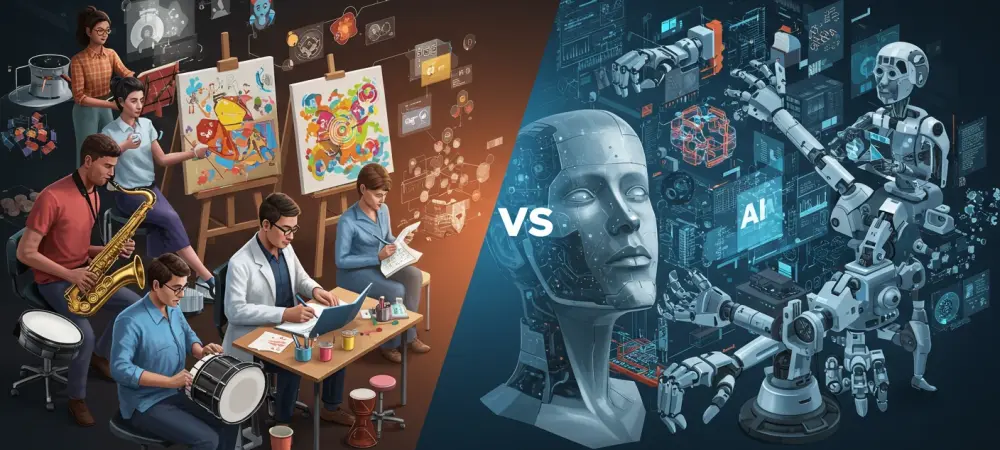
Amid the cacophony of the 21st-century professional environment, a new dynamic is taking form—one where artificial intelligence (AI) isn’t just auxiliary but a formidable director altering career trajectories for many. Recent studies indicate that traditional entry-level roles are being transformed, shaking up the archetypical path to leadership. The future might see careers formed entirely in AI-infused landscapes, inviting questions about the readiness of today’s workforce for such change.
A Rapid Shift Fueled by AI
AI’s growing influence in the workplace is a phenomenon that industries can’t afford to underestimate. The technology digs deeper into sectors led by cognitive roles—technology, finance, and beyond. Economic pressures and societal changes heighten the urgency, as companies flock to AI-driven systems promising unparalleled efficiency gains, frequently at the expense of headcount reductions. This ongoing transformation places a spotlight on industries grappling with a duality: increased productivity versus workforce contraction.
Dynamics Reshaping Employment
Automation driven by AI raises poignant questions for entry-level positions, traditionally critical in grooming future leaders. These foundational roles are often the first to experience cuts or reconfigurations, potentially undercutting the experiential learning vital for developing essential human-centric leadership skills. However, while automating routine tasks, AI also holds the promise of enhancing productivity in sectors such as customer service and data analysis, as evidenced by its application in leading companies that have reported significant efficiency improvements.
Industry Leaders Weigh In
Dario Amodei, a prominent figure and CEO of Anthropic, warns of profound impacts on white-collar jobs as AI continues to evolve. He notes that entry-level and seasoned professionals alike are experiencing shifts in their roles, with AI threatening tasks previously regarded as safe from automation. Noam Scheiber, a respected journalist, observes that even veterans in their fields should remain cautious, as the potential for AI to streamline processes might render certain human oversight roles obsolete. Firsthand accounts from employees navigating AI-heavy projects reinforce these perspectives, revealing both opportunities and apprehension in adapting to AI’s comprehensive capabilities.
Strategies for Adapting Leadership
Organizations face a critical challenge: equipping leaders with skills that AI cannot replicate. Attention is increasingly shifting toward refining human qualities such as empathy, cultural awareness, and nuanced judgment. Companies are urged to adapt their leadership training programs, embedding these soft skills into AI-dominated work environments. Redesigning development programs to incorporate experiential learning, rather than relying solely on traditional training, emerges as a practical approach to cultivating the leaders of tomorrow within this evolving landscape.
Looking Forward: Ensuring Future Growth
Developments in AI remind institutions that safeguarding growth requires adapting to innovation without undervaluing humanity. Fostering a workforce skilled in empathy and cultural navigation has become an integral element of contemporary leadership cultivation. While some may fear displacement, the essence of AI should inspire organizations to reassess their strategies to incorporate robust human skill sets. Balancing technological integration with the preservation of fundamental leadership abilities became crucial for resilient, future-proof organizational growth. In retrospect, the push for thought leaders who possess unrivaled human instincts coexisted with the technological prowess of AI. The responsibility fell on businesses to nurture these intangible qualities, seamlessly integrating AI without losing the essence of human wisdom. Ultimately, the sustainability and success of future organizations hinged on this balance, further elevating the critical role of prudently managing AI’s scope in the workplace.