

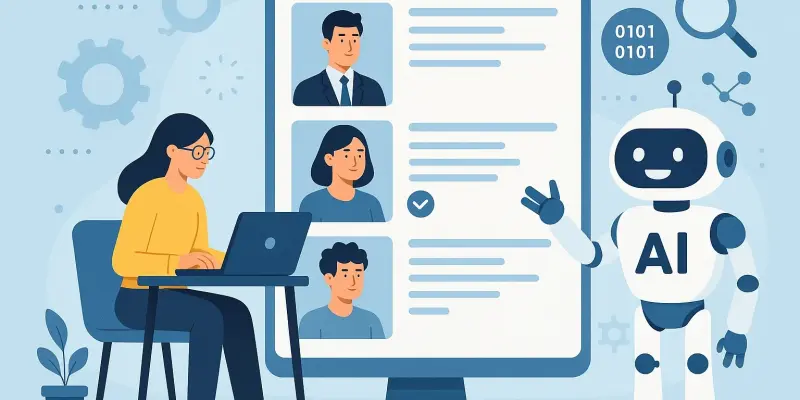
In the ever-evolving landscape of employment practices, the emergence and widespread adoption of artificial intelligence in recruitment processes stand as some of the most transformative developments. As organizations grapple with intensifying competition to attract top talent, AI-driven interviews have gained traction, fundamentally reshaping traditional hiring methodologies. This shift is particularly noticeable in the United States and the United Kingdom, where generative AI tools have seamlessly integrated into human resources and recruitment strategies. With AI’s assimilation no longer experimental, companies increasingly view these tools as essential components in conducting initial candidate assessments and optimizing the hiring process. This shift indicates a broader acceptance of AI’s potential to not only enhance efficiency but also expand evaluative capabilities.
The Unfolding Adoption of Generative AI
AI Technologies Transforming Candidate Assessments
Generative AI’s role in redefining candidate assessments reflects significant changes in organizational strategies. Many companies now leverage AI to manage initial interview stages, using it as a screening tool to create job descriptions, sift through resumes, and identify potential talent. Data from TestGorilla indicates that a noteworthy percentage of U.S. and U.K. employers have implemented AI for preliminary candidate interviews, emphasizing how these technologies have transitioned from peripheral to mainstream assets. This evolution highlights the growing confidence in AI’s capacity to enrich recruitment practices while preserving manpower for more strategic decision-making during the interview process.
Changing Landscape of Hiring Priorities
Within the current hiring landscape, a distinct shift in priorities underscores a movement away from traditional educational benchmarks toward valuing candidate skills and compatibility. While generative AI technology is being deployed by a significant proportion of employers, there is a declining demand for explicit AI-centric skills across the board. This trend suggests an increasing appreciation for innate human characteristics such as critical thinking and communication. Recent surveys reveal that a majority of employers now opt for skills assessments over formal academic qualifications, often dispensing with the prerequisite of a college degree for many roles. This paradigm shift corresponds with a rising focus on the importance of soft skills, evidencing adjustments in recruitment scope aligning with broader workforce demands.
Impact of Skills-Based Hiring Models
Enhanced Outcomes Through AI Integration
The integration of AI into skills-based hiring models has led to notable improvements in hiring outcomes across multiple areas. Companies that prioritize skills-based recruitment are more inclined to incorporate AI capabilities, provide AI-focused training, and embed these technologies within their operational frameworks. The reported efficiencies by organizations utilizing AI tools reflect a remarkable increase, with the U.S. and U.K. demonstrating significant adoption rates. Even though a portion of employers elected against AI utilization due to some presumed drawbacks, including costs and data security concerns, the trend indicates a movement towards greater AI involvement. This emphasis on skills over traditional metrics is reflective of broader industry adaptations to meet evolving market expectations.
Understanding Candidates Beyond Technical Skills
The rise of AI in recruitment processes allows employers to gain a more comprehensive understanding of candidates, transcending mere technical evaluations. Organizations apply AI to scrutinize characteristics, behaviors, and cultural alignment, aiming to minimize the frequency of poor hiring decisions that stem from inadequate assessment of soft skills. By accelerating the handling of applications and matching candidates to roles based on skill set compatibility, AI enhances both the precision and efficiency of hiring strategies. By offering a more in-depth analysis of candidate qualities, AI helps employers make informed, balanced hiring decisions, aligning workforce composition with organizational values and goals.
Roles of Technology Providers in Recruitment
Diverse AI-Enabled Solutions in Hiring
The breadth and depth of AI’s application in recruitment are mirrored by the array of solutions offered by technology providers. Various companies offer services that span the recruitment spectrum from applicant tracking to recruitment marketing and data analytics. Cognitive technologies like IBM’s generative AI play a significant role in streamlining HR tasks and inquiries, showcasing their potential to augment traditional processes. Notable corporations have adopted AI-powered tools to enhance their hiring workflows significantly. By incorporating AI, these companies illustrate a concerted industry trend towards leveraging technology to refine hiring processes, underscoring the value placed on evaluating candidate values and behavioral attributes.
Job Seekers Leveraging AI for Competitive Edge
Job seekers are increasingly turning to AI tools to improve their resumes and refine their responses to interview questions. However, these AI enhancements sometimes fall short, as the majority of HR professionals are adept at identifying AI-generated content. This underscores the notion that while AI can augment application processes, its outputs occasionally lack the nuanced touch of human intuition. Nonetheless, reliance on such tools is prominent in tech careers, often seen in structured formats and industry-speak that disclose AI involvement. These developments suggest a need for strategic usage of AI enhancements that complement rather than overshadow individual candidate strengths.
Advancing Toward Future Recruitment Innovations
Efficiency Gains Amidst Technological Advancements
As AI technologies continue to evolve, the ensuing recruitment practices reflect marked efficiency gains. Organizations are now reconsidering the utility of AI tools to streamline and optimize hiring workflows effectively. The adoption of AI in recruitment has prompted HR departments to shift towards more integrated and comprehensive evaluation models, blending algorithmic insights with personal judgment to obtain a holistic view of potential hires. This strategic shift towards a more consumer-focused experience for candidates promises a richer, fairer recruitment journey. While technological efficiencies are evident, the emphasis remains on fostering authentic engagements between employers and aspiring employees.
Broader Implications on Employment Processes
Generative AI is increasingly central to transforming candidate assessments, marking notable shifts in how organizations approach hiring strategies. Many companies have begun integrating AI to handle the initial stages of interviews, employing it to streamline tasks like crafting job descriptions, reviewing resumes, and spotting potential candidates. According to TestGorilla, a significant share of employers in the U.S. and the U.K. utilize AI for early-round interviews. This underscores how technologies have moved from secondary tools to vital components in the hiring process. The trend highlights trust in AI’s ability to enhance recruitment efficiency, enabling HR teams to focus their efforts on strategic decision-making rather than administrative tasks during interviews. By relying on AI for routine assessments, organizations not only expedite the initial screening but also ensure a more robust and thorough analysis of prospective candidates, ultimately refining their talent acquisition processes.