

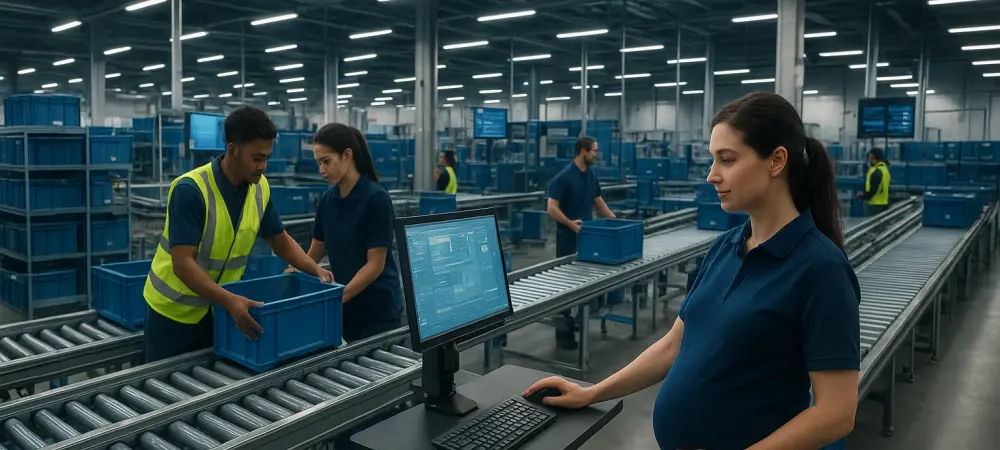
The Equal Employment Opportunity Commission is currently preparing revisions to the Pregnant Workers Fairness Act as this high-profile litigation moves through the court system. This legal action, initiated on September 8 by the advocacy group A Better Balance, represents a significant escalation in the ongoing tension between high-speed automated management systems and the fundamental biological requirements of the human workforce. The litigation alleges that the e-commerce giant has consistently failed to provide essential workplace accommodations, transforming routine pregnancies into periods of extreme professional and physical risk for thousands of employees. Rather than accommodating simple requests such as additional bathroom breaks, the ability to carry a water bottle, or temporary lifting restrictions, the company is accused of utilizing its rigorous productivity metrics to penalize those who cannot maintain a standard pace while pregnant. These claims suggest that the pursuit of logistical perfection has created a systemic environment where expecting mothers are viewed as liabilities rather than valued contributors to the global supply chain.
Individual Accounts of Workplace Hardship
Severe Health Risks and Retaliation
The case of Willamina Barclay, a former associate at a fulfillment center in Rochester, New York, provides a stark illustration of how rigid corporate policies can lead to dangerous medical outcomes. Despite informing her supervisors of a high-risk pregnancy and providing documentation that necessitated a 15-pound lifting limit, Barclay was reportedly forced to continue performing strenuous manual labor that exceeded these medical boundaries. The lack of accommodation eventually culminated in a medical emergency that occurred directly on the warehouse floor, necessitating immediate hospitalization. Instead of receiving support or a modified work plan upon her return, the automated attendance tracking systems allegedly flagged her for absences related to her medical crisis. The company then issued a termination warning through its digital portal, eventually finalizing her firing shortly after she submitted a formal doctor’s note explaining the necessity of her absence. This sequence of events highlights a troubling disconnect between human resources protocols and the reality of high-risk medical conditions in a physically demanding environment.
Furthermore, the Barclay case underscores the perceived coldness of algorithmic management, where software often makes the final determination on an employee’s status regardless of personal circumstances. For workers in high-pressure environments, the fear of “points” or “time off task” violations often leads them to push their bodies beyond safe limits, a situation that is particularly perilous during pregnancy. Advocates argue that the company’s reliance on automated discipline creates a barrier for employees who need to negotiate temporary changes to their work routines. When the system is programmed to prioritize throughput above all else, the nuances of a high-risk pregnancy are often lost in the data. This legal challenge aims to prove that such an approach is not merely a technical oversight but a discriminatory practice that disproportionately affects women who must choose between their livelihood and their physical safety. The outcome of this specific grievance could set a precedent for how much weight automated warnings can hold when they conflict with federally protected medical needs.
The Obstacles of Bureaucracy and Physical Demands
Jennifer Hatch’s experience at the Lancaster facility reveals a different but equally debilitating facet of the alleged discrimination: the use of administrative hurdles to delay or deny simple requests. Despite being visibly pregnant and experiencing significant physical strain, Hatch was required to navigate a complex and exhausting medical documentation process just to obtain permission to sit on a stool during her shifts. This bureaucratic friction occurred even as her secondary, part-time job at a local gas station provided her with a chair immediately upon learning of her pregnancy without requiring extensive paperwork. The contrast between a small business’s common-sense approach and the global retailer’s rigid requirements highlights a culture where the burden of proof is placed entirely on the vulnerable worker. While Hatch waited for her requests to be processed through the proper corporate channels, she continued to suffer from lightheadedness and abdominal pain caused by prolonged standing on concrete floors.
The situation for Hatch worsened when she was eventually terminated for utilizing her accumulated unpaid time off to manage the physical exhaustion and pain caused by the lack of a chair. This specific incident points to a broader trend within the company’s warehouses where “time off” is treated as a finite resource to be managed by the worker, regardless of whether that time is needed for basic recovery from workplace-induced stress. By failing to recognize a chair as a reasonable and immediate accommodation, the company effectively forced Hatch into a position where her only options were to endure physical harm or lose her job. The lawsuit contends that this “standing-only” culture is fundamentally incompatible with the physical realities of pregnancy and serves as a de facto barrier to employment for expecting mothers. This narrative challenges the notion that corporate efficiency must come at the expense of basic human dignity and physical health, suggesting that even the most advanced logistics systems must account for the physical limitations of the people who power them.
Challenges for Postpartum and Nursing Mothers
The litigation extends its reach beyond the period of pregnancy itself, addressing the systemic difficulties faced by employees returning to work, as exemplified by the experiences of Kristina Green. After struggling to secure accommodations during her pregnancy, Green returned to the warehouse only to find that the environment was equally hostile to her needs as a nursing mother. Federal law mandates that employers provide reasonable break time and a private space for employees to express breast milk, yet Green was reportedly disciplined for the time she spent away from her station to do so. The primary issue cited in the complaint was the physical layout of the facility; the designated lactation room was situated nearly a ten-minute walk from her workstation. Under the company’s “time off task” metrics, the time spent walking to and from the room, combined with the time required for the biological process itself, triggered automated disciplinary flags that eventually led to her termination in early 2026.
This focus on the postpartum experience highlights a critical gap in corporate policy where the letter of the law may be followed while the spirit is systematically undermined by operational constraints. While a lactation room may technically exist, if its location and the company’s productivity expectations make its use impossible without risking one’s job, the accommodation is essentially a hollow gesture. The Green case illustrates how the pressure of the “clock” can be used as a tool of discrimination, effectively forcing new mothers out of the workforce because they cannot meet the impossible demand of being in two places at once. The legal team representing the plaintiffs argues that this environment creates an unsustainable situation for women who wish to balance their careers with their responsibilities as new parents. By bringing these issues to light, the lawsuit seeks to compel a redesign of warehouse logistics that acknowledges the time and physical space required for postpartum health and infant care, ensuring that federal protections are not rendered obsolete by the speed of a conveyor belt.
Corporate Defense and Socioeconomic Disparities
Amazon’s Stance on Employee Benefits
In response to the mounting legal pressure, the company has maintained a defensive posture, emphasizing its role as a leader in employee benefits and workplace support. Spokespeople frequently cite a 99.9% approval rate for the tens of thousands of pregnancy accommodation requests processed annually across its global network. From the corporate perspective, the narrative of the lawsuit is an inaccurate representation that focuses on a few isolated incidents while ignoring the vast majority of positive outcomes. The company points to its comprehensive benefits package, which includes up to 20 weeks of paid parental leave and specialized “ramp-back” programs designed to help returning parents reintegrate into their roles at a manageable pace. These programs are framed as industry-leading initiatives that demonstrate a deep commitment to the well-being of the workforce, suggesting that any failures in the system are the result of individual personnel decisions or clerical errors rather than systemic bias.
However, the high approval rate cited by the company is a point of contention for legal advocates who argue that the data may be misleading. They suggest that many workers are discouraged from even filing formal requests due to the complexity of the process or the fear of retaliation. Furthermore, an approved request does not always translate to a functional accommodation on the warehouse floor, where local managers might prioritize immediate production quotas over corporate-mandated flexibility. The defense argues that as one of the largest employers in the world, the sheer scale of its operations makes occasional administrative friction inevitable. This argument attempts to shift the focus from systemic discrimination to the challenges of managing millions of employees across diverse geographic locations. Despite these claims of support, the lawsuit insists that the company’s culture of extreme efficiency creates a baseline of expectations that are inherently biased against any worker whose physical needs deviate from the “ideal” able-bodied norm.
Impact on Low-Wage and Minority Workers
The socioeconomics of this legal battle reveal a stark divide in how pregnancy is experienced within the modern American workforce. While high-earning professionals in corporate offices may struggle with the “glass ceiling,” those in manual labor roles face what advocates call a “concrete floor” of immediate physical and financial peril. Data from various labor organizations suggest that women of color and those in the lowest income brackets are significantly less likely to have their requests for simple workplace adjustments granted. For these workers, a healthy pregnancy often becomes a privilege of the wealthy rather than a guaranteed right for everyone. The inability to secure a stool or an extra water break can lead to a downward spiral of health complications, job loss, and long-term economic instability, further entrenching the disparities that exist within the labor market.
Advocates argue that the company’s labor practices exacerbate these existing inequalities by treating warehouse workers as interchangeable parts in a massive machine. When an employee is terminated for pregnancy-related absences, the impact is not just a loss of income but a loss of health insurance and stability at a time when they are most needed. The lawsuit seeks to highlight that the human cost of these policies is disproportionately borne by those who have the least power to fight back. By framing the issue as one of socioeconomic justice, the plaintiffs are calling for a broader conversation about the responsibilities that mega-corporations have toward their most vulnerable employees. The challenge is to prove that the company’s focus on low-cost, high-speed logistics is built upon the systemic exclusion of workers who require even minimal physical accommodations. This perspective shifts the debate from a simple contract dispute to a fundamental question of human rights and corporate ethics in the twenty-first century.
Health Implications and the Future of Labor Law
Medical Necessity of Workplace Adjustments
From a clinical perspective, the accommodations sought by the plaintiffs are far from being “perks” or conveniences; they are essential health interventions required to ensure a safe pregnancy. Medical experts testify that basic adjustments like increased hydration, frequent restroom access, and the ability to avoid heavy lifting are critical for preventing life-threatening conditions. Forcing a pregnant woman to maintain a high-intensity work pace in a warehouse environment significantly increases the risk of preeclampsia, gestational hypertension, and preterm birth. These conditions not only threaten the life of the mother but can lead to long-term developmental challenges for the child. The lawsuit contends that the company’s corporate culture, which prioritizes automated efficiency and constant movement, is fundamentally at odds with these medical realities, even when employees provide detailed documentation from their healthcare providers.
The psychological toll of working in a hostile environment while pregnant is also a major component of the health risks involved. The constant stress of being monitored by “time off task” sensors and the fear of losing one’s livelihood can lead to increased cortisol levels, which are linked to negative birth outcomes. When a worker is denied a simple request, such as a chair to rest for five minutes every hour, the message sent by the employer is that their physical well-being is secondary to the movement of packages. This environment creates a state of chronic anxiety that is detrimental to both maternal and fetal health. By ignoring the advice of medical professionals, the company is accused of practicing medicine without a license, effectively overriding the specialized care of doctors with the rigid logic of logistical software. The legal goal is to establish that medical necessity must always supersede corporate productivity standards, regardless of the industry or the complexity of the supply chain.
Federal Regulation and Legal Precedents
The resolution of this class-action suit is expected to provide a definitive test for the enforcement of the Pregnant Workers Fairness Act (PWFA). As federal regulators work to refine the guidelines for what constitutes a “reasonable accommodation” in high-tech environments, this case offers a clear example of the friction between old labor laws and new management technologies. The plaintiffs are seeking a total overhaul of how the world’s largest retailer tracks and manages accommodations, moving away from a system of automated discipline toward one that prioritizes human interaction and flexibility. This could involve a mandatory cooling-off period before any pregnancy-related disciplinary action is taken, as well as the implementation of onsite advocates who are independent of the productivity-focused management chain. The outcome could force a shift in how all major retailers and logistics firms handle the needs of their pregnant workforce.
Beyond immediate changes at one company, this litigation serves as a warning to the broader tech and logistics industry that the era of “management by algorithm” must be tempered by legal accountability. If the court finds that the company’s practices were indeed discriminatory, it will likely trigger a wave of similar lawsuits across different sectors where high-speed monitoring is common. The legal precedent could establish that the use of automated systems does not absolve a company of its duty to provide individualized, person-centered accommodations. This move toward a more regulated and human-centric approach to labor management is seen by many as a necessary correction to the rapid automation of the workplace. The litigation thus stands at the intersection of labor rights, technology, and health, representing a pivotal moment in the history of American employment law where the rights of the individual are weighed against the efficiency of the machine.
The Economic Vulnerability of the Working Class
The lawsuit concluded that the “paradox of choice” remained a central theme for many workers who, despite facing medical trauma and unfair termination, expressed a desire to return to their positions. This contradiction stemmed from the fact that the company provided competitive wages and a sense of professional identity that was difficult to replicate in other low-wage sectors. The legal team observed that the plaintiffs were not merely seeking financial damages but were fighting for the right to work in a safe environment that respected their physical reality. It was found that the economic necessity of staying employed often forced workers to endure conditions that they knew were harmful, highlighting a deep-seated vulnerability in the working class. The proceedings showed that without robust legal protections, the promise of high wages functioned more as a trap than an opportunity for those with medical needs.
The final phase of the litigation demonstrated that the demand for corporate reform was echoed by a broad coalition of labor and health advocates. The court examined how the existing corporate structure failed to bridge the gap between high-level benefit promises and the day-to-day reality of the warehouse floor. It was ultimately recognized that a fundamental shift in corporate philosophy was required to ensure that economic survival did not come at the cost of one’s health or the safety of an unborn child. The legal experts involved suggested that the most effective path forward involved a combination of stricter federal oversight and the empowerment of local health advocates within large-scale facilities. These insights provided a blueprint for future labor policies that aimed to humanize the most automated corners of the global economy. By the time the initial hearings ended, the conversation had shifted from individual grievances to a comprehensive demand for a more ethical and sustainable model of employment.