

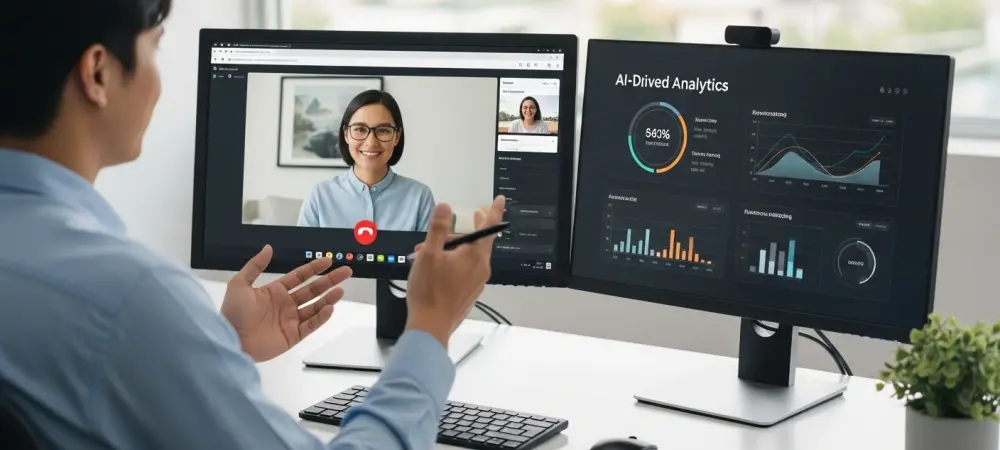
The relentless race to secure top-tier talent has become a defining challenge for modern businesses, forcing them to navigate the complexities of resource constraints and protracted hiring cycles. In this high-stakes environment, artificial intelligence has emerged not merely as a tool but as a transformative force, fundamentally reshaping the talent acquisition landscape. This analysis examines the rise of AI-driven recruitment, exploring its practical applications, data-backed impact, and future trajectory through the lens of a new market entrant poised to redefine the industry.
The Empirical Evidence for AI Adoption
The Data-Driven Shift in Hiring Metrics
The pressure on hiring teams is quantified by stark industry metrics, with the average time-to-hire frequently extending to a sluggish 45 days. This lengthy process often results in lost candidates and missed opportunities. In stark contrast, AI-powered tools are demonstrating the capacity to slash this cycle to as little as seven days. This acceleration is achieved by leveraging technology to perform tasks at a scale previously unimaginable, evaluating candidate pools up to 300 times larger than what manual sourcing can accommodate.
This efficiency represents a significant technological leap beyond legacy applicant tracking systems. Where older platforms relied on simple keyword-matching that often overlooked qualified candidates, modern AI delves deeper. It intelligently analyzes complex role requirements and subtle candidate signals—from project experience to skill adjacencies—to deliver a far more sophisticated and accurate match, ensuring that hiring managers connect with the most relevant talent from the outset.
AI in Practice The OpenJobs AI ‘Mira’ Platform
The OpenJobs AI hiring agent, Mira, serves as a compelling real-world example of this trend in action. The platform is engineered to automate the most time-consuming and repetitive aspects of the recruitment funnel, including candidate sourcing, crafting personalized outreach, and conducting initial qualifications. By handling these foundational tasks, Mira systematically removes bottlenecks that traditionally slow down the hiring process.
This automation fundamentally shifts the role of the human recruiter. Freed from the administrative burden of sourcing and initial screening, hiring managers and talent acquisition specialists can redirect their focus toward high-value, strategic activities. Their time is reallocated to what matters most: conducting in-depth interviews, assessing cultural fit, and making the final, critical evaluation. OpenJobs AI is currently offering this technology through a beta program for growth-stage and mid-market companies in the U.S., allowing them to integrate this efficiency into their operations.
Industry Insights The C-Suite Perspective
The push toward AI adoption is not just a technological curiosity; it is a direct response to significant business pressures. According to Kin Fu, Founder and CEO of OpenJobs AI, the technology was expressly built to “remove the friction and guesswork from sourcing.” His perspective highlights a critical reality for modern businesses, where hiring teams are consistently being asked to “do more with less.”
This insight reinforces the idea that AI in recruitment is far more than a simple efficiency tool. It is a strategic asset for achieving greater operational agility and maintaining a competitive advantage. In a market where speed and precision are paramount, leveraging AI allows companies to build stronger teams faster, directly impacting their ability to innovate and scale.
Projecting the Future of AI-Powered Recruitment
The integration of AI is set to permanently evolve the recruiter’s role from a primarily administrative function to that of a strategic talent advisor. This shift promises significant benefits across the hiring ecosystem, including a vastly improved candidate experience through hyper-personalized communication and a reduction in the unconscious bias that can permeate manual sourcing. The result is a faster, more equitable, and more engaging hiring pipeline.
However, this transition is not without its challenges. The industry must navigate the need for upskilling HR professionals to work alongside AI, establish robust protocols for data privacy, and thoughtfully maintain the essential human element in final hiring decisions. Successfully addressing these factors will be crucial for unlocking the full potential of a more agile and responsive talent market, where organizations can dynamically scale their recruitment efforts to meet ever-changing business demands.
Conclusion Navigating the New Frontier of Hiring
The evidence indicates that AI is no longer a peripheral technology but a core component of modern talent acquisition, demonstrably improving hiring efficiency, expanding talent pools, and automating foundational recruitment tasks. This trend represents a fundamental and permanent shift in how organizations approach building their teams, moving beyond traditional methods toward a more data-driven, strategic framework. For industry leaders, the path forward involves proactively exploring AI solutions, engaging with emerging technologies, and preparing their teams for a collaborative future where human expertise and artificial intelligence unite to build the world-class workforces of tomorrow.