

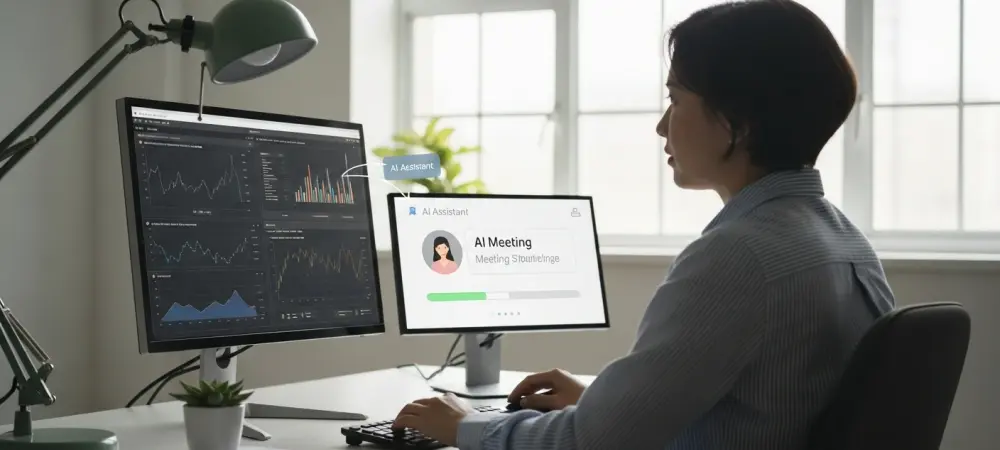
The empty chair in the conference room is no longer a sign of absence but a symbol of hyper-efficiency, occupied by an invisible artificial intelligence diligently taking notes for its human counterpart. This scenario has rapidly moved from speculative fiction to a daily reality in workplaces across the globe. As professionals increasingly delegate their attendance to AI assistants, a critical question emerges: in the quest to reclaim our calendars, what essential human elements of work are we sacrificing? The dilemma is no longer about technological capability, but about professional judgment. Navigating this new frontier requires a deliberate strategy to harness the power of automation without inadvertently diminishing the very human connections and skills that drive successful collaboration and leadership.
Your AI Just Saved You Five Hours This Week—What Did It Cost You?
The appeal of deploying an AI meeting assistant is undeniably potent, rooted in the promise of reclaiming one of life’s most finite resources: time. Current data reveals that professionals using these tools save an average of 52 minutes each day, translating to nearly five hours of recovered productivity per week. This isn’t just about escaping tedious status updates; it represents a strategic reallocation of focus. Instead of being consumed by the administrative burden of note-taking and summarizing, employees can now dedicate that cognitive energy to critical thinking, creative problem-solving, and the high-impact work that truly drives innovation and organizational growth.
However, this newfound efficiency comes with a hidden ledger of costs that are not immediately apparent. The convenience of an automated summary can obscure the subtle, yet critical, layers of human interaction that define a successful meeting. Delegating one’s presence, while practical, sends a powerful message about priorities and engagement. The risk is that in automating attendance, professionals may also be automating indifference, slowly eroding the trust, rapport, and collaborative spirit that are forged through shared presence and active participation, raising the question of whether the time saved is worth the potential relationship deficit incurred.
The New Colleague in the Conference Room: Why AI Assistants Are a Workplace Reality
The integration of AI assistants into the meeting lifecycle is not a fleeting trend but a fundamental shift in how modern work is conducted. These sophisticated tools have evolved far beyond simple transcription services. They now offer intelligent summaries, identify key action items, track decision-making processes, and create searchable archives of corporate knowledge. This technological maturation has made them indispensable for remote and hybrid teams struggling to maintain alignment across different time zones and work schedules, ensuring that no critical information is lost and that every team member can remain informed and accountable.
This widespread adoption is fueled by a clear organizational imperative to optimize resources and boost operational agility. When AI handles the meticulous task of documentation, human participants are liberated to engage in more dynamic and productive dialogue. This shift facilitates faster decision-making, as teams can focus on the substance of the discussion rather than the mechanics of recording it. Furthermore, it enhances project continuity; a colleague who misses a meeting can review a comprehensive summary and seamlessly reintegrate into the workflow, preventing the bottlenecks and information silos that have long plagued collaborative efforts.
The Productivity Paradox: Decoding the Gains and Losses of AI Meeting Attendance
The argument for leveraging AI in meetings is powerfully reinforced by its correlation with career advancement. Data from recent industry surveys shows a compelling link between frequent AI usage and professional success. Employees who regularly utilize these tools are nearly twice as likely to receive a promotion compared to their non-user colleagues. This momentum is matched by significant financial rewards, with frequent users earning approximately 27% more. This trend suggests that organizations are actively recognizing and rewarding individuals who masterfully delegate administrative tasks to technology, freeing themselves to concentrate on strategic initiatives that deliver measurable value.
Conversely, this reliance on automation carries significant and often underestimated risks. The technology, while impressive, is far from infallible. Nearly half of all workers (48%) report that AI-generated notes can contain inaccuracies or, more critically, miss the essential nuance of a conversation. Meaning is conveyed not only through words but through tone, hesitation, and body language—data points that current AI cannot process. Beyond accuracy, pervasive concerns about privacy (46%) and data security (42%) loom large, especially in the absence of clear corporate governance. This ambiguity creates a landscape where an employee’s well-intentioned effort to be more efficient could inadvertently expose sensitive information, creating substantial organizational risk. Moreover, the outsourcing of presence can lead to a gradual atrophy of core professional skills like active listening and the art of “reading a room,” while simultaneously signaling a disinterest that can damage vital relationships with both clients and colleagues.
Voices from the Field: Data-Driven Insights and Generational Divides
Quantitative analysis from research bodies like SAP SuccessFactors and Software Finder confirms the tangible impact of AI adoption on both individual efficiency and career trajectories. The data consistently illustrates a landscape where leveraging AI is becoming synonymous with high performance. These insights move the conversation beyond anecdotal evidence, providing a statistical foundation for the productivity gains and financial benefits that early adopters are experiencing. This evidence paints a clear picture for organizations: failing to integrate these tools may mean falling behind in the competitive race for efficiency and talent retention.
Despite the clear benefits, these same studies reveal a deep-seated hesitation among the workforce, rooted primarily in issues of trust and future job security. The statistical basis for this caution is clear, with a significant portion of employees expressing concerns over how their data is handled and the ultimate reliability of AI-generated outputs. This apprehension is further stratified across generations. A striking 52% of Gen Z workers harbor fears of being replaced by peers with superior AI skills, a stark contrast to the 33% of Gen X employees who share the same concern. This generational anxiety gap highlights a growing apprehension that proficiency with AI may soon become a more valued skill than the foundational human expertise it is meant to support.
The Strategic Decision-Making Framework: When to Send Your Bot and When to Go Yourself
The intelligent application of AI meeting assistants requires a discerning framework, one that distinguishes between tasks fit for automation and moments demanding human presence. AI is ideally suited for scenarios centered on information dissemination, such as large-scale town halls or company-wide updates where the primary objective is passive listening. Similarly, routine operational check-ins with predictable agendas are prime candidates for delegation. In these contexts, an AI can capture the necessary details, allowing professionals to review a summary and reserve their direct participation for more strategically critical engagements. The technology also serves as an invaluable tool for resolving unavoidable scheduling conflicts, ensuring complete information capture when being in two places at once is a necessity. However, the line must be drawn where human connection, emotional intelligence, and nuanced judgment are paramount. High-stakes negotiations, pivotal client pitches, and sensitive internal strategy sessions are non-negotiable arenas for personal attendance. In these moments, the ability to build rapport, interpret subtle cues, and respond with empathy is what dictates success. Likewise, creative brainstorming sessions thrive on the spontaneous, energetic interplay of human minds—a dynamic that cannot be replicated or captured by a machine. Ultimately, any meeting focused on building or mending relationships, from performance reviews to conflict resolution, demands the authentic presence that fosters trust and psychological safety.
The rise of the AI meeting assistant marked a pivotal moment in the evolution of professional work, offering a powerful solution to the relentless demands on our time. It presented a compelling trade-off: exchange physical presence for a summary of proceedings, gaining back hours for deeper, more focused work. Professionals who embraced this technology strategically found themselves not only more productive but also on a faster track for promotion and higher earnings. However, this progress was not without its costs, as the convenience of automation brought to light the irreplaceable value of human nuance, the complexities of data security, and the subtle art of building relationships through shared experience. The key lesson learned was that the decision to attend a meeting—either personally or via a digital proxy—became a strategic act in itself. True mastery lay not in choosing one over the other, but in developing the wisdom to know when a machine’s efficiency was sufficient and when a human touch was essential.