

In the intricate dance of modern commerce, where artificial intelligence orchestrates global supply chains with unparalleled precision, a critical human element is quietly being engineered out of the system, creating a paradox that threatens the very foundation of future expertise. While AI-driven automation delivers staggering gains in productivity, it is simultaneously dismantling the traditional training grounds where the next generation of leaders once honed their skills. This profound disconnect between rapid technological adoption and stagnant talent development strategies is setting the stage for a significant workforce crisis, one where companies may find themselves rich in data but poor in the human wisdom needed to navigate complex challenges. The solution, however, may lie within the problem itself: reimagining AI not just as a tool for efficiency, but as a mentor for a new era of apprenticeship.
The Automation Paradox of Modern Industry
The relentless pursuit of operational efficiency has introduced a fundamental conflict into the modern workplace. As organizations integrate sophisticated AI systems to automate routine decisions, predict disruptions, and optimize logistics, they achieve remarkable short-term performance boosts. This optimization, however, comes at a hidden long-term cost. The very entry-level, process-oriented tasks that once served as the crucible for developing junior talent are systematically being eliminated. This creates a scenario where the technology boosting today’s productivity could be directly responsible for tomorrow’s leadership and expertise shortage.
This paradox stems from a strategic blind spot where technology implementation outpaces human capital planning. The focus has been almost exclusively on what tasks can be automated, not on how the skills derived from those tasks will be replaced. As experienced professionals who built their careers on this foundational knowledge begin to retire, a vacuum is forming at the heart of many organizations. Without a clear pathway for new employees to gain equivalent hands-on experience, the pipeline of future leaders is being severely constricted, raising critical questions about long-term organizational resilience and adaptability.
The Vanishing Rung on the Career Ladder
Historically, career progression was built upon a de facto apprenticeship model. A junior employee in a field like supply chain management would begin by manually tracking shipments, reconciling invoices, or troubleshooting minor order delays with vendors. While these tasks may have seemed mundane, they were invaluable learning opportunities. This direct, hands-on engagement provided a granular understanding of the operational ecosystem, allowing new hires to build the crucial instincts, problem-solving skills, and institutional knowledge required to advance into more strategic roles.
In contrast, today’s entry-level professionals are often firewalled from these foundational processes by layers of automation. AI now handles the shipment tracking, flags the discrepancies, and even initiates corrective actions, leaving the human employee to oversee a dashboard rather than engage with the underlying mechanics. This shift effectively removes a critical rung from the career ladder. Without the opportunity to learn by doing at the most basic level, emerging talent struggles to develop the deep operational context necessary to make informed, high-stakes decisions later in their careers, eroding the very pathway to expertise.
Facing the Skills Cliff a Looming Workforce Crisis
This erosion of foundational learning is pushing industries toward a “skills cliff”—a steep and impending drop-off in essential workforce capabilities. This is not a distant threat but a developing crisis, marked by the departure of a generation of seasoned experts and the absence of a sufficiently trained cohort to replace them. The chasm between technology strategy and talent development is widening, with concrete data underscoring the severity of the disconnect. For instance, a recent analysis of job descriptions revealed that AI knowledge is listed as a required skill in only 2% of postings, a jarringly low figure given the technology’s fundamental role in reshaping modern work.
The potential consequences are stark, particularly in sectors reliant on deep operational expertise. The Manufacturing Institute has sounded the alarm, projecting that as many as 2.1 million U.S. manufacturing jobs could go unfilled by 2030. This deficit is not due to a lack of available positions, but a critical shortage of candidates possessing the necessary technical and problem-solving skills. This statistic highlights a systemic failure to align training and hiring practices with the new operational reality, threatening not just individual companies but the stability of entire industries.
From Tool to Teammate Reimagining AI as a Mentor
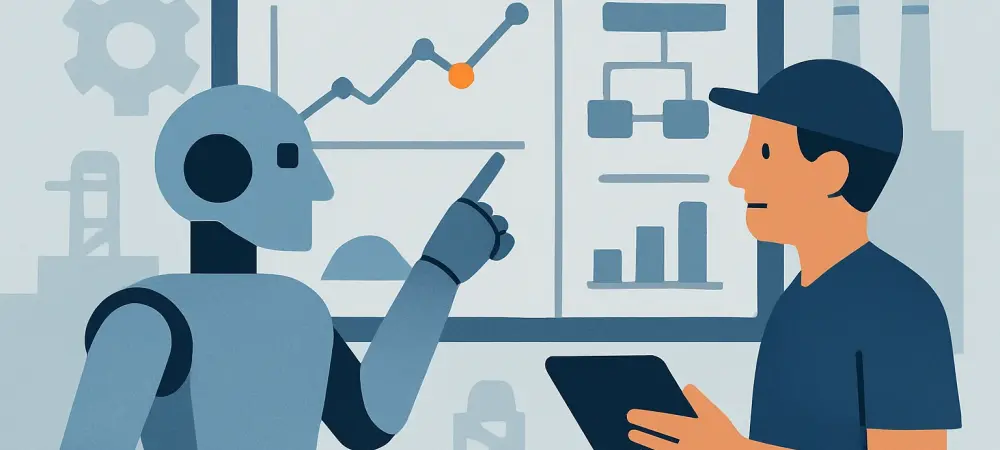
To avert the fall from the skills cliff, organizations must pivot their perspective on artificial intelligence. The prevailing view of AI as a tool for automating and replacing human tasks is insufficient and, ultimately, self-defeating. A more strategic approach involves leveraging AI as a sophisticated platform for training, mentorship, and the preservation of invaluable institutional knowledge. This paradigm shift reframes the technology from a simple instrument of efficiency to an active partner in talent development, heralding the advent of the “AI Apprenticeship.”
This new model envisions a symbiotic partnership where humans and AI collaborate to accelerate learning and cultivate next-generation expertise. Instead of merely executing tasks, AI can be programmed to guide, instruct, and challenge junior employees. It can create scalable, adaptive, and immersive training environments that replicate the hands-on learning experiences that automation has removed. By transforming AI from a black box into a transparent teammate, companies can build a robust and continuous learning culture that prepares their workforce for the complexities of the future.
AI Apprenticeships in Action A Framework for Future Experts
Implementing an AI-driven apprenticeship model is not a theoretical exercise but a practical framework with tangible applications. One key function is to use AI as a “flight simulator” for business operations. The system can generate realistic, high-stakes scenarios—such as critical shipment delays, transaction errors, or sudden partner disputes—for junior staff to resolve in a risk-free environment. Guided by the AI, an apprentice can walk through complex decision trees and resolution pathways, building analytical confidence without jeopardizing real-world financial or operational outcomes. Furthermore, AI can serve as a “transparent mentor” by deconstructing its own automated decisions. When an AI system optimizes a delivery route or flags a potential supply disruption, it can be programmed to “show its work,” detailing the data points and logic behind its conclusion. Managers can then lead review sessions where apprentices analyze the AI’s reasoning, fostering critical thinking and a deeper strategic understanding. Finally, AI can act as a “personalized coach” by monitoring an employee’s task exposure to identify knowledge gaps. Based on this analysis, the system can automatically recommend tailored learning modules, suggest specific simulations to address a weakness, or connect the employee with a senior human expert, ensuring development is targeted, continuous, and highly effective.
The analysis presented a stark choice for business leaders facing the dual pressures of technological advancement and a looming talent shortage. It became clear that continuing to treat technology adoption and workforce development as separate initiatives was an unsustainable path. The evidence pointed toward an urgent need to integrate these strategies, transforming the very tools driving automation into instruments for education and skill cultivation. The organizations that recognized this imperative were the ones best positioned for long-term resilience and growth. Ultimately, ensuring future viability required a proactive commitment to embedding AI-powered learning and apprenticeship models into the core of their operational and human capital strategies, fostering a symbiotic partnership where technology and human expertise could evolve together.