

As an early adopter of blockchain and a passionate advocate for financial technology’s power to reshape our world, Nicholas Braiden has spent his career at the intersection of innovation and finance. He possesses a deep understanding of how technology can dismantle traditional barriers, a perspective he brings to his work advising startups. Today, he shares his expert insights on a landmark partnership between EV innovator XPENG and FinTech giant Ant International, a collaboration set to redefine the global electric vehicle charging experience.
EV makers expanding globally often encounter fragmented payment channels. How does this partnership’s unified solution address that complexity for XPENG, and what were the main challenges in integrating numerous payment methods into a single app for a seamless user experience?
This partnership is a masterclass in solving the puzzle of global expansion. When a company like XPENG moves into new markets, they’re not just selling cars; they’re selling an entire ecosystem. The biggest headache is that every country has its own preferred way to pay—credit cards here, specific e-wallets there. What Antom provides is a universal translator for payments. It bundles over 300 distinct payment methods across 200 markets into a single, elegant integration. The real challenge wasn’t just technical; it was about the user experience. You have to make a driver in Hong Kong using AlipayHK feel just as comfortable and secure as a future driver in Malaysia using their Touch ‘n Go eWallet, all within the same XPENG app. It’s about hiding immense complexity behind a simple, intuitive interface, ensuring that the payment process feels invisible.
The Hong Kong launch allows drivers to pay with AlipayHK directly in the XPENG APP. Could you describe the step-by-step user journey, from finding a charger to completing the payment, and what key metrics will determine the success of this initial phase?
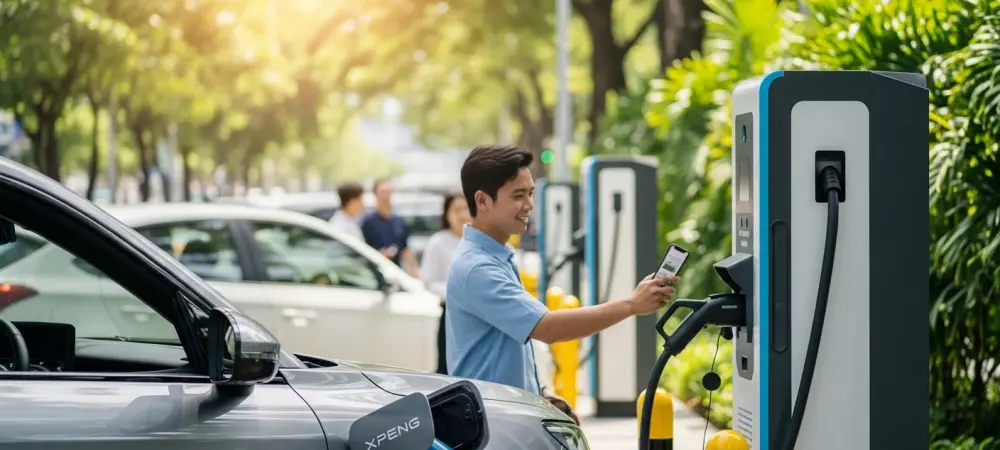
The user journey is designed to be incredibly fluid, almost second nature. An XPENG driver in Hong Kong pulls up the app and uses it to locate one of the 1,600 partnered charging stations. Once they arrive, they can either scan a QR code on the charging pile or simply initiate the session directly within the app. After they’ve charged their vehicle, they end the session in the app, and the payment is processed seamlessly using their linked AlipayHK account. It’s a complete “Search, Locate, Charge, Pay” experience. Success here won’t just be about the number of transactions. Key metrics will include user adoption rates—how many XPENG drivers are actually using the integrated feature versus other methods? We’ll also be watching transaction times and, most importantly, user feedback. A low rate of payment failures and positive reviews will be the true indicators that they’ve nailed the experience.
Looking ahead to the 2026 expansion into Southeast Asia, what unique localization challenges do you anticipate when integrating regional e-wallets like DANA and Touch ‘n Go eWallet? How will the strategy differ from the Hong Kong rollout to ensure a smooth adoption?
Southeast Asia is a completely different ballgame from Hong Kong. While Hong Kong is a single, dense, and highly digitized market, Southeast Asia is a mosaic of diverse economies, regulations, and consumer behaviors. Integrating DANA in Indonesia or Touch ‘n Go eWallet in Malaysia isn’t just a technical task; it’s a cultural one. These aren’t just payment apps; they’re “super-apps” deeply woven into daily life. The strategy must go beyond simple payment acceptance. It will involve co-marketing efforts and potentially integrating loyalty programs to tap into the massive, engaged user bases of these regional e-wallets. Unlike the Hong Kong launch, which could be more direct, the SEA expansion will require a hyper-localized approach for each country to build trust and feel native to the users there.
Beyond simplifying payments, the collaboration aims to create cross-industry partnerships by driving user traffic. Could you provide a practical example of how you might leverage Ant International’s global user base to benefit XPENG’s branded charging stations and enhance the overall driver experience?
This is where the partnership’s true genius lies—it’s about creating a virtuous cycle. Imagine this: a tourist from mainland China, an avid Alipay user, is traveling in Thailand. Through the Alipay app’s ecosystem, they could receive a notification or a special offer for charging their rental EV at an XPENG-branded station. This drives new foot traffic—or rather, “tire traffic”—directly to XPENG’s network. In return, while charging, the XPENG app could offer that user a discount voucher for a nearby restaurant or attraction that also uses Antom for payments. This transforms a simple utility—charging a car—into a richer, more engaging commercial experience that benefits the user, XPENG, and other local businesses in Ant’s network.
What is your forecast for the role of integrated digital payments in the global EV industry over the next five years?
Over the next five years, integrated digital payments will become as fundamental to an EV brand as battery range or horsepower. It will no longer be a feature but a core expectation. We’re moving beyond simply paying for a charge. The vehicle itself will become a payment platform—authorizing payments for charging, tolls, parking, and even in-car commerce, all authenticated biometrically. The successful EV companies will be those who leverage these payment ecosystems not just for convenience, but to build deeper, data-driven relationships with their customers, offering personalized services and rewards that make the entire ownership experience seamless and valuable. Payment will be the invisible thread that ties the entire smart mobility ecosystem together.