

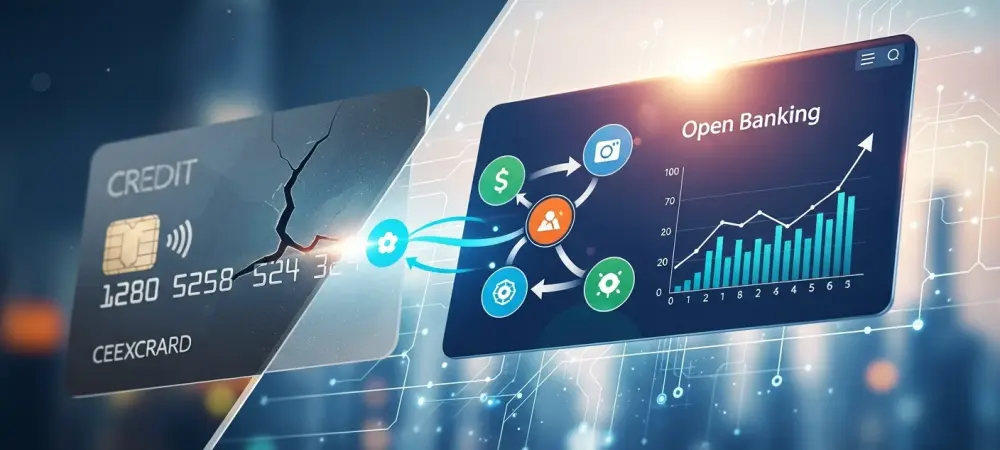
The physical credit card, once the undisputed symbol of financial autonomy and global consumerism, is rapidly losing its status as the foundational architecture of the modern digital economy. For decades, the global financial system relied on the card-on-file model, a method where merchants store static credit card details to facilitate subscriptions, utility payments, and automated investments. However, this legacy system is currently facing a structural challenge from the rise of Variable Recurring Payments (VRP) and the broader adoption of account-to-account (A2A) infrastructure. This shift represents a move toward a more integrated “Bank on File” environment, where transactions occur directly between financial institutions, bypassing the expensive and often inefficient middleman represented by traditional card networks.
The significance of this transition lies in the move from fragmented, one-off transactions to a unified, recurring bank-to-bank ecosystem. While early iterations of open banking focused on simple balance checks or single payments, the current momentum is centered on the ability to handle complex, ongoing financial relationships. This evolution is not merely a technical upgrade; it is a fundamental redesign of how money moves. By leveraging the security of modern banking APIs, businesses can now establish persistent connections that offer greater reliability and lower fees than any plastic-based alternative. This analysis explores the statistical drivers of this change, the strategic insights from industry experts, and the global outlook for a world where the bank account itself becomes the primary payment instrument.
The Rising Momentum: Drivers of Account-to-Account Adoption
Statistical Drivers: The Hidden Cost of Subscription Failures
The move toward recurring open banking is largely propelled by the systemic friction inherent in traditional card billing cycles. Recent data indicates that digital enterprises face payment failure rates ranging from 5% to 10% during standard subscription renewals. These failures occur for a variety of reasons, including card expiration, theft, or the overzealous application of fraud detection algorithms that trigger false positives. For a modern subscription-based business, these technical glitches are not minor annoyances but are instead direct threats to the bottom line, often resulting in a 9% loss of annual revenue.
Furthermore, the stability of the payment method directly correlates with the financial health of the consumer. In the current economic climate, millions of individuals are burdened by recurring bills, and a significant portion of the population has missed at least one essential payment in recent months. Legacy systems like Direct Debit often lack the flexibility and transparency needed to manage modern household budgets effectively. Account-to-account payments provide a more stable foundation by anchoring the transaction to the consumer’s actual bank account, which does not expire or change numbers, thereby reducing the risk of accidental churn and missed deadlines.
Real-World Applications: Case Studies in Early Adoption
The practical utility of this technology is already visible in the strategic deployment of “Bank on File” systems across several key sectors. Wealth management platforms such as Trading 212 and IG Group have become early adopters, utilizing Variable Recurring Payments to facilitate frictionless wealth accumulation. By allowing retail investors to automate their account funding through direct bank connections, these platforms have removed the psychological and technical barriers associated with manual card entries. This automation ensures that investment schedules remain consistent, helping users build long-term capital without the risk of their funding sources expiring or being blocked by card issuers.
Innovation is also making a significant impact in the social housing sector, where financial clarity is a top priority for both tenants and providers. Organizations like the East Lothian Housing Association have implemented recurring A2A payments to manage rent collections with instant settlement. Unlike traditional card payments or Direct Debits, which can take several days to clear, bank-to-bank transactions provide immediate visibility. Tenants receive instant confirmation that their rent has been paid, which reduces anxiety and helps them manage their remaining funds with greater precision. This real-time feedback loop is essential for maintaining trust and stability within low-income communities.
Strategic Expert Insights: Rebuilding Financial Infrastructure
Bypassing Regulatory Gridlock: The Power of Collaborative Rulebooks
A major hurdle in the growth of open banking has historically been the slow pace of legislative mandates and regulatory oversight. To overcome this, a consortium of more than 30 banks and fintech companies established the UK Payments Initiative (UKPI). By moving ahead with a unified industry standard rather than waiting for government intervention, these organizations have accelerated the rollout of VRP capabilities at an unprecedented scale.
Expert perspectives suggest that this maturity in infrastructure is exactly what was needed to challenge the dominance of giants like Visa and Mastercard. For the first time, A2A technology possesses the technical reliability and interoperability required to compete with the global reach of card networks. The transition toward these rails is seen as a strategic necessity for businesses looking to reduce their dependence on high-fee intermediaries. This collaborative approach ensures that the underlying technology is robust enough to handle the volume of modern digital commerce while remaining flexible enough to adapt to changing market demands.
Redefining the User Experience: Consent and Security
The shift to recurring open banking also marks a radical departure from traditional merchant-controlled “pull” payments. In contrast, the modern A2A model is built on consumer-authorized “push” agreements. This consent-based framework requires the user to set specific limits on withdrawal amounts and frequencies, providing a level of transparency that was previously unavailable. This empowerment of the consumer is a critical factor in the widespread adoption of new payment standards.
Security is further enhanced through the integration of native mobile biometrics, such as Face ID and fingerprint scanning. By replacing the manual entry of long card numbers and security codes with a single biometric authorization, the checkout flow is both simplified and made more secure. This process significantly reduces the risk of fraud, as the authentication occurs directly through the user’s trusted banking application rather than a third-party merchant site. The combination of ease of use and high-level security creates a compelling value proposition that encourages users to move away from familiar but less secure plastic alternatives.
The Future Roadmap: Scaling Global Money Movement
Scaling into Mainstream Digital Retail: The Path Ahead
While recurring open banking found its initial footing in niche verticals like investment and social housing, its potential to dominate mainstream digital retail is becoming increasingly clear. Enterprise-level subscription services and high-velocity e-commerce platforms are looking toward these systems to optimize their checkout experiences. As more retailers realize the benefits of instant settlement and lower transaction costs, the adoption of “Bank on File” is expected to become the new standard for digital memberships and household bills.
The ambitions for this technology are global in scope, with plans to expand the Variable Recurring Payment framework across the broader European market and into 22 different countries. This expansion is supported by the growing synergy between A2A payments and other financial services, such as credit and Buy Now, Pay Later (BNPL) options. The acquisition of specialized providers like In3 by major open banking players indicates a move toward a comprehensive alternative for every type of transaction. By integrating credit into the bank-to-bank flow, providers can offer a seamless experience that covers everything from a simple grocery purchase to a complex multi-year loan.
Synergy with Credit: Building the Modern Utility Layer
The long-term implication of this trend is the creation of a “modern utility layer” for the movement of money. This infrastructure aims to bypass the high fees and high failure rates of card networks, providing a more sustainable and transparent financial ecosystem. By aligning the interests of banks, merchants, and consumers, the open banking movement is working to replace the aging rails of the twentieth century with a system designed specifically for the digital age. This change is not just about cost savings; it is about creating a more resilient financial foundation that can support the rapid pace of global innovation.
Overcoming deeply ingrained consumer habits remains one of the primary challenges for the widespread success of this movement. People are accustomed to the rewards and protections offered by traditional credit cards, and shifting that behavior requires a demonstrable improvement in both convenience and value. However, as the benefits of instant settlement and enhanced control become more apparent, the transition is likely to accelerate. The evolution of the digital economy demands a more transparent and efficient way to handle recurring obligations, and open banking is poised to fill that role by providing a secure, bank-integrated alternative to the status quo.
Final Findings: The Evolution of Digital Commerce
The transition toward a recurring open banking standard provided a definitive shift in how the digital economy operated at its most fundamental level. The industry recognized that the technical maturity achieved through collaborative frameworks was essential for matching the functionality of traditional card networks. Stakeholders adopted these new protocols because the economic incentives, including reduced failure rates and lower fees, were too significant to ignore. Innovation shifted away from merchant-controlled models and moved toward a more transparent, consent-based system that prioritized consumer autonomy and security. The success of this transition depended on businesses auditing their legacy billing systems and reconfiguring them to accommodate real-time settlement windows. By embracing biometric authorization and mobile-first banking flows, the financial sector addressed the systemic friction that had plagued digital subscriptions for years. This strategic move ensured a more stable foundation for modern commerce, allowing both enterprises and consumers to interact with greater confidence. Ultimately, the replacement of card-on-file with a robust bank-on-file alternative represented a necessary evolution in the global movement of money.