

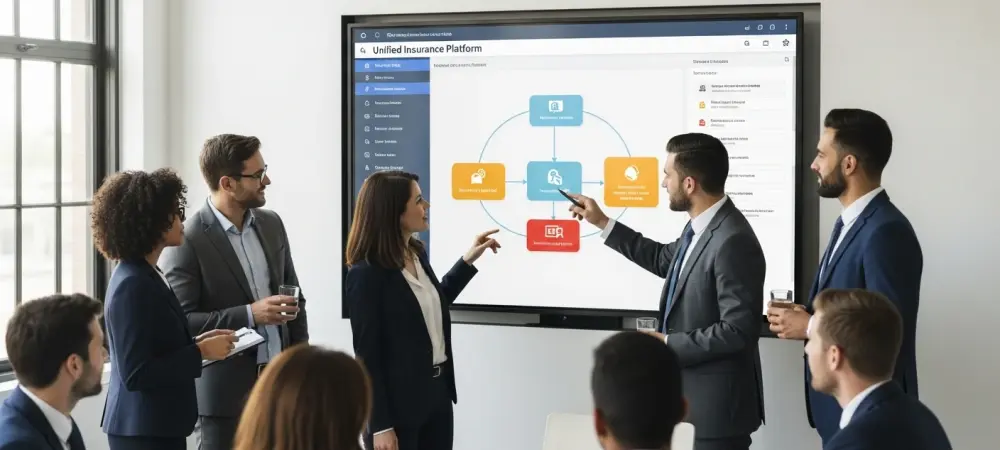
The insurance industry stands at a technological crossroads, where cumbersome legacy systems built decades ago are now clashing directly with the modern consumer’s demand for seamless, intuitive, and digitally native experiences. This fundamental tension has elevated digital transformation from a corporate buzzword to a critical mandate for survival and growth. In this environment, integrated platforms have emerged as a powerful solution, offering a pathway for insurers to modernize operations and meet evolving customer expectations. The strategic partnership between INSTANDA and ServiceNow serves as a compelling case study, illustrating the mechanics, impact, and future implications of this accelerating trend.
The Shift Towards Unified Insurance Ecosystems
Market Drivers and Adoption Statistics
The pressure for insurers to modernize is no longer a distant concern but an immediate operational reality. Antiquated legacy systems, often characterized by high maintenance costs and rigid architecture, have become significant barriers to innovation. These systems lack the flexibility required to launch new products quickly or integrate with modern digital tools, creating operational bottlenecks and frustrating customer interactions. Consequently, the industry has seen a substantial increase in strategic investments aimed at dismantling these digital roadblocks.
In response to these challenges, there has been a notable surge in capital flowing into Insurtech, AI, and workflow automation. This investment is driven by a clear market need to satisfy rising customer expectations for the kind of seamless, on-demand service they experience in other sectors. A key part of this trend is the rapid adoption of no-code and low-code platforms. These technologies empower insurers to accelerate product development and deployment cycles dramatically, shifting the paradigm from multi-year IT projects to agile, market-responsive product launches.
A Case Study in Synergy: The INSTANDA and ServiceNow Partnership
The collaboration between INSTANDA and ServiceNow offers a prime example of an integrated platform strategy in action. This partnership is not merely an integration of two software tools but a strategic alignment designed to create a cohesive, end-to-end solution for the modern insurer. It demonstrates how combining specialized platforms can address the full spectrum of insurance operations, from product creation to claims resolution.
At the core of this synergy is INSTANDA’s no-code, configurable insurance platform. This technology provides insurers and managing general agents (MGAs) with the ability to design, launch, and manage complex insurance products with unprecedented speed. By removing the need for extensive coding, it allows business users to adapt to market changes and regulatory updates in real time. Complementing this agility is ServiceNow’s AI-driven workflow automation platform, which streamlines critical back-office functions. Its capabilities in intelligent triage, routing, and resolution for underwriting, servicing, and claims processing reduce manual effort and improve operational accuracy. The result is a unified digital solution that covers the entire insurance lifecycle, enabling a level of operational fluidity previously unattainable with siloed systems.
Analyzing the Core Benefits and Strategic Value
The adoption of integrated platforms delivers tangible outcomes and a distinct competitive advantage to insurers. By leveraging a unified solution like the one offered by INSTANDA and ServiceNow, carriers can effectively overcome the constraints of their outdated infrastructure and begin to innovate at scale. This move frees them from the slow, cumbersome processes that have historically hampered their ability to respond to market opportunities and emerging risks. This strategic shift represents a fundamental change from a siloed operational model to a connected and agile ecosystem. Instead of different departments operating with disparate systems and data sets, an integrated platform creates a single source of truth and a seamless flow of information. This connectivity fosters greater collaboration, enhances decision-making, and drives significant operational efficiencies, ultimately allowing insurers to focus on delivering value to their customers rather than managing technological complexity.
Envisioning the Future of Insurance Operations
Partnerships like the one between INSTANDA and ServiceNow are set to fundamentally shape the future of the insurance industry. The continued evolution of these integrated platforms will likely involve deeper AI integration, enabling capabilities such as predictive underwriting based on real-time data and the creation of hyper-personalized customer journeys. This will allow insurers to move from a reactive to a proactive stance in risk management and customer engagement.
The broader implications for the industry are profound. Insurers will gain increased agility to respond to new and complex risks, such as those related to climate change and cybersecurity. Moreover, heightened operational efficiency will translate into lower costs and improved profitability. Most importantly, this technological evolution will empower carriers to deliver the exceptional, personalized service that modern consumers demand. However, the path forward is not without its challenges. Insurers must navigate the complexities of implementation, ensure seamless data integration with legacy systems, and foster a cultural shift toward innovation and agility within their organizations.
Conclusion: The Imperative for Integration
The analysis of this trend led to an unequivocal conclusion: integrated platforms became not a luxury but a necessity for insurers aiming to thrive in a digital-first world. The limitations of siloed legacy systems made it clear that a new architectural approach was essential for competitiveness and growth. The INSTANDA and ServiceNow partnership provided a compelling blueprint for a future-ready insurance architecture, demonstrating how a combination of no-code agility and intelligent automation could resolve long-standing industry challenges. Ultimately, embracing such collaborative, technology-driven solutions proved to be the definitive path for achieving sustainable growth, operational excellence, and lasting customer loyalty in an increasingly demanding market.