

The long-anticipated cooling of the global digital commerce furnace has arrived, replacing the frantic, uncoordinated surges of the early decade with a more calculated and resilient operational rhythm. For years, supply chain managers and retail giants operated under a siege mentality, reacting to unprecedented demand spikes with whatever resources were available, regardless of long-term efficiency. As the calendar settles into 2026, the frantic “gold rush” has transitioned into a “stabilization era,” where strategic foresight and cost-optimization have become the primary drivers of success. This shift marks the end of the experimental phase of global ecommerce and the beginning of its institutional maturity, where the winners are no longer those who grow the fastest, but those who manage their networks with the highest degree of precision.
The significance of this transition cannot be overstated, as it represents a fundamental recalibration of how goods move across borders and within domestic territories. While the previous years were defined by agility and survival, the current market landscape is characterized by a “new normal” of sustainable growth. The industry has absorbed the shocks of geopolitical volatility and regulatory overhauls, emerging as a more sophisticated ecosystem. This stabilization is not a sign of stagnation but rather an indication that the infrastructure of global trade has finally caught up with the digital demands of the modern consumer. Consequently, the focus has shifted toward refining internal processes and building localized resilience.
The Shift from Rapid Expansion to Market Maturity
Statistical Overview of the Stabilization Era
The breakneck speed of the previous years, which saw a compound annual growth rate (CAGR) of 13.01% between 2022 and 2025, has finally moderated into a more predictable trajectory. Data for the current cycle spanning 2026–2030 indicates that the market is moving toward a more sustainable CAGR of 6.09%. This decelerated pace allows logistics providers to catch their breath and reinvest in the infrastructure that was pushed to its limits during the pandemic-era boom. By the end of this decade, the total market value is projected to reach approximately EUR 782.8 billion, representing a massive but more orderly expansion compared to the chaotic climbs of the past. Market composition is also revealing a heavy leaning toward localized strength, with domestic services currently commanding a staggering 83.5% of the total logistics market. This dominance highlights a significant pivot away from the reliance on direct-to-consumer international shipping. Even though cross-border operations continue to grow, they represent a smaller slice of the pie, as brands find that keeping inventory within the borders of their primary markets is the only way to ensure the speed and reliability consumers demand. The focus is no longer on how far a package can travel, but on how quickly it can reach the final mile from a local hub.
Regional growth disparities further illustrate the uneven nature of this stabilization. While the global average is cooling, high-velocity markets like Indonesia are still experiencing explosive growth at 22%, and Poland continues its ascent with a 9% growth rate. These regions serve as the new frontiers for logistics investment, contrasting sharply with mature markets such as the DACH region—comprising Germany, Austria, and Switzerland—where growth has slowed to a modest 4.6%. These mature markets are now focusing on operational excellence and sustainability rather than raw volume, setting a blueprint for how other regions will eventually behave as they reach a similar state of saturation.
Real-World Impacts of Regulatory and Operational Changes
One of the most disruptive forces in the current logistics landscape is the fallout from the removal of “de minimis” tax exemptions across major economies. The United States and the European Union have led the charge in closing loopholes that previously allowed low-value consignments to bypass heavy customs duties and rigorous documentation. This regulatory shift has effectively ended the era of “frictionless” low-cost shipping from manufacturing hubs in Asia directly to Western doorsteps. Consequently, the volume of small, individual parcels entering these regions has faced a sharp correction, forcing sellers to rethink their entire international distribution strategy.
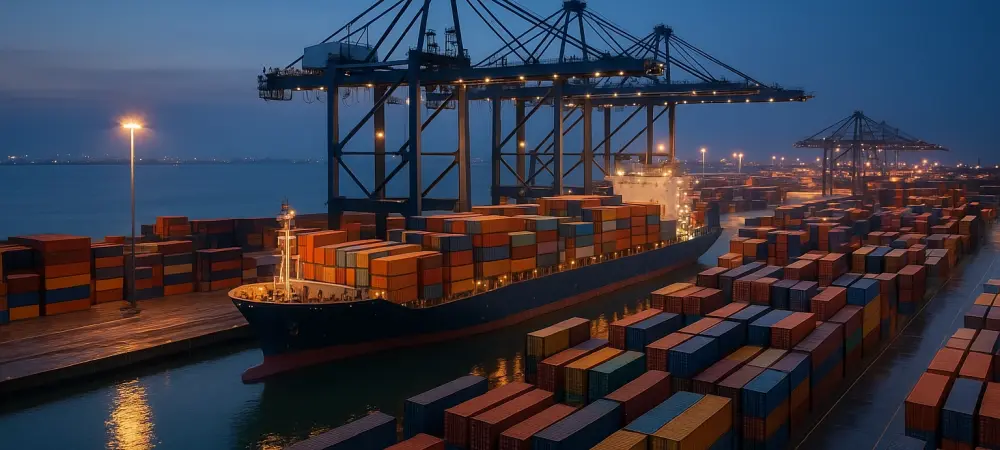
The shift in transport modes serves as a direct reflection of these new regulatory hurdles. Air freight, once the preferred method for rapid cross-border delivery of small goods, has seen its dominance wane significantly. In some corridors, air freight volumes have plummeted by nearly 24% as the costs associated with customs clearance and high fuel prices make it an unsustainable option for low-margin products. In contrast, sea freight has experienced a resurgence, with the number of bills of lading rising from 3.7 million to 5.9 million in recent cycles. Shipping large containers to local ports is once again the most economical way to move goods, even if it requires a longer lead time. To combat these customs hurdles, inventory consolidation has become the strategy of choice for major international sellers. Asian retailers are increasingly establishing massive distribution hubs within Europe and North America to bypass the complexities of individual parcel clearance at the border. By importing goods in bulk through traditional sea freight and storing them in local warehouses, these companies can offer domestic delivery speeds while remaining compliant with new tax laws. This move toward localized fulfillment has revitalized the contract logistics sector, as brands seek partners who can manage the complexities of local warehousing and labor markets.
Furthermore, sector-specific logistics requirements are driving a need for specialized handling. Fashion and electronics currently represent over 50% of the total ecommerce market share, and both categories bring unique challenges. The fashion industry requires sophisticated returns management systems to handle high volumes of rejected items, while the electronics sector demands high-security transport and climate-controlled storage for sensitive components. Logistics providers are no longer just movers of boxes; they are becoming specialized service partners capable of managing the intricate life cycles of specific product categories in a highly regulated environment.
Industry Expert Perspectives on Strategic Realignment
Industry veterans are increasingly vocal about the fact that the “cheap air freight” model is effectively dead for the majority of international sellers. Experts suggest that the convergence of rising jet fuel costs and the loss of tax exemptions has created a “perfect storm” that makes direct-to-consumer air shipping a luxury rather than a standard. Logistics consultants are now advising brands to view customs brokerage expertise as a primary competitive advantage. In a world where a single documentation error can lead to weeks of delays at a port, the ability to navigate complex international trade laws in real-time is often more valuable than the physical act of moving the goods themselves. Consumer behavior is also exerting immense pressure on the logistics sector, with 90% of buyers expressing a clear preference for the lowest possible price point. This extreme price sensitivity leaves very little margin for logistics providers to absorb rising operational costs. Consequently, there is a frantic search for efficiency through automation and data analytics to keep shipping costs low without sacrificing service quality. If a logistics provider cannot find a way to maintain low rates while navigating a high-cost regulatory environment, they risk losing their client base to more technologically advanced competitors who can optimize every centimeter of their supply chain.
Moreover, the consolidation of marketplace power is reshaping the power dynamics between retailers and logistics providers. Projections indicate that by the end of 2026, large marketplace platforms will control approximately 87% of all B2C ecommerce revenue. These platforms have the leverage to dictate terms to logistics companies, often forcing them into tight delivery windows and low-margin contracts. However, this consolidation also provides an opportunity for logistics firms that can integrate seamlessly with marketplace APIs and offer end-to-end transparency. The ability to provide real-time tracking and automated returns within a marketplace ecosystem is no longer an optional feature; it is a requirement for survival.
Professional commentary also highlights a growing trend toward “green” logistics as a response to both consumer demand and government mandates. While price remains the primary driver for shoppers, a significant minority is beginning to favor brands that can prove a lower carbon footprint in their delivery process. This has led to a strategic realignment where sea freight and rail are favored not only for their cost-effectiveness but also for their relatively lower emissions compared to air transport. Logistics firms that invested early in electric delivery fleets and sustainable warehousing are now finding themselves at a distinct advantage as these preferences move from the periphery to the mainstream.
The Future of Global Fulfillment Networks
As the industry moves deeper into this era of stabilization, the role of contract logistics is set to expand significantly. Brands are moving away from centralized global warehouses in favor of a decentralized “hub-and-spoke” model that places inventory as close to the final consumer as possible. This movement toward localized distribution is designed to insulate companies from future geopolitical shocks and transport disruptions. However, this transition is not without its hurdles, as it requires a massive investment in local infrastructure and a deep understanding of regional labor laws. The complexity of managing dozens of small warehouses is far greater than managing one large central hub, necessitating a new generation of management software.
Increased warehousing costs and the complexity of localized labor markets represent significant challenges for the years ahead. As demand for local storage space skyrockets, rental prices in key logistics corridors have reached record highs. Furthermore, finding and retaining skilled labor in an increasingly automated environment has become a major headache for warehouse operators. The solution appears to lie in the rapid adoption of robotics and artificial intelligence to handle repetitive tasks, allowing human workers to focus on more complex problem-solving. This tech-driven approach is the only way to manage the rising costs of localized fulfillment while maintaining the speed that consumers have come to expect.
The evolution of technology-driven solutions will be particularly critical in managing the complex international customs environments that now exist. Real-time customs clearance software, which uses machine learning to classify goods and calculate duties instantly, is becoming an essential tool for cross-border trade. These systems reduce the risk of human error and ensure that shipments are not held up by administrative bottlenecks. As we move toward 2030, the integration of blockchain and other distributed ledger technologies could further streamline this process, providing a transparent and immutable record of a product’s journey from the factory floor to the customer’s doorstep.
Ultimately, the broader implications for global trade suggest a move from a volume-centric “gold rush” to an era defined by operational excellence and strategic maturity. The companies that will thrive are those that recognize the value of stability over frantic growth. This means building resilient supply chains that can withstand regulatory shifts, investing in the technology required to navigate a complex global landscape, and prioritizing the local fulfillment networks that have become the backbone of modern commerce. The transition has been difficult, but the result is a more robust and predictable global economy that is better equipped to serve the needs of a digital world.
Conclusion: Navigating the New Logistics Landscape
The transition from the explosive, unpredictable growth of the previous decade to the stabilized market of the current era required a fundamental shift in how stakeholders approached the supply chain. Market participants recognized that the old model of relying on cheap air freight and regulatory loopholes was no longer viable in a world of increasing oversight and rising operational costs. Decision-makers successfully pivoted toward sea freight and localized distribution hubs, which provided the necessary stability to survive the “de minimis” fallout. This period of realignment served as a filter, separating the organizations capable of strategic adaptation from those that remained anchored to outdated, high-risk logistics practices.
Looking ahead, the next logical step for logistics providers involved the deep integration of predictive analytics to anticipate localized demand before it manifested. By utilizing large datasets to position inventory even closer to the consumer, companies reduced their reliance on expensive last-minute shipping. Furthermore, the industry prioritized the development of multi-modal transport networks that could switch between sea, rail, and road based on real-time cost and carbon emission data. These actionable strategies transformed logistics from a back-end cost center into a front-end competitive advantage, allowing brands to maintain their margins despite the disappearance of traditional tax advantages.
Success in the coming years was defined by the ability to balance the extreme price sensitivity of the global consumer with the increasing complexity of a localized, high-tech distribution network. Those who invested heavily in customs brokerage expertise and automated fulfillment found themselves shielded from the volatility that continued to plague less prepared competitors. The move toward strategic maturity was not just about surviving a period of slower growth, but about building a foundation for a more sustainable and efficient global trade system. Ultimately, the stabilization of ecommerce logistics paved the way for a more resilient era where operational excellence became the ultimate metric of a company’s value.