

The success of a modern retail enterprise during high-traffic surges like Black Friday is no longer dictated by front-end aesthetics but by the invisible reliability of its back-end systems. This integration of Enterprise Resource Planning (ERP) with digital storefronts represents a shift from simple data entry to a sophisticated, automated ecosystem. Current reviews of this technology focus on its ability to synchronize complex logistics with consumer-facing platforms, ensuring that the promise made at the digital checkout is actually fulfilled in the physical warehouse. Understanding the evolution of these connected systems is critical for any organization looking to maintain relevance in a competitive, multichannel marketplace where customer loyalty is fragile.
The Foundation of Integrated Commerce Systems
At the core of this technology lies the principle of centralized data management, where the ERP serves as the definitive record for all business operations. In the current retail environment, having a disconnected web store is often a liability rather than an asset, as the speed of sales frequently outpaces the ability of human operators to update stock levels manually. The emergence of these integrated systems has provided a bridge between accounting software and various e-commerce platforms, allowing for a bidirectional flow of information.
This connectivity is particularly relevant in an era where consumers expect immediate gratification and absolute accuracy. The technical framework typically involves middleware that translates data between different software languages, ensuring that a sale recorded on a website immediately reflects as a reduction in inventory within the accounting system. This prevents the traditional “silo” effect, where sales teams and warehouse managers operate on conflicting information, leading to operational friction and customer dissatisfaction.
Architectural Components of ERP-to-Storefront Syncing
Real-Time Inventory and Price Synchronization
One of the most vital components of this integration is the creation of a “source of truth” regarding stock availability and pricing. When a retailer lists products across multiple channels, such as a dedicated website and various third-party marketplaces, the risk of overselling becomes a statistical certainty without automation. This synchronization technology functions by polling the ERP for changes and pushing those updates to every connected storefront at high frequencies, often reducing the window of error to mere seconds.
Moreover, dynamic pricing updates allow businesses to react to market trends or internal inventory levels without manual intervention. If a specific product line is moving slowly, the integrated system can trigger promotional pricing across all platforms simultaneously, ensuring consistency in brand messaging. This level of control is essential for maintaining margins and ensuring that customers are not lured by outdated price tags, which could lead to legal disputes or a loss of consumer trust.
Automated Fulfillment and Warehouse Handoff
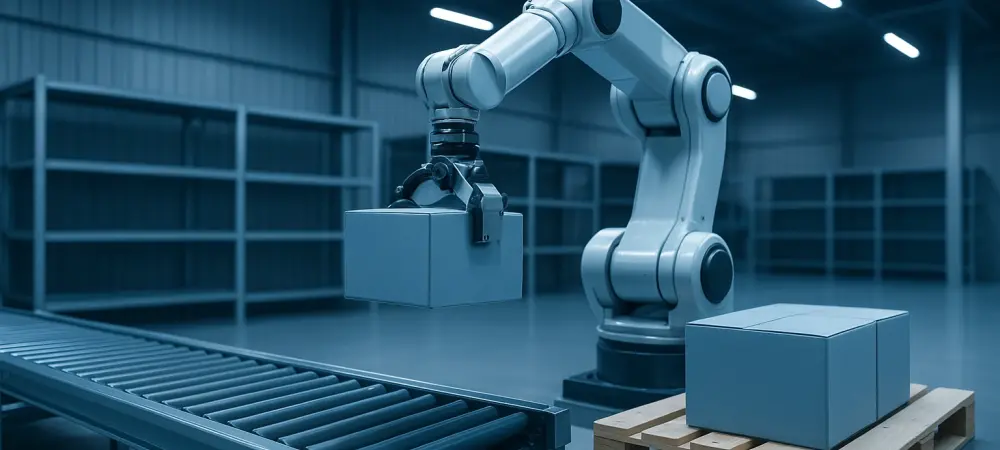
Beyond simple stock counts, the integration layer facilitates a seamless transition from the digital purchase to the physical shipping process. By automating the handoff between sales channels and fulfillment networks, the system effectively eliminates the need for manual data re-entry, which is a common source of human error. This automation ensures that pick slips are generated in the warehouse the moment an order is confirmed, significantly reducing the time it takes for a package to leave the facility.
The technical reduction of “short-picks”—situations where staff cannot find an item because the system was inaccurate—is a primary metric for success in this area. Advanced integrations allow for intelligent routing, where an order might be fulfilled from a specific warehouse based on proximity to the customer or current stock levels. This logic-driven approach optimizes the supply chain, lowering shipping costs and improving delivery times during peak periods.
Emerging Trends in Systems-Driven Retail
The industry is currently witnessing a transition from traditional batch processing toward high-frequency, near-instantaneous updates. While older systems might have updated stock counts every few hours, modern integrations utilize webhooks and advanced API calls to reflect changes as they happen. This shift is largely driven by the demands of global marketplaces that impose strict performance penalties on sellers who fail to fulfill orders due to stock inaccuracies.
There is also an increasing focus on specialized connectors for platforms like Amazon or Takealot, which require specific data formats and high-velocity communication. These connectors are designed to handle the unique rules of each marketplace, such as handling VAT calculations or managing specific shipping labels. As these platforms continue to dominate the retail landscape from 2026 to 2028, the ability to integrate deeply with their infrastructures will be a deciding factor for brand survival.
Real-World Applications and Sector Impact
In sectors such as apparel and hardware, where stock-keeping units (SKUs) can number in the thousands, the impact of ERP integration is profound. For instance, large-scale retailers like Ackermans have utilized this technology to achieve a 65% reduction in inventory errors. In the textile and hardware industries, where items vary by size, color, and technical specifications, the precision offered by automated syncing prevents the logistical nightmare of shipping the wrong variant to a customer.
Implementations in the building and hardware sectors have shown that integration helps bridge the gap between B2B and B2C sales. By allowing wholesale customers to access a dedicated trade store that pulls directly from the same ERP, businesses can manage diverse client bases without doubling their administrative workload. These real-world examples highlight that the technology is not just for niche online boutiques but is a foundational requirement for industrial-scale operations.
Technical Obstacles: Navigating Market Challenges
Despite the benefits, the technology faces significant hurdles, particularly regarding “sync latency” during extreme traffic events. During periods like Black Friday, the sheer volume of API calls can overwhelm either the ERP or the e-commerce platform, leading to delays in data reflection. To mitigate this, developers have introduced safety stock buffers—essentially “lying” to the storefront by reporting slightly less stock than is actually available to provide a cushion against rapid-fire sales.
Integrating legacy ERP systems also presents a recurring challenge, as older software often lacks the modern API capabilities required for smooth communication. This often necessitates custom-built middleware or significant software overhauls, which can be costly and time-consuming. Retailers must balance the desire for cutting-edge connectivity with the limitations of their existing infrastructure, often leading to a gradual, phased approach to full automation.
The Future of Connected Enterprise Resource Planning
Looking ahead, the integration layer is expected to incorporate sophisticated AI-driven demand forecasting. Instead of merely reacting to current stock levels, these systems will likely predict future needs by analyzing historical sales data and external market trends. This proactive approach will allow retailers to adjust their procurement strategies long before a shortage occurs, further stabilizing the global supply chain.
There is also a clear trajectory toward deeper social commerce integration, where purchases made directly through social media platforms are processed with the same rigor as traditional web orders. As decentralized commerce becomes the norm, the ERP will remain the central nervous system, but its “limbs” will extend into every digital corner where a consumer might discover a product. This evolution will further blur the lines between marketing, sales, and logistics.
Summary and Final Assessment
The evaluation of ERP e-commerce integration demonstrated that system stability was the primary determinant of retail success in a high-velocity market. While marketing brought customers to the storefront, it was the underlying architecture that protected the brand’s reputation by ensuring accuracy and speed. The transition from manual processes to automated, real-time syncing was no longer a luxury but a fundamental necessity for any business seeking to scale without a proportional increase in overhead.
Retailers who adopted these systems found that the reduction in human error and the improvement in warehouse efficiency provided a significant competitive advantage. To remain viable through the end of the decade, organizations should prioritize auditing their current sync frequencies and exploring AI-enhanced forecasting modules. The final verdict on this technology is clear: businesses must move toward deeper integration or risk being sidelined by the operational efficiency of more agile, system-driven competitors.