

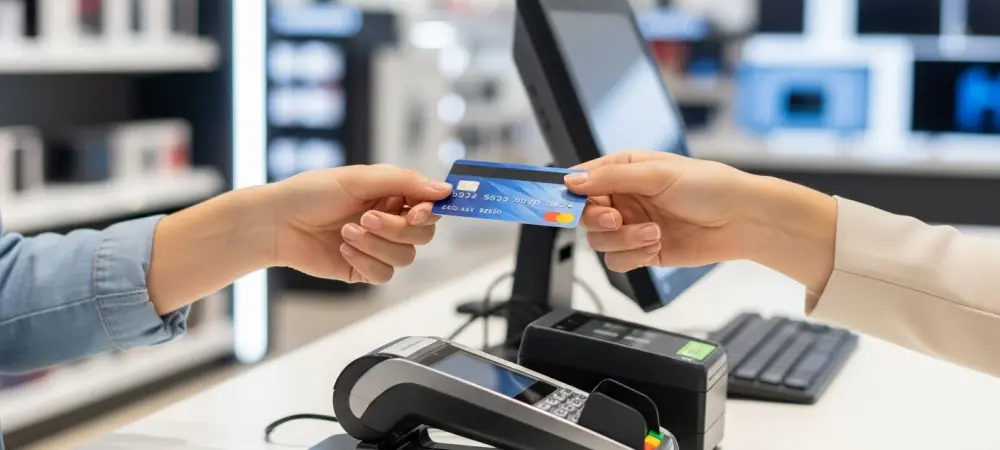
The long-simmering predictions for the digital payments landscape finally boiled over in 2025, transforming abstract forecasts into the concrete reality of how consumers and businesses now exchange value. This was the year that long-held prophecies about the industry’s evolution became tangible, fundamentally reshaping interactions at checkout counters and online. This review examines the accuracy of forecasts concerning mobile wallets, “buy now, pay later” services, and the monetization of payment data, providing a clear picture of the industry’s trajectory.
The Mobile Wallet Shake-Up: NFC Unlocks New Competition
By the Numbers: A Surge in Tap-to-Pay Adoption
The shift toward contactless payments reached a critical mass in the United States, with in-store mobile wallet usage climbing to 31.2% of consumers. This growth was not merely incremental but was significantly accelerated by new partnerships integrating flexible payment options like BNPL directly into existing wallet infrastructures. Consequently, this created a more compelling value proposition for users to leave their physical cards at home.
While Apple Pay maintained a strong foothold, the competitive landscape broadened dramatically. Challengers such as Cash App, Google Pay, and PayPal more than doubled their respective user shares since 2023, largely by transcending their roles as simple payment apps. In Europe, the long-anticipated opening of Apple’s NFC technology proved to be the catalyst for change, as validated by PayPal and Klarna launching their own tap-to-pay functionalities, igniting a new wave of competition in the region.
In Practice: From Digital Wallets to Financial Hubs
The European launches by PayPal and Klarna serve as a powerful real-world demonstration of how regulatory and technological shifts can immediately alter market dynamics. This move broke a long-standing barrier, allowing fintech innovators to compete directly at the physical point of sale and offering consumers more choice in how they pay with a simple tap of their phone.
This intensified competition is forcing platforms to evolve. Mobile wallets are rapidly expanding their feature sets, becoming integrated financial hubs that offer services far beyond simple transactions. The inclusion of tools for subscription management, real-time order tracking, and budget oversight deepens user engagement, making the wallet an indispensable part of a consumer’s daily financial life. Despite this influx of new capabilities from competitors, Apple Pay continues to lead the US market, a testament to its deep integration within its hardware ecosystem and the powerful force of ingrained consumer habits.
BNPL Breaks into Brick-and-Mortar
Measuring the Impact: BNPL’s Physical Retail Footprint
The “buy now, pay later” model successfully shattered its online-only reputation, making a significant entry into physical retail. The explosive growth of the Klarna Card, which saw its gross merchandise volume soar by an astonishing 92% year-over-year, stands as a testament to the pent-up consumer demand for flexible payment options in brick-and-mortar stores.
This expansion was not accidental but was enabled by a key technological advancement: the widespread adoption of flexible digital credentials. The development and issuance of BNPL-enabled debit cards proved to be the crucial innovation, providing a simple and familiar form factor that seamlessly bridged the gap between the digital BNPL experience and the traditional in-store checkout process.
Case Studies: The Rise of the BNPL-Powered Card
Leading the charge, both Klarna and Affirm successfully launched BNPL-enabled debit cards built upon Visa’s extensive payment network. These products quickly became powerful new growth engines, allowing consumers to split payments on everyday purchases from groceries to gasoline, directly from a physical card. These launches highlight a pivotal strategy for the BNPL sector: leveraging existing, trusted payment networks to achieve scale and consumer trust. By partnering with giants like Visa, BNPL providers have effectively bypassed the need to build their own physical acceptance networks, creating a frictionless path to bring their popular online financing solutions into the offline world.
The New Gold Rush: Monetizing Data with Financial Media Networks
A New Revenue Stream: The FMN Market Takes Shape
In 2025, the forecast that payment providers would aggressively pursue new revenue streams through data monetization was unequivocally confirmed. The emergence of Financial Media Networks (FMNs) became a dominant trend, marking a strategic pivot for institutions looking to capitalize on their most valuable and unique asset: transaction data.
At its core, an FMN leverages first-party consumer payment data to create a highly sophisticated and targeted advertising platform. Unlike traditional ad networks that rely on cookies or browsing history, FMNs offer insights based on actual purchase behavior. This allows merchants to deliver hyper-relevant offers to proven customers, while financial institutions unlock a significant new source of revenue.
Leading the Charge: Pioneers of Payment-Powered Advertising
PayPal stepped forward as a prime example of this trend in action, launching its Ad Manager platform. This dedicated tool empowers merchants to use transaction data to generate new advertising revenue and drive sales, turning the payment platform into a marketing partner.
This movement quickly gained industry-wide momentum. Established financial giants, including Mastercard, Amex, and Western Union, all unveiled their own FMNs to harness their vast repositories of data. Concurrently, other institutions took a more subtle approach; US Bank, for instance, began transforming its customer rewards program into a precursor for an FMN, using exclusive cardholder deals to train users to check their banking apps for offers, thereby paving the way for a future advertising platform.
The Road Ahead: Future Trajectories and Challenges
Looking forward, the industry is poised for a convergence of these powerful trends. The next wave of innovation will likely feature BNPL options seamlessly integrated into every major mobile wallet by default. Furthermore, personalized offers generated by FMNs will be delivered directly to consumers at the point of sale, creating a hyper-contextual shopping experience.
However, this data-driven future comes with significant hurdles. The industry will inevitably face growing scrutiny from both regulators and consumers over data privacy and the responsible use of financial information in FMNs. Alongside this, the BNPL sector can expect increased regulatory oversight as it becomes a more mainstream component of consumer credit. The central conflict will be the intensifying battle for the consumer, as traditional banks, nimble fintechs, and global tech giants all vie for control over the primary financial interface in their customers’ lives.
Conclusion: 2025’s Legacy in Digital Payments
The year 2025 confirmed a monumental shift in the digital payments landscape. It was defined by three core developments: the competitive opening of NFC technology that spurred new wallet competition, the successful and rapid expansion of BNPL from the digital realm into physical retail, and the strategic rise of FMNs as a powerful new monetization engine.
These developments were not isolated trends but were the interconnected pillars of an entirely new payment ecosystem. The legacy of 2025 was the creation of a financial environment that is more integrated, intensely data-driven, and fundamentally more competitive than ever before. Stakeholders across the industry saw that they must adapt to this new reality or face the undeniable risk of being left behind.