

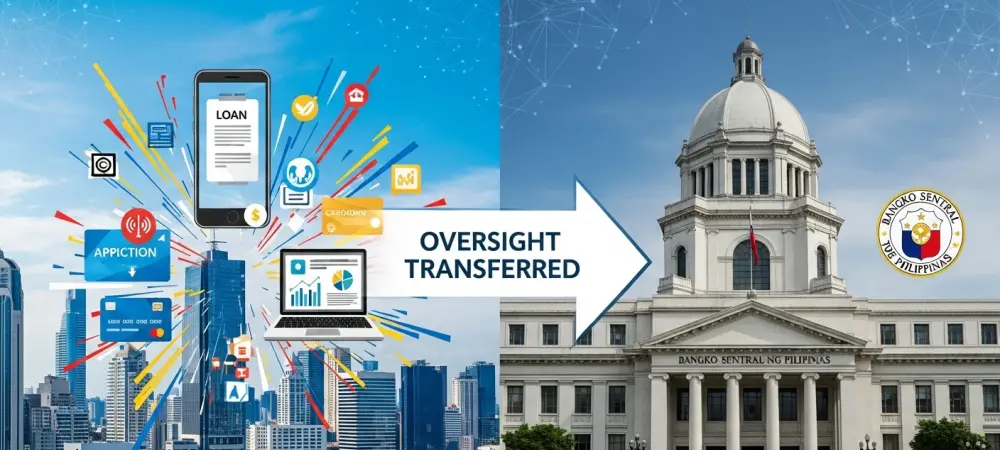
The rapid proliferation of digital financial services in the Philippines has created a landscape where convenience often comes at a steep price for many vulnerable borrowers. As the nation grapples with the complexities of a fast-evolving fintech sector, the government is executing a pivotal shift in its regulatory strategy by transferring the oversight of online lending companies from the Securities and Exchange Commission to the Bangko Sentral ng Pilipinas. This move represents a fundamental restructuring of how digital credit is managed, signaling a departure from the fragmented supervision that allowed predatory entities to flourish. By placing these firms under the direct jurisdiction of the central bank, authorities aim to harmonize the rules governing all lending activities, regardless of the platform used. This transition is not merely a change in paperwork but a calculated effort to integrate digital lenders into the broader banking ecosystem where stability and transparency are mandatory for all.
The New Mandate: Strengthening Consumer Protections
Addressing the persistent issue of unfair debt collection practices is at the heart of this regulatory migration, as many Filipinos have reported severe harassment from digital platforms. Under the new regime, the Bangko Sentral ng Pilipinas will enforce the Financial Consumer Protection Act with the same rigor it applies to traditional commercial banks. This means that fintech companies must now adhere to stringent protocols regarding borrower privacy and ethical communication, effectively ending the era of aggressive and shaming tactics. The central bank’s mandate includes ensuring that lenders provide clear information about interest rates and fees, preventing the hidden charges that often lead to debt traps. By elevating the standards of conduct, the government seeks to restore public trust in digital finance, which has been eroded by the actions of rogue operators. This change ensures that the convenience of a smartphone loan does not expose the user to distress. Beyond immediate consumer protection, the shift aims to professionalize the entire online lending industry by requiring tech firms to adopt more sophisticated risk management frameworks. The Bangko Sentral ng Pilipinas brings a wealth of experience in monitoring institutional liquidity and operational resilience, which will now be applied to the high-frequency environment of digital apps. This oversight is expected to curb the growth of unsustainable lending models that rely on high-volume, high-interest cycles to survive. Instead, the focus will shift toward sustainable credit growth that contributes to financial inclusion without compromising the integrity of the national financial system. Regulators are particularly interested in how these companies use automated algorithms for credit scoring, demanding greater transparency in how loan decisions are made. By subjecting these digital-native firms to traditional banking scrutiny, the central bank is closing the gap between innovative technology and sound financial practices.
From Policy to Practice: Navigating Legal and Capital Transitions
Transferring authority between two major government bodies is a complex legal undertaking because online lenders are currently governed by laws dating back to 1998 and 2007. A dedicated technical working group is currently evaluating the most efficient path forward, weighing the pros and cons of administrative circulars versus formal legislative amendments in Congress. While issuing circulars offers a faster response to market needs, amending existing statutes provides a more permanent and legally robust foundation for the new regulatory order. This dual-track strategy allows the Bangko Sentral ng Pilipinas to begin coordinating with the Securities and Exchange Commission immediately, ensuring there is no regulatory vacuum during the transition period. The legal framework must be carefully updated to recognize digital lenders as distinct from traditional financing companies while still holding them to equivalent standards. Ensuring the transition is legally sound is crucial to preventing court challenges from firms seeking to avoid the rules. To stabilize the market further, regulators introduced stricter capital requirements and operational limits for all participants. As the registration process for new platforms resumed, firms were restricted to operating a maximum of five online lending platforms under a single entity. Additionally, the government implemented a sliding scale of paid-up capital requirements, ranging from P20 million to P100 million, to ensure only financially resilient companies participated. Industry leaders, including the Fintech Alliance.PH, recognized these changes as essential for elevating the sector’s reputation. Moving forward, the focus shifted toward establishing a comprehensive credit reporting system that integrated digital lending data into a national database. This integration allowed for more accurate risk assessments and prevented borrowers from becoming over-leveraged. Financial institutions were encouraged to prioritize the development of ethical AI models that prioritized transparency. Ultimately, the government successfully built a safer digital economy.