

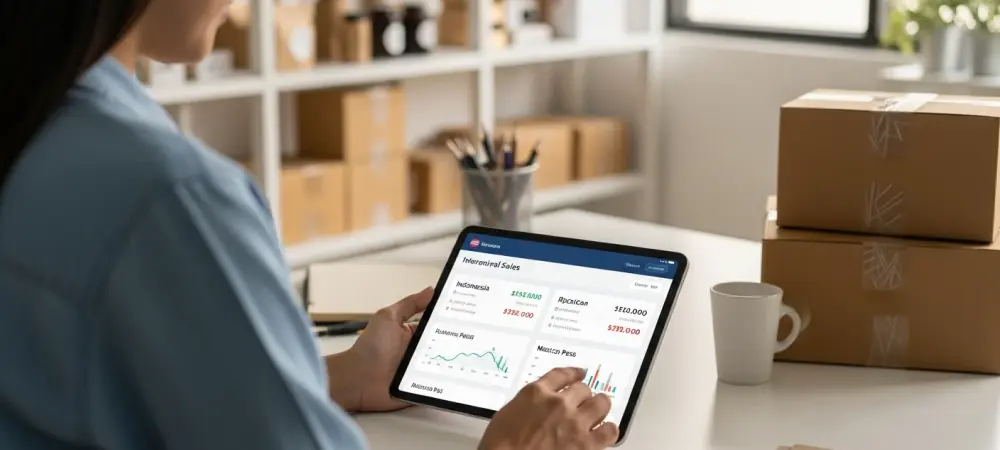
With a deep-seated belief in the power of financial technology to reshape global commerce, Nicholas Braiden has been a key figure in the FinTech space since the early days of blockchain. His work advising startups has placed him at the forefront of innovation, particularly in digital payments and lending systems that empower small and medium-sized businesses. Today, we delve into the evolving landscape of cross-border e-commerce, exploring how new payment capabilities in high-growth markets like Indonesia and Mexico are leveling the playing field for entrepreneurs worldwide. We’ll discuss the tangible benefits of localized financial tools, the strategic thinking behind market expansion, and what the future holds for global digital trade.
Given that Indonesia accounts for over half of ASEAN’s online business, what specific friction points do the new local collection capabilities solve for SMBs there? Please walk me through the tangible, day-to-day benefits for a cross-border seller using the platform.
Absolutely. For a small business owner, say, in the U.S. selling artisanal goods into Southeast Asia, Indonesia is this massive, unmissable opportunity. But historically, getting paid was a nightmare. The primary friction point was the inability to collect funds locally. This meant convoluted payment chains, often involving multiple intermediaries, which led to high fees and significant delays. On a day-to-day level, this created immense uncertainty in cash flow. With these new capabilities, that seller can now collect Indonesian Rupiah directly from local marketplaces as if they had a local bank account. This isn’t just a minor convenience; it’s a fundamental shift that eliminates costly, forced currency conversions at unfavorable times and gives them direct, streamlined access to their earnings from the region’s largest digital economy.
With the enhancement of peso collection services in Mexico, how exactly does this simplify market entry for sellers on major platforms like Amazon or Mercado Libre? Describe the primary financial or operational complexities they faced before this update that are now removed.
Mexico is another prime example of a booming market that was historically complex for foreign sellers. Before this kind of enhancement, entering the market meant navigating a web of financial red tape. Sellers often had to establish a local entity or partner with a local firm just to open a bank account to receive pesos, which is a massive operational hurdle. Alternatively, they’d rely on marketplace-facilitated currency conversion, which stripped them of any control and often came with opaque fees. The primary complexity removed is that barrier to entry. Now, a seller from Europe can list their products on Amazon Mexico or Mercado Libre and receive MXN payments directly into their Payoneer account. It completely bypasses the need for local banking infrastructure, saving months of administrative work and significant costs, making the market accessible virtually overnight.
Global trade is constantly reshaping due to macro-economic factors. Beyond these recent expansions, how does a company like Payoneer identify the next critical high-growth markets? Could you detail the key indicators and data points your team prioritizes when planning future rollouts in regions like Latin America and Asia Pacific?
That’s a critical question. Identifying the next frontier isn’t about throwing a dart at a map; it’s a deeply data-driven process that responds to the dynamic nature of global trade. We’re constantly analyzing macro factors, from shifting trade policies to digital adoption rates. Key indicators include the velocity of e-commerce growth, the size of the digitally-active consumer base, and, crucially, the existing pain points in the payment ecosystem. We look for markets where SMBs are struggling to get paid efficiently. For instance, in Latin America and Asia Pacific, we’re prioritizing countries with a rapidly expanding middle class and increasing internet penetration, but where the financial infrastructure hasn’t kept pace. It’s about finding that intersection of massive opportunity and a clear problem that our technology can solve for our nearly 2 million customers.
For a small business, managing foreign exchange is a significant hurdle. Could you share a practical example of how these new local collection services in Indonesia or Mexico give a merchant greater control over their FX management and improve their overall cash flow?
Let’s imagine a small electronics business in Canada selling on various Mexican marketplaces. Previously, every sale made in pesos would be automatically converted to Canadian dollars by the marketplace or a payment processor, often at a less-than-ideal rate for that specific day. The business owner had no say in the timing and would just see a smaller amount hit their bank account. With local MXN collection, the game changes. They can now receive and hold pesos in their account. This gives them immense control. They can watch the FX markets and choose to convert their pesos to dollars on a day when the rate is more favorable, potentially increasing their profit margin by several percentage points. This ability to strategically manage conversions transforms FX from an unpredictable cost center into a manageable part of their business strategy, dramatically improving their cash flow stability.
What is your forecast for the cross-border e-commerce landscape for SMBs over the next three to five years?
My forecast is one of radical accessibility and hyper-localization. The trend we’re seeing, exemplified by these expansions, is the systematic dismantling of the financial borders that have traditionally kept small businesses out of global markets. Over the next three to five years, I predict that selling internationally will become almost as simple for an SMB as selling domestically. We’ll see FinTech platforms offer even more localized payment and collection methods, moving beyond just bank transfers to include popular local digital wallets and payment options. This will empower entrepreneurs to compete on a truly global scale, not just by selling their products, but by offering a localized, frictionless purchasing experience that builds trust and loyalty with customers anywhere in the world. The future is about enabling ambition, regardless of geography.