

As global travel resumes its vibrant pace, the friction of currency exchange and card rejection remains a significant pain point for international visitors exploring Southeast Asia. We are joined today by a specialist in financial infrastructure who has spearheaded the integration of regional payment rails into the global ecosystem. With a deep understanding of the regulatory landscape and the technical intricacies of the neoConnect platform, our expert provides a unique perspective on how over 40 million Indonesian merchants are now accessible through a single digital interface.
The conversation explores the transformative power of the Quick Response Code Indonesian Standard (QRIS) and its role in bridging the gap between small-scale street vendors and global travelers. We delve into the infrastructure behind white-label payment engines, the strategic push for a cashless tourism economy in destinations like Bali, and the expanding interoperability of digital wallets across major Asian markets.
With over 40 million merchants in Indonesia now accessible via QRIS Scan & Pay, what were the primary technical hurdles in integrating this regional payment rail into a global app, and how does the neoConnect platform simplify compliance and settlement for fintech partners?
The core challenge was orchestrating a system that could handle the sheer scale of 40 million touchpoints while maintaining the split-second response times users expect at a busy checkout. We had to build a robust bridge between diverse local standards and a unified API that provides real-time transaction processing without the typical lag of cross-border settlements. The neoConnect platform serves as a sophisticated Fintech-as-a-Service engine that removes the heavy lifting for partners by handling all the regulatory compliance and complex settlement logic behind the scenes. This allows a global app to offer local payment experiences without the massive capital expenditure of building their own regional infrastructure from scratch. It is incredibly satisfying to see a digital wallet go live with these capabilities, providing a scalable engine that manages connectivity to regional payment rails seamlessly.
Given that card acceptance is often limited among Southeast Asian street vendors and small eateries due to high processing fees, how does this digital payment collaboration specifically lower barriers for these merchants while ensuring international travelers can pay as easily as locals?
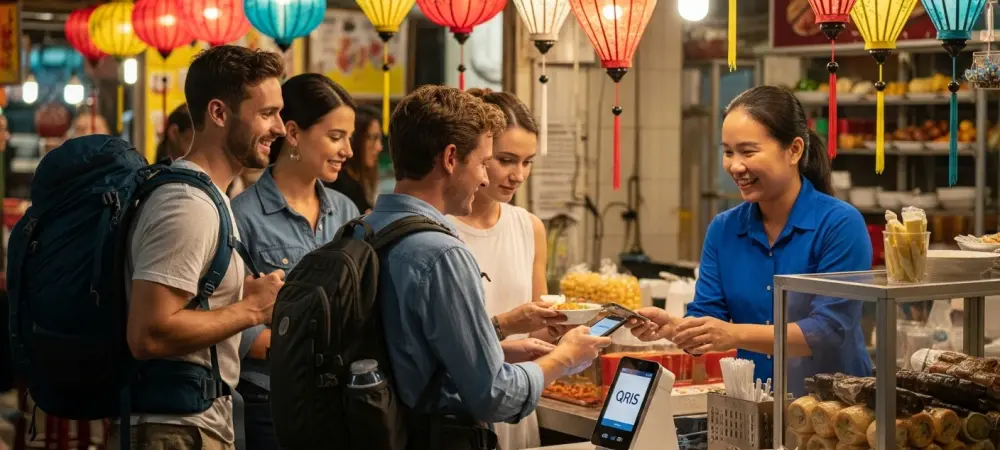
For a small eatery owner in a bustling market, the high fees and hardware costs associated with traditional credit card terminals are often a complete deal-breaker. By leveraging QRIS, we eliminate the need for expensive point-of-sale hardware, allowing a vendor to accept payments with nothing more than a printed QR code. This creates an emotional sense of inclusion for the merchant, who no longer has to turn away tourists because they lack the “right” payment method. Travelers feel a surge of confidence when they can pay for a simple street meal using their phone, experiencing the same cost-efficient convenience as a local resident. This collaboration essentially democratizes financial access, ensuring that even the smallest stall can participate in the digital economy without being penalized by the high transaction costs typical of legacy systems.
The Indonesia Tourist Travel Pack recently introduced QRIS-embedded SIM cards to promote a cashless tourism economy. How does the integration of these payment capabilities at the point of arrival impact traveler behavior, and what specific steps are taken to ensure real-time transaction security across different jurisdictions?
When a tourist lands in Bali and receives a QRIS-embedded SIM card, it fundamentally shifts their mindset from searching for an ATM to immediately engaging with the local culture. This initiative, launched in late 2025, removes the initial friction of travel and encourages spending at key tourist touchpoints that might have otherwise been skipped. To maintain security across different jurisdictions, our engine utilizes advanced real-time monitoring to detect anomalies as payments move between international wallets and local accounts. We treat every transaction with the highest level of scrutiny, ensuring that the traveler’s funds are protected by the same security standards used by a MAS-licensed Major Payment Institution. The result is a secure, invisible layer of technology that empowers the visitor to focus on their journey rather than the safety of their physical cash.
As non-bank mobile wallets expand their interoperability across markets like Singapore, Thailand, Malaysia, and Japan, what specific metrics indicate a successful transition to borderless commerce, and how does providing a white-label payments engine accelerate the product roadmap for emerging digital wallets?
Success is measured by the volume of cross-border transactions and the sheer diversity of merchant types being accessed, showing that users are moving beyond high-end retail to everyday purchases. When we see a wallet being used frequently for transportation or street food in different countries, it validates that the interoperability we have built is meeting a genuine demand for regional mobility. By providing a white-label payments engine, we allow emerging wallets to skip years of development and regulatory hurdles, essentially “plugging in” to a pre-built network of millions of merchants. This acceleration is crucial in a competitive market, as it allows fintech companies to focus on their unique user experience while we handle the complex plumbing of international finance. Watching a partner’s product roadmap shrink from years to months because of our API suite is a powerful testament to the efficiency of this model.
What is your forecast for the evolution of cross-border QR payments in Southeast Asia over the next three years?
I anticipate that we will see a complete blurring of borders where the distinction between local and international payments becomes entirely irrelevant to the end user. As more countries like Singapore, Thailand, Malaysia, and Japan tighten their digital linkages, we will likely see a surge in “super-app” capabilities where a single wallet handles every financial interaction across the entire region. The infrastructure we are building today will eventually support a truly unified digital economy, where 40 million merchants in Indonesia are just the beginning of a much larger, interconnected network. We are moving toward a future where the physical wallet is a relic of the past, replaced by a secure, ubiquitous digital presence that travels as easily as we do. It will be an era defined by extreme convenience and total financial inclusivity for both the traveler and the local merchant.