

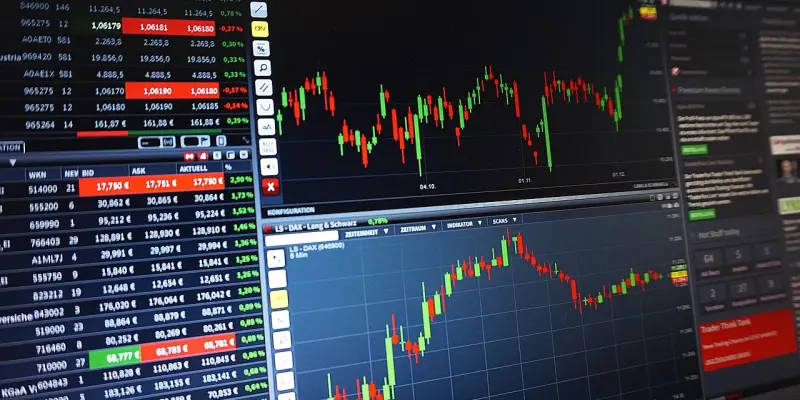
Advances in technology have significantly altered the landscape of arbitrage trading, fundamentally changing how traders operate and make decisions. Algorithms, high-frequency trading systems, and real-time data analytics play vital roles in reshaping the industry, allowing traders to identify and exploit market inefficiencies with unprecedented speed and accuracy. These technological innovations have introduced both opportunities and challenges, prompting a reevaluation of traditional trading methods and strategies.
The Technological Takeover
The advent of sophisticated algorithms and high-frequency trading systems has propelled the field of arbitrage trading into new dimensions. These technologies enable traders to detect marginal price differences across markets with remarkable speed and accuracy, rendering manual methods obsolete. Real-time data analytics further supports these high-tech tools, enabling instantaneous reactions to market changes. These tools can assess vast amounts of financial data in seconds, analyzing market trends and price movements to identify profitable opportunities swiftly.
The integration of algorithms allows for the automation of trades, drastically reducing the time required to execute them. This efficiency is particularly beneficial in arbitrage trading, where the timing of trades can mean the difference between profit and loss. High-frequency trading, characterized by its rapid execution of orders, capitalizes on these marginal price differences by conducting thousands of trades in seconds. The rapid pace of execution allows traders to secure gains before market corrections occur. However, this level of automation means that markets are increasingly driven by machine-based decisions, which can sometimes react unpredictably to market stimuli.
Efficiency and Precision: A Technological Edge
One of the most significant advantages offered by technology in arbitrage trading is improved efficiency and precision. Advanced systems can operate at speeds beyond human capability, ensuring that traders can capitalize on even the smallest market inefficiencies. Firms are increasingly investing in machine learning and artificial intelligence to enhance predictive accuracy and refine decision-making processes. These technologies can analyze patterns and trends that would be imperceptible to human traders, enabling a more nuanced understanding of market dynamics. Machine learning models, in particular, have shown great potential in improving the precision of trading decisions. By continually learning from vast amounts of data, these models can predict future market movements with increasing accuracy. AI-driven models can adapt to evolving market conditions and incorporate new information into their analyses, which helps traders make more informed decisions. This technological edge has resulted in tighter profit margins but offers a greater volume of trades, enabling firms to achieve substantial gains through cumulative small profits.
Navigating the Complexities
While technological advancements bring enormous potential, they also introduce complexity and risk. The high speed and automated nature of these systems could lead to technical disruptions or software glitches, posing significant threats. Moreover, simultaneous responses to market signals by multiple systems can create instability, demanding continuous monitoring and regular reviews to ensure safety and effectiveness. The reliance on algorithms and automated trading systems necessitates a strong focus on system reliability and security.
Furthermore, the complexity of modern trading systems can obscure transparency, making it difficult for traders to fully understand the mechanics behind their strategies. Technical failures, whether due to software bugs, hardware malfunctions, or network issues, can have catastrophic consequences. Hence, traders must implement rigorous testing and maintenance protocols to minimize the risk of such disruptions. Continuous performance evaluations and a proactive approach to identifying potential issues can help mitigate the risks associated with high-frequency trading systems.
The Threat of Scams and Frauds
The fast-paced world of arbitrage trading technology isn’t devoid of its pitfalls. One notable risk is the proliferation of fraudulent schemes disguised as cutting-edge solutions. Traders and investors must exercise caution and perform due diligence when adopting new technologies and services. Verification of credentials and a cautious approach are crucial to steering clear of scams promising quick profits. The allure of rapid financial gains can often cloud judgment, leading investors to fall prey to unscrupulous actors.
Scams in the arbitrage trading domain can take various forms, from bogus trading platforms to misleading investment products. Thus, a thorough review of a service provider’s track record, user reviews, and regulatory compliance is essential. Industry experts recommend consulting with established financial advisors or conducting independent research before adopting new technologies. Remaining vigilant and informed can help investors protect their assets and make more prudent investment choices.
Striking the Balance Between Innovation and Risk
As innovation drives forward, a balanced approach is essential to mitigate inherent risks. The need for robust risk management protocols becomes paramount. Strategies such as diversification of trading methods, setting strict stop-loss orders, and leveraging advanced analytics to monitor real-time trends can help minimize risk exposure. Effective risk management safeguards against market volatility and surprises triggered by rapid technological shifts. By implementing a well-rounded strategy, traders can better navigate the complexities of modern arbitrage trading.
Risk management involves not only employing advanced technological tools but also understanding their limitations. Traders should continuously update their knowledge on emerging risks and adapt their strategies accordingly. Diversification, while a common risk management tactic, can be particularly effective in arbitrage trading, given the narrow profit margins and high frequency of trades. By spreading risks across different trading strategies and asset classes, traders can hedge against potential losses and ensure more stable returns.
Conclusion and Final Insights
The evolution of technology has profoundly transformed the field of arbitrage trading, revolutionizing the ways traders operate and make decisions. Modern tools like algorithms, high-frequency trading (HFT) systems, and real-time data analytics are now core elements that reshape trading strategies, enabling traders to pinpoint and capitalize on market inefficiencies faster and more precisely than ever before. These advancements have opened up vast new opportunities for profitability, as traders can execute arbitrage strategies at lightning speed, outpacing traditional methods. However, these innovations also introduce a set of new challenges, including increased market competition, the necessity for continuous technological upgrades, and heightened regulatory scrutiny. As a result, there’s a compelling need for the trading community to revisit and refine their existing methodologies to adapt to this rapidly changing environment. Ultimately, while technology enhances the efficiency and potential of arbitrage trading, it also demands a higher level of sophistication and adaptability from traders to stay ahead in an increasingly competitive market landscape.