

For an industrial powerhouse accustomed to dominating regional markets with tangible goods, the intangible world of global e-commerce presents a landscape of both unprecedented opportunity and immense operational complexity. Vietnamese industrial group Sunhouse, a significant name in its home market, has set its sights on a monumental goal: to triple its international online business. This ambition marks a critical pivot from a traditional manufacturing-first model to that of a digitally agile, global competitor. To navigate this transformation, the company has forged a strategic partnership with technology firm Anchanto, signaling a decisive investment in the digital infrastructure required to compete on the world stage.
From Regional Giant to Global Contender The High Stakes of E-Commerce Expansion
The leap from regional manufacturing leadership to global e-commerce prominence is a formidable one, demanding more than just listing products on international platforms. It requires a fundamental re-engineering of the operational backbone that supports every click, order, and shipment. For Sunhouse, this evolution represents a strategic imperative to capture a larger share of the international consumer market and build a brand that resonates beyond its domestic borders.
This initiative is not merely about increasing sales figures; it is about building a sustainable and scalable international business. The decision to partner with a technology specialist like Anchanto underscores a recognition that legacy systems, however effective for a localized B2B model, are inadequate for the high-velocity, high-volume demands of modern, cross-border e-commerce. The stakes are high, as success will determine whether Sunhouse becomes a case study in successful digital transformation or a cautionary tale of overreach.
The Breaking Point Why Sunhouse’s Old Systems Couldn’t Keep Up
As Sunhouse’s cross-border sales began to accelerate, the operational cracks in its existing infrastructure became impossible to ignore. The rapid growth, while desirable, introduced a level of complexity that its manual and fragmented systems were ill-equipped to handle. The company found itself wrestling with disconnected data streams from a growing list of global marketplaces, including Amazon, TikTok Shop, and Walmart. This data fragmentation created a cascade of critical issues that threatened to undermine its expansion efforts.
The most pressing challenge was the significant delay in data synchronization between sales channels and inventory records. This lag necessitated a heavy reliance on manual processes to reconcile numbers, which was not only inefficient but also prone to human error. During peak sales events, this created a high-stakes risk of overselling—accepting orders for products that were no longer in stock, leading to canceled orders and damaged customer trust. Compounding this issue were deep-seated inefficiencies within its warehouses, where a lack of real-time product visibility and traceability slowed down order fulfillment and created costly operational bottlenecks.
The Blueprint for Transformation A Two-Part Technological Overhaul
To dismantle these operational barriers, Sunhouse’s strategy centers on a comprehensive, two-part technological overhaul powered by Anchanto’s integrated software suite. The core of this transformation is the deployment of an Order Management System (OMS) and a Warehouse Management System (WMS), designed to work in concert as a single, cohesive unit for its entire global e-commerce operation.
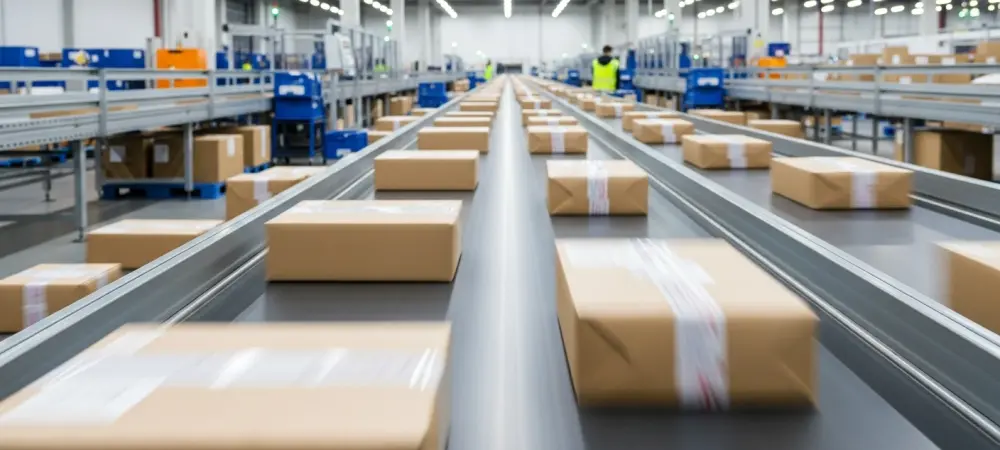
The OMS will act as the unified command center, centralizing all order, customer, and inventory data from its diverse sales channels across key markets in Vietnam, the United States, Mexico, and Canada. This creates a single source of truth, eliminating data silos and enabling real-time visibility. Simultaneously, the WMS will be implemented at two strategic e-commerce logistics hubs in Northern and Southern Vietnam. Its role is to modernize and automate warehouse execution—from receiving and putaway to picking, packing, and dispatch—injecting speed, accuracy, and efficiency into the physical fulfillment process.
Measurable Impact The Tangible Gains of a Unified System
The implementation of this integrated technology is projected to deliver immediate and substantial performance improvements. A primary target is the automation of workflows from the moment a customer clicks “buy” to the point of dispatch, which is anticipated to slash order processing time by an impressive 50%. This acceleration directly translates to a better customer experience and a more efficient supply chain.
Furthermore, the real-time synchronization between the OMS and WMS is designed to completely eliminate inventory discrepancies. By ensuring that stock levels are updated instantly across all sales channels as orders are placed, the persistent and costly problem of overselling will be eradicated. This digital overhaul is viewed as the foundational layer upon which Sunhouse can build a reputation for professional, rapid, and reliable service. Beyond the immediate gains, the new system provides the inherent scalability needed to support seamless expansion into new international markets in the years to come.
The Strategic Implementation Sunhouse’s Action Plan for Global Dominance
Sunhouse’s action plan is a methodical, multi-step process aimed at establishing a robust and agile e-commerce framework. The first step involves centralizing all multi-channel data through the Anchanto OMS. This initial phase is critical for creating the single, authoritative view of its global operations that was previously missing. Following this, the second step is the automation and streamlining of warehouse processes via the WMS installation, which will target improvements in speed, accuracy, and product traceability from shelf to customer. The third and most crucial step is the deep integration of these two systems. This synergy will ensure seamless, automated communication between sales channels and logistics hubs, allowing order flows and inventory updates to occur without manual intervention. Finally, with this integrated infrastructure in place, Sunhouse will be able to leverage its new capabilities to gain tighter control over the entire product lifecycle. This includes optimizing everything from packing and dispatch protocols to managing reverse logistics more effectively, providing a solid technological foundation for its ambitious global journey.