

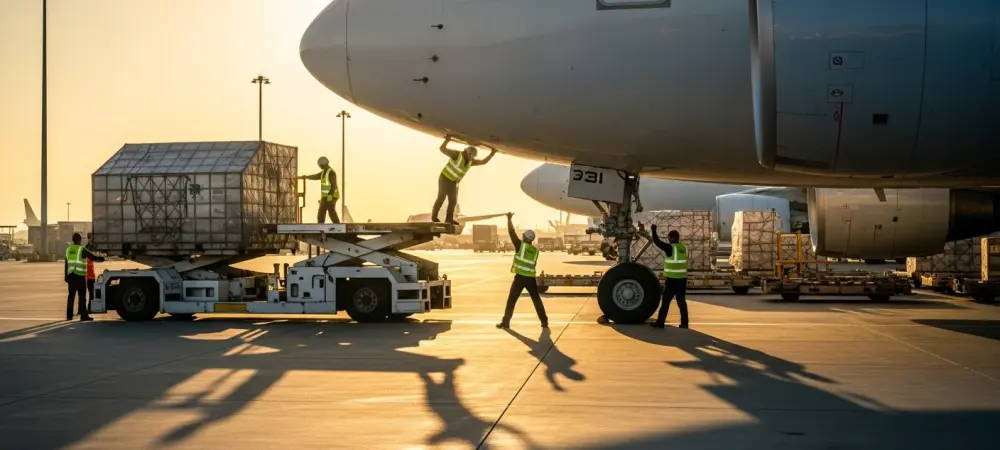
Navigating a landscape marked by shifting trade alliances and economic crosswinds, the global air cargo industry in 2025 carved out a path of determined growth, proving its indispensable role in the machinery of international commerce. The year was not a story of uniform expansion but one of nuanced recovery and significant strategic realignment. This analysis dissects the key performance indicators, regional dynamics, and powerful economic factors that shaped the industry, offering a comprehensive view of a market in transition. From the persistent demand driven by e-commerce to the redrawing of major trade lanes, the following sections provide a detailed examination of the forces at play.
2025 Market Performance: A Year of Resilient Growth
Core Metrics and Demand Catalysts
The global air cargo market demonstrated notable strength in 2025, concluding the year with a 3.4% overall increase in demand, as measured in cargo tonne-kilometers (CTK). This expansion was not fueled by a broad economic boom but was instead overwhelmingly sustained by the relentless momentum of global e-commerce. This sector served as the primary engine for air freight volumes, providing a critical buffer against the dampening effects of geopolitical tensions and evolving trade policies.
In parallel, the market witnessed a significant normalization following the extreme volatility of the pandemic era. Total available capacity, tracked as available cargo tonne-kilometers (ACTK), rose by 3.7%, slightly outpacing the growth in demand. This expansion effectively ended the severe capacity crunch that had defined previous years, rebalancing the supply-demand equation and setting the stage for a return to more predictable market conditions. The measured increase in capacity reflects the industry’s gradual stabilization as more passenger aircraft returned to service, supplementing dedicated freighter fleets.
Profitability and Strategic Adjustments
The rebalancing of the market had a direct and immediate impact on profitability, with full-year cargo yields experiencing a 1.5% decline compared to the prior year. This downward adjustment signaled a definitive shift away from the historically high rates seen during the peak of supply chain disruptions. The trend underscored a broader return to pre-pandemic market dynamics, where competition and capacity exert more conventional pressure on pricing.
Amid these changing conditions, the industry showcased its inherent adaptability. Businesses increasingly resorted to strategic maneuvers like the “front-loading” of shipments to preempt the impact of anticipated tariffs, highlighting air cargo’s role as a tool for mitigating supply chain risk. This proactive approach was supported by a favorable, albeit complex, economic backdrop. A 9.1% average decrease in jet fuel prices provided some operational relief for carriers, while a 4.4% expansion in global goods trade offered a solid foundation for cargo demand, even as cautious manufacturing sentiment lingered.
The Shifting Map: A Deep Dive into Regional Dynamics
A Tale of Contrasting Fortunes
A look beneath the global growth figures reveals a story of stark regional divergence in 2025. The Asia-Pacific region emerged as the undisputed leader, with carriers posting a remarkable 8.4% increase in demand for the year. This robust performance cemented the region’s position as the primary hub of air cargo activity, driven by strong manufacturing output and booming e-commerce exports. In sharp contrast, North America was the only region to register a full-year contraction, with demand falling by 1.3%. This decline reflected the direct impact of shifting trade policies and the realignment of supply chains away from trans-Pacific routes. Meanwhile, other regions presented a mixed but generally positive picture. African carriers recorded impressive 6.0% growth, and European carriers saw a solid 2.9% rise in demand. Latin America, however, experienced a significant downturn toward the year’s end, with December demand plummeting by 4.1%, signaling potential volatility ahead for the region.
Redrawing the Trade Lanes
The most significant structural trend of 2025 was the profound geographic shift in air cargo flows away from the historically dominant trans-Pacific trade lane. This realignment was largely a direct consequence of U.S. tariffs and the removal of the de minimis exemption for small-value shipments, which prompted businesses to seek alternative supply chain routes. The once-thriving Asia–North America corridor faced considerable headwinds as shippers pivoted their operations.
This pivot created powerful tailwinds for other major corridors. The Asia–Europe trade lane, for instance, experienced a surge in volume as it absorbed traffic redirected from the Pacific. Simultaneously, the Within Asia and Middle East–Asia lanes demonstrated robust growth, reflecting the deepening of regional supply networks and the establishment of new logistical hubs. This redrawing of the world’s trade map underscores a more fragmented and dynamic global commerce environment, with air cargo at the forefront of this transformation.
Expert Insights: Interpreting the Headwinds
Industry leaders noted that the market’s performance in 2025 was a testament to its resilience in the face of persistent uncertainty. Willie Walsh, Director General of IATA, highlighted that while the 3.4% growth was a welcome development, the industry remains sensitive to ongoing geopolitical developments and the evolution of international trade policies. These external factors continue to be the primary determinants of future demand patterns.
Expert analysis also points to a sense of caution within the global manufacturing sector, a key indicator for air cargo demand. Although the global manufacturing index edged into expansionary territory late in the year, the new export orders component remained in contraction. This disconnect suggests that while overall production was recovering, international trade sentiment had not yet fully rebounded, creating a potential headwind for the industry as it moved into the new year.
Charting the Future: Projections and Potential Volatility
Looking at the current year, industry forecasts point toward a period of more moderate expansion. IATA projects that demand will grow by a conservative 2.4%, a figure that aligns more closely with long-term historical trends rather than the recovery-driven pace of 2025. This projection suggests the market is settling into a phase of stable, albeit slower, growth as the last of the post-pandemic distortions fade.
However, the path forward is not without potential turbulence. Persistent geopolitical uncertainty, from trade disputes to regional conflicts, remains the most significant risk to the forecast. Fluctuating economic indicators and the lingering threat of inflation could also temper demand. At the same time, significant opportunities exist. The continued structural strength of e-commerce is expected to provide a reliable demand floor, while the newly established and fortified trade corridors offer avenues for sustained growth and greater supply chain resilience.
Conclusion: Key Takeaways for Navigating a New Era
The narrative of global air cargo in 2025 was one of complex adaptation. The year’s growth was fundamentally anchored by the digital economy, with e-commerce providing the necessary momentum to overcome significant geopolitical and economic headwinds. This reliance was coupled with a profound structural realignment of global trade lanes, which saw traffic pivot away from the trans-Pacific in favor of routes connecting Asia with Europe and the Middle East. These shifts occurred as the market simultaneously normalized, with capacity returning and yields softening from their pandemic-era peaks.
Ultimately, the industry’s greatest strength proved to be its remarkable adaptability. From carriers adjusting networks to shippers reconfiguring supply chains, stakeholders demonstrated an impressive capacity for strategic flexibility in a volatile global landscape. This ability to anticipate, react, and realign will remain the most critical asset for all participants as they navigate the evolving currents of international trade in the years ahead.