

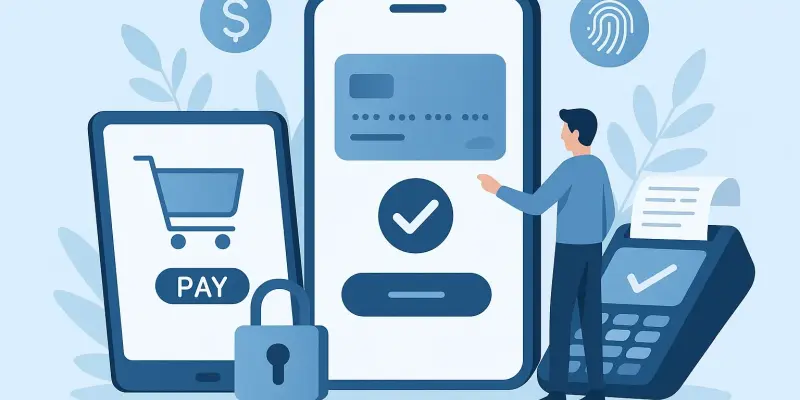
In an era where digital transformation dictates the trajectory of business practices, U.S. Bank has emerged as a powerful force in redefining how embedded payment solutions can enhance organizational efficiency. By expanding its suite of embedded payment offerings, U.S. Bank aims to provide businesses with the ability to integrate robust payment functionalities seamlessly into their existing systems. This innovative approach is designed to facilitate smooth financial operations across diverse industries, ensuring secure transactions whether online or through enterprise systems. The enhanced capabilities provide a compelling solution for industries ranging from fintech to healthcare, underscoring the bank’s dedication to improving transaction speed and safeguarding financial operations.
Expanding Groundbreaking Embedded Payment Solutions
Integrating Financial Transactions into Business Ecosystems
U.S. Bank’s latest expansion in its suite of embedded payment solutions marks a significant evolution in the intersection of technology and finance. By enabling businesses to embed sophisticated payment functionalities directly into their platforms, the bank is addressing a crucial market demand for seamless and efficient transaction capabilities. The system’s backbone is the For-Benefit-Of (FBO) solution, an advanced feature supporting unlimited virtual accounts. This allows businesses to monitor participant funds effectively and aids in maintaining precise financial records across various transactions. Through this integration, U.S. Bank provides a comprehensive package that includes account management, risk handling, and payment facilitation, offering a significant advantage for businesses seeking streamlined operations. The motivation driving these enhancements revolves around the current pressures faced by finance leaders to optimize liquidity, minimize payment frictions, and enhance user experience. By leveraging embedded payment capabilities, U.S. Bank supports businesses in achieving smoother operations and better financial control within their technological frameworks. This not only increases the speed of transactions but also significantly boosts security and reliability. The scope of these innovations reflects U.S. Bank’s pledge to deliver top-tier payment solutions that adapt with evolving business needs and technological landscapes.
Enhancing Customer Experience with Real-Time Processing
Central to U.S. Bank’s embedded payment solutions is the ability to offer diverse payment types, including real-time payments tailored to various business and customer needs. By facilitating instant processing, businesses can greatly enhance their customer experience, providing an edge in today’s competitive market. With an emphasis on real-time execution, customers experience a frictionless transaction process that not only meets but often exceeds their expectations for speed and efficiency. This dynamic approach ensures that businesses can maintain high levels of customer satisfaction while simultaneously enhancing their operational effectiveness. Further supporting this capability is the system’s robust risk management framework, which provides ongoing support and security for transactions. This commitment extends to various sectors, with U.S. Bank’s solutions supporting fintechs, insurance companies, and healthcare systems, among others. For instance, Basefund, a fintech catering to municipalities and corporations, leverages these integrated solutions to enable secure, high-value transactions involving multiple parties. Such integrations showcase how U.S. Bank’s pioneering solutions can be tailored to meet specific industry demands. As businesses continue to adopt these innovative solutions, U.S. Bank remains steadfast in its dedication to enhancing transaction processes through state-of-the-art technology.
The Role of Elavon and Industry Collaborations
Leveraging Substantial Experience in Payment Processing
Elavon, a subsidiary of U.S. Bank, is integral to these transformative embedded payment solutions. Offering a wealth of services, from merchant processing to treasury management, Elavon underpins the bank’s strategy by delivering customized, integrated solutions for a wide range of businesses. By utilizing Elavon’s extensive expertise, U.S. Bank enriches its offerings, ensuring businesses receive tailored solutions that meet the unique demands of their operations. This collaboration highlights the symbiotic relationship between U.S. Bank’s innovative payment systems and Elavon’s industry-specific insights, which collectively enhance business capabilities.
The strength of this relationship is evident in the real-world applications of these solutions. For example, Rain, a fintech platform, capitalizes on Elavon’s capabilities to provide instant wage access to employees, streamlining a service that benefits millions of users monthly. Through such partnerships, U.S. Bank illustrates its commitment to remaining at the forefront of financial technology by constantly innovating and adapting to market needs. The dual expertise of U.S. Bank and Elavon ensures that businesses have access to cutting-edge payment solutions that align with their strategic objectives.
Industry Applications and Success Stories
The successful integration of embedded payment solutions across various industries serves as a testament to the effectiveness of U.S. Bank’s strategic approach. Financial technology platforms, insurance companies, and healthcare providers are among the early adopters benefiting from the streamlined transaction processes the bank offers. This diverse application demonstrates the bank’s versatility in addressing the needs of different sectors, from facilitating high-value transactions in fintech to ensuring secure payment processing in healthcare systems. By setting a new benchmark for payment solutions, U.S. Bank’s initiatives represent a broader industry trend towards incorporating advanced financial technologies within business frameworks. These real-world implementations reflect not just the bank’s ability to meet current demands, but its foresight in anticipating the future of financial transactions. As industries evolve, the necessity for dynamic, secure, and efficient payment solutions becomes increasingly clear. U.S. Bank continues to lead in this domain, providing a blueprint for future-focused financial systems that bridge technological advancements with practical business needs.
Navigating the Future of FinTech Integration
In today’s world, where digital transformation is a key driver of business strategies, U.S. Bank stands out as a leader in redefining the effectiveness of embedded payment solutions to improve organizational efficiency. By broadening its range of embedded payment offerings, U.S. Bank seeks to empower businesses to seamlessly integrate sophisticated payment functionalities into their existing frameworks. This forward-thinking strategy is aimed at ensuring smooth financial processes across a variety of sectors, promoting secure transactions whether conducted online or via enterprise systems. These enhanced capabilities serve as an attractive option for industries including fintech and healthcare, highlighting the bank’s commitment to boosting transaction speed while ensuring financial security. U.S. Bank’s efforts are a testament to its unwavering dedication to enhancing the way financial operations are conducted, providing a crucial tool for businesses to navigate the complexities of the digital age efficiently.