

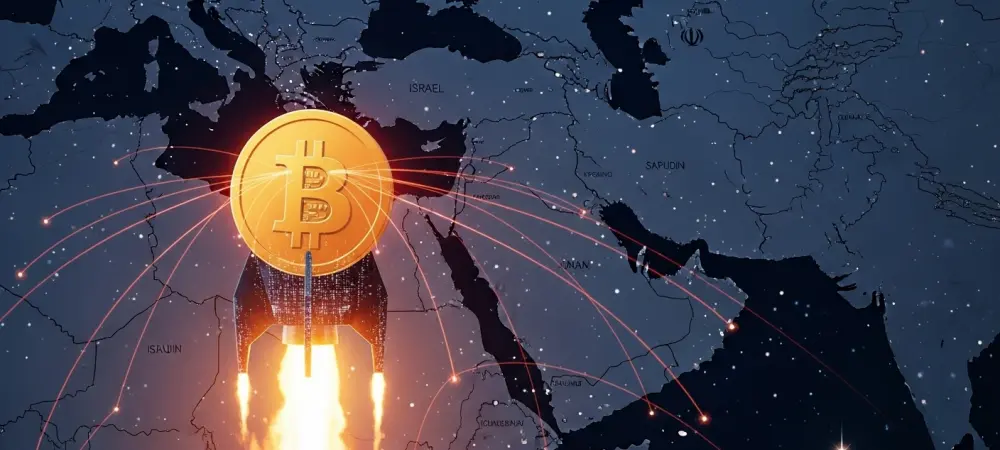
The global financial landscape is currently navigating a high-stakes transition where the traditional barriers between geopolitical warfare and digital asset valuation have almost entirely evaporated. As the world watches the shifting power dynamics in the Middle East, Bitcoin has emerged not merely as a speculative token but as a hyper-sensitive barometer for global liquidity and institutional fear. This recent ascent to the $70,000 threshold represents a sophisticated recalibration of risk, where investors are increasingly treating the premier cryptocurrency as a high-beta asset that thrives on the resolution of systemic uncertainty.
Assessing the Synergy Between Geopolitics and Digital Finance
Bitcoin’s current role in the international economy is defined by its ability to react instantaneously to shifts in military and administrative rhetoric. Unlike gold, which often moves with a slow, defensive posture, Bitcoin functions as a liquidity sponge that absorbs the market’s collective reaction to changes in global stability. When tensions in the Middle East show signs of cooling, the release of “war premiums” flows directly into the digital sector, pushing valuations toward historical resistance levels.
The ongoing debate over whether Bitcoin serves as a safe haven or a risk-on asset has reached a new level of clarity. During the height of regional conflict, it often mirrors the volatility of tech stocks; however, as de-escalation begins, it leads the recovery. The psychological barrier of $70,000 is more than just a number; it acts as a signal to institutional traders that the macroeconomic volatility which previously suppressed growth is now being priced out in favor of a more stable, liquid environment.
Decoding Market Drivers and the Trump Effect on Crypto
Emerging Trends in Geopolitical Arbitrage and Investor Behavior
The rapid 3% surge in Bitcoin’s valuation can be traced directly to specific administrative claims regarding the acceleration of military timelines. When leadership suggests that operations are nearing a conclusion ahead of schedule, the market interprets this as a green light for risk-on behavior. This phenomenon, often referred to as geopolitical arbitrage, allows savvy investors to trade on the gap between official state narratives and the ground reality of regional stability.
Institutional traders have historically adopted a wait-and-see approach when faced with conflicting reports from Western and Middle Eastern governments. While Washington may project optimism, denials from regional powers regarding ceasefires create a friction-filled environment. This tension ensures that while the price climbs, the market remains cautious, preventing the kind of irrational exuberance that typically leads to a blow-off top. Instead, the current growth appears measured and driven by a calculated reduction in perceived systemic risk.
Quantitative Analysis and the Path Toward Price Discovery
From a technical standpoint, the recovery of Bitcoin is anchored by a critical support zone at $68,000, which has held firm despite repeated tests. The current focus for quantitative analysts is the $71,200 resistance level. Breaking this ceiling would not only validate the current rally but would also move the asset into a price discovery phase. In this state, the absence of historical sell orders allows for rapid appreciation, potentially setting the stage for new all-time highs as the global economy seeks a new equilibrium.
Forward-looking projections suggest that if energy prices continue their current trend toward stabilization, the cryptocurrency market could see an influx of capital from traditional sectors. As the volatility of crude oil subsides, the diverted capital often searches for high-growth alternatives. This transition is expected to fuel a sustained bullish structure, provided that the underlying geopolitical assumptions remain intact and no new flashpoints emerge to disrupt the flow of global trade.
Overcoming Systemic Obstacles and Global Friction
The fragility of the current bullish structure is primarily tied to the validity of de-escalation claims. Unverified reports of a ceasefire can create artificial price spikes that are vulnerable to sudden reversals if hostilities are renewed. This logistical uncertainty is compounded by complexities within European alliances, where disputes over base usage in the United Kingdom and Spain have introduced friction into the broader Western response, reminding investors that the path to stability is rarely a straight line.
Furthermore, the persistent threat of disruptions in the Strait of Hormuz remains a significant “tail risk” for the digital asset market. Any closure of this vital maritime artery would likely trigger an immediate risk-off sell-off, as the resulting energy shock would force a global flight to cash. To mitigate these risks, sophisticated participants are increasingly using hedging strategies that balance Bitcoin positions with energy futures, ensuring they are protected against sudden shifts in geopolitical rhetoric or a breakdown in diplomatic negotiations.
Navigating the Regulatory and Macroeconomic Landscape
The collapse of WTI crude oil prices has a profound impact on the Federal Reserve’s interest rate trajectory, which in turn dictates Bitcoin’s appeal. Lower energy costs help dampen sticky inflation, giving central banks more room to move toward a dovish monetary policy. As Treasury yields fluctuate in response to these shifts, the opportunity cost of holding Bitcoin decreases, making it an attractive alternative to traditional bonds which may offer diminishing real returns in a post-conflict economy.
International compliance and security measures also play a vital role in maintaining the liquidity required for Bitcoin to sustain its $70,000 valuation. During times of regional crisis, the ability to move capital across borders without the friction of traditional banking delays becomes a primary value proposition. This structural advantage ensures that Bitcoin remains a pillar of the global financial architecture, even as global trade routes face temporary interruptions or regulatory scrutiny.
The Future of Bitcoin in a De-Escalating Global Economy
As energy markets normalize, the broader adoption of digital assets is likely to accelerate, potentially decoupling Bitcoin from traditional equity markets like the Nasdaq and S&P 500. Emerging technologies in the mining and settlement layers are expected to further differentiate the crypto-economy from the legacy financial system. This evolution suggests a future where Bitcoin is not just a reactive asset but a proactive component of a diversified global portfolio, less dependent on the whims of traditional market cycles.
The diplomatic outcomes currently being shaped will likely influence the next decade of financial innovation. A stabilization of the Middle East could lead to the integration of digital currencies into regional trade settlements, particularly in the energy sector. This would cement Bitcoin’s status as a permanent fixture in global finance, transitioning it from a speculative tool used during times of war into a foundational asset for a more transparent and efficient global trade network.
Synthesizing the Rebound and Investment Outlook
The relationship between administrative optimism and the normalization of oil prices created the exact conditions necessary for Bitcoin to reclaim its current height. While the rally was initially fueled by sentiment, its sustainability depended on the tangible cooling of energy-related inflation. Market participants observed that the market prioritized political signaling over military data, showing a clear preference for a return to macroeconomic normalcy. This trend highlighted the dominance of liquidity shifts over immediate physical conflict outcomes in the digital asset space.
Moving forward, the focus must shift toward verifying policy changes rather than relying on political rhetoric to guide investment decisions. Investors should prioritize the monitoring of actual energy supply levels and official state department communiqués to ensure their positions are supported by more than just temporary market optimism. The integration of decentralized finance into standard risk-management protocols will likely become a necessity for those seeking to capitalize on future regional stabilizations. By focusing on verified de-escalation metrics, participants can better navigate the volatility that remains inherent in a world where geopolitics and digital finance are inextricably linked.