

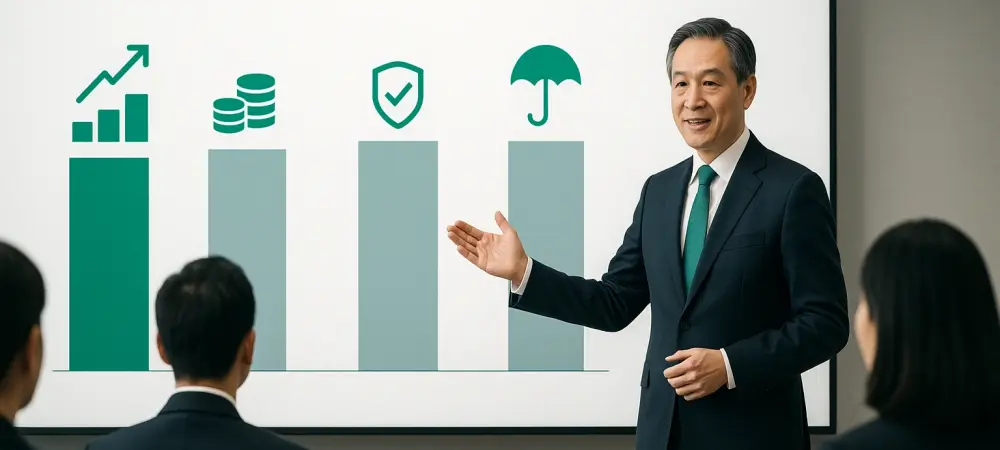
In the high-altitude boardrooms overlooking Victoria Harbor, the conversation has shifted from the pursuit of immediate market gains toward the much more intricate and enduring task of crafting a multi-generational financial legacy. Hong Kong’s financial landscape is currently undergoing a silent but profound transformation, moving away from the era of quick-win transactions toward a future of legacy-building. While many institutions are retreating into purely digital storefronts, Hang Seng Bank is doubling down on a more sophisticated, high-touch model. By launching a comprehensive five-pillar wealth strategy, the bank is not just selling financial products; it is positioning itself as the architect of long-term family security in a city that currently manages a staggering HK$42.2 trillion in assets. This pivot reflects a broader recognition that wealth is no longer merely about the balance sheet of today, but about the sustainability of a family’s influence and comfort across decades of shifting global dynamics.
Redefining Prosperity in the Heart of Hong Kong
The quest for financial stability in a premier global hub like Hong Kong requires more than just access to capital; it demands a spatial and psychological environment that fosters deep reflection. Hang Seng has recognized that as the city’s wealth matures, the physical spaces where financial decisions are made must also evolve. This is not about a simple aesthetic upgrade but a fundamental reimagining of what a bank represents to its most valued clients. By moving beyond the transactional nature of traditional branch banking, the institution is creating sanctuaries where complex conversations about inheritance, philanthropy, and international transition can happen without the bustle of the street level.
This strategy is particularly relevant as Hong Kong solidifies its status as a leading global wealth hub, attracting a diverse array of high-net-worth individuals from across the region. The bank’s commitment to physical infrastructure serves as a counter-narrative to the trend of total digitalization, suggesting that high-stakes wealth management still requires a human-centric, tangible presence. The integration of luxury and utility in these new spaces reflects a localized understanding of the Hong Kong affluent class, who value both the efficiency of modern technology and the prestige of personalized, face-to-face consultation.
The Evolution from Individual Returns to Family Legacies
The traditional approach to wealth, which once focused almost exclusively on the individual and their immediate market gains, is no longer sufficient for the complexities of modern life. Today’s investors are increasingly concerned with lifestyle continuity, intergenerational education, and the intricate logistics of estate planning. This shift is mirrored by market data from the Securities and Futures Commission, which reported a 20 percent year-on-year growth in total assets under management recently. As families look toward the horizon, the demand has moved toward integrated planning that can withstand market volatility while securing a family’s future across borders.
Furthermore, the rise of the “sandwich generation”—those managing the needs of both aging parents and growing children—has accelerated the need for comprehensive family financial structures. The objective is no longer just to outperform a specific index, but to ensure that the wealth accumulated over a lifetime can be seamlessly transitioned to the next generation without loss of value or purpose. This transition requires a move away from siloed investment accounts toward a unified family balance sheet that accounts for diverse goals, from overseas tuition to retirement healthcare and charitable foundations.
The Five Strategic Pillars of Hang Seng’s Wealth Transformation
Central to this transformation is the Optimization of the Physical Service Network, where the bank is transitioning from traditional branches to elite “Wealth Centers.” A flagship example is the Hysan Place Wealth Center in Causeway Bay, which offers a “Sky Bar” and panoramic harbor views to facilitate deep financial discussions in a tranquil setting. This tiered network utilizes MTR station points for daily convenience while reserving high-end hubs for complex, goal-based planning. This duality ensures that the bank remains an integral part of a client’s daily routine while providing specialized environments for significant life milestones.
Simultaneously, there is a distinct Shift to Family-Centric Wealth Planning. Moving beyond the individual, the bank has introduced the “Family+” account system. This innovative structure allows a primary holder to manage multiple sub-accounts tailored to the specific needs of different family members, such as education funds for children or medical reserves for elders. Coupled with multi-currency life insurance plans, this approach ensures that banking evolves alongside the family’s changing life stages, providing a flexible framework for protection and growth.
To support these diverse needs, the bank has committed to an Unrivaled Diversification of Financial Products. With a portfolio spanning 23 product categories, the bank offers everything from standard equities to physical gold—a rare offering in modern retail banking that appeals to those seeking tangible asset security. Supporting 10 different currencies, this pillar allows clients to manage liquidity and hedge risks, which is vital for families with international education or relocation goals from 2026 to 2030 and beyond.
The human element is reinforced through Aggressive Talent Expansion and Professionalism. Recognizing that high-level wealth management requires a nuanced touch, Hang Seng is increasing its relationship management staff by 20 percent. Through frequent recruitment and rigorous training, the bank ensures its advisors are equipped to provide tailored guidance rather than just transaction support. Finally, Seamless Technological Integration acts as the connective tissue for the entire strategy. By investing in digital tools that provide real-time portfolio insights, the bank creates a cohesive ecosystem where the mobile app and physical centers share a synchronized flow of information.
Expert Insights into the Hong Kong Wealth Hub
Financial analysts note that the success of this strategy lies in its alignment with the global trend of “integrated planning.” Rannie Lee, the bank’s head of retail banking and wealth, suggests that modern wealth management is now a “family conversation” rather than a private solo venture. This perspective is vital in a culture where family unity and collective security are paramount. The bank’s design motif, featuring “water droplets merging into the ocean,” symbolizes the steady, patient accumulation of wealth that defines the Hong Kong success story.
Industry experts point out that by bridging the gap between a mass-market retail bank and an exclusive private wealth manager, the institution is effectively democratizing high-end financial services for the affluent middle class. This move capitalizes on deep historical roots in the region, providing a sense of stability that newer, purely digital entrants cannot easily replicate. The focus on multi-currency and physical assets like gold also reflects a sophisticated understanding of regional risk management, positioning the bank as a steady partner in an increasingly unpredictable global economy.
Frameworks for Building a Modern Wealth Portfolio
Building a resilient portfolio in the current climate requires the adoption of a multi-tiered management system. Investors are encouraged to utilize digital tools for daily liquidity while dedicating specific time for face-to-face consultations on long-term goals. This ensures that short-term needs do not distract from the overarching mission of legacy building. Furthermore, every financial plan should prioritize the four pillars of wealth: education, protection, retirement, and legacy stewardship, ensuring that no aspect of a family’s future is left to chance.
Leveraging currency diversification has also become a non-negotiable strategy for modern families. Protecting against regional volatility by maintaining assets in multiple currencies facilitates easier international transitions and secures purchasing power for global education. Finally, adopting a goal-based allocation model allows families to shift their focus from chasing short-term market returns to achieving specific milestones. This disciplined approach transformed the way wealth was perceived, moving it from a fluctuating number on a screen to a solid foundation for the future.
The implementation of these strategies provided a definitive roadmap for families seeking to navigate the complexities of the regional economy. The institution successfully integrated the convenience of transit-linked service points with the prestige of high-altitude consultation centers, creating a seamless journey for the client. This holistic framework allowed investors to view their assets not as isolated investments, but as part of a grander narrative of family progress. By focusing on professional talent and technological synergy, the bank established a new benchmark for what it meant to be a trusted wealth partner. This evolution ultimately ensured that the steady accumulation of capital served a higher purpose of long-term security and intergenerational prosperity.