

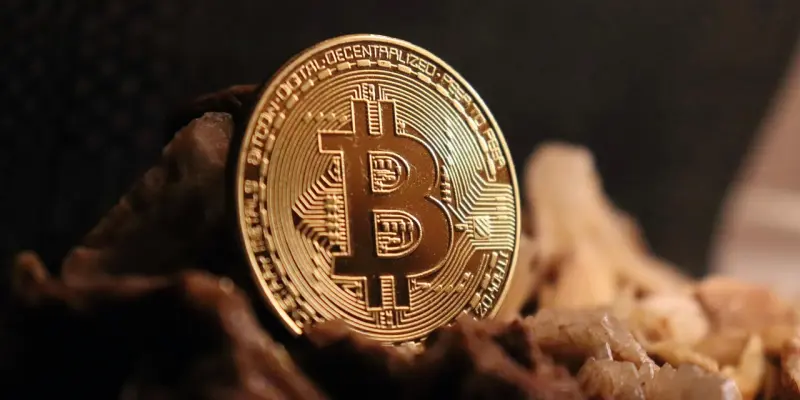
Bitcoin remains a dominant force in the crypto market, garnering attention due to its status as digital gold. Its decentralized structure relies on miners who validate transactions through a proof-of-work process. Recently, Bitcoin’s price has seen substantial growth, soaring to $83,199.00 as of April, with expectations to hit between $150,000 and $200,000 by the end of the current year.
Governments and financial institutions worldwide are recognizing the importance of Bitcoin and incorporating it into their regulatory frameworks. Spot Bitcoin ETFs have also made significant contributions to Bitcoin’s accessibility. By enabling investors to purchase and trade Bitcoin through traditional stock exchanges, these ETFs bridge the gap between conventional finance and the crypto market. The increased accessibility is expected to drive more institutional investments, which in turn, will continue to propel Bitcoin’s value upward.
MANTRA stands out in the cryptocurrency space due to its distinct regulatory compatibility, crafted specifically for compliance. MANTRA operates on the Cosmos SDK and is IBC-compatible, supporting CosmWasm smart contracts through a proof-of-stake mechanism. This technology allows for 10,000 transactions per second, showcasing both efficiency and scalability.MANTRA’s current price is at $6.38, up significantly from $0.8688 in August of the previous year. Analysts forecast its price to increase to $10.43 by December, underlined by its institutional compatibility and regulation-friendly approach.
The proof-of-stake mechanism utilized by MANTRA not only ensures regulatory compatibility but also demonstrates impressive transaction efficiency and scalability. Capable of handling 10,000 transactions per second, MANTRA is well-equipped to meet the demands of high-frequency trading and other financial operations. The surge in its price reflects the growing confidence among institutional investors, who are increasingly recognizing the benefits of MANTRA’s regulatory compliance and technological capabilities.
BlockDAG has carved a niche in the developer community by providing a practical and feature-rich Beta Testnet. Unlike early-stage networks that primarily focus on performance metrics, BlockDAG emphasizes usability for developers, offering an integrated toolkit designed to facilitate a seamless and efficient building experience. This toolkit includes a live Integrated Development Environment (IDE), simplified deployment wizards, decentralized applications (dApps), and comprehensive documentation. These features make BlockDAG an attractive platform for developers looking to construct and test blockchain applications. The success of the Beta Testnet is measured by user engagement, targeting at least 10 developers interacting with smart contracts and over 100 wallet creations within the first month.
BlockDAG has demonstrated impressive financial momentum, raising $213.5 million in presale and pricing its BDAG coin at $0.0248.This substantial financial backing underscores the market’s confidence in BlockDAG’s developer-centric approach and its potential to foster innovation within the blockchain space. By prioritizing developer experience and providing robust tools, BlockDAG aims to become the bedrock for future Web3 advancements. The success of BlockDAG’s initiatives is not only measured by financial metrics but also by the level of engagement and satisfaction among developers who utilize the platform.
Emerging trends indicate strong institutional interest and regulatory developments driving Bitcoin and MANTRA’s growth. Bitcoin’s established legacy continues to attract attention, while MANTRA’s focus on regulation appeals to institutions seeking compliance and efficiency. These trends highlight the importance of regulatory support and institutional investment in the cryptocurrency market.
BlockDAG, on the other hand, sets itself apart by fostering a supportive environment for developers to construct and test blockchain applications.This developer-centric approach is crucial for the sustainable growth and adoption of new technologies within the blockchain space. By prioritizing developer experience and providing robust tools, BlockDAG ensures that innovation and development remain integral parts of the cryptocurrency industry’s trajectory. As more developers engage with BlockDAG’s platform, the potential for groundbreaking advancements within the Web3 ecosystem increases.
The varied strategies and trajectories of Bitcoin, MANTRA, and BlockDAG highlight the dynamic and multifaceted nature of the cryptocurrency industry.Bitcoin capitalizes on its market prominence, MANTRA embraces regulatory alignment to attract institutional investment, and BlockDAG empowers developers with tools for innovation. This synthesis of differing approaches underscores the importance of infrastructure, regulation, and developer experience in shaping the future of cryptocurrency.Bitcoin, MANTRA, and BlockDAG are three standout projects among the countless vying for attention, each bringing unique strategies and bright futures to the table. These cryptocurrencies have carved significant niches in their respective domains, offering fresh insights and perspectives on the ever-changing crypto landscape. Bitcoin, as the pioneering cryptocurrency, continues to reinforce its position as a digital gold standard. MANTRA focuses on community governance and staking, pushing the boundaries of decentralized finance. BlockDAG introduces advanced consensus methods, aiming to overcome scalability issues of traditional blockchain. Together, their advancements provide a well-rounded understanding of cryptocurrency’s future direction and trends, illustrating the dynamic nature of digital assets and the evolving opportunities within this innovative sector.