

A Market Unbalanced: The Anatomy of a Crypto Flash Crash
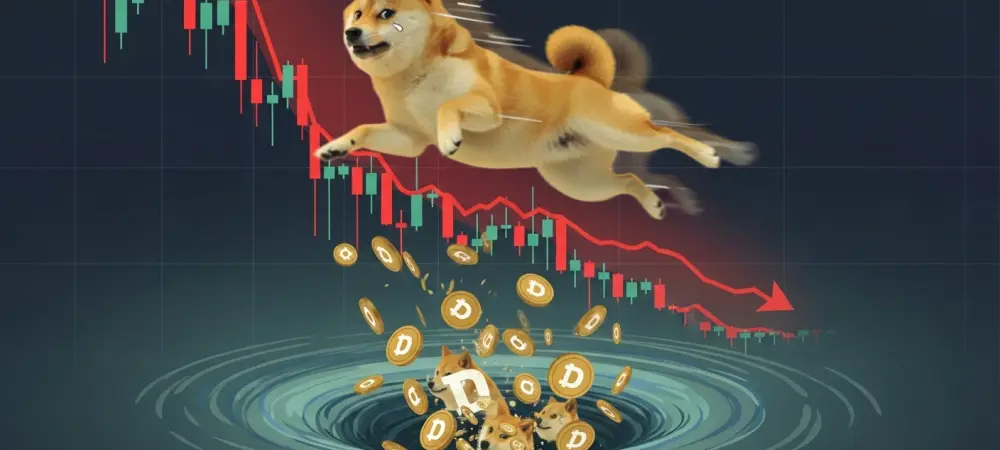
The cryptocurrency market recently witnessed a dramatic event as Dogecoin (DOGE), a leading meme coin, experienced a sharp price decline that triggered a cascade of forced liquidations. This was not just a typical market downturn; it was a stark demonstration of how leveraged trading can amplify volatility, leading to an extreme and one-sided market flush. The event saw a staggering imbalance in futures liquidations, highlighting the immense pressure placed on bullish traders. This analysis will dissect the mechanics behind this massive liquidation event, explore the technical indicators at play, and offer insights into what this means for the future of Dogecoin and its community of traders.
From Meme to Market Mover: Dogecoin’s Volatile Legacy
To understand the significance of this event, it is crucial to appreciate Dogecoin’s unique position in the crypto landscape. Born from an internet meme, DOGE has evolved into a top-tier digital asset known for its passionate community and extreme price swings, often fueled by social media trends and celebrity endorsements. This inherent volatility makes it a popular choice for derivatives trading, where investors use leverage to magnify potential gains. However, leverage is a double-edged sword. As the broader meme coin sector experienced a pullback, the speculative enthusiasm that once propelled Dogecoin upward became the very catalyst for its accelerated decline, setting the stage for the liquidation crisis.
Dissecting the Market Turmoil
The 12,928% Imbalance: A Cascade of Forced Selling
The core of the recent turmoil lies in the futures market, where an astonishing disparity emerged between bullish and bearish liquidations. Data revealed a 12,928% gap, with over $315,000 in long positions—bets on the price increasing—being forcibly closed in a single hour, compared to a mere $2,304 in short positions. This phenomenon, known as a long squeeze, occurs when a price drop triggers margin calls for leveraged traders. Unable to add more collateral, their positions are automatically sold on the market. This sudden influx of sell orders creates a vicious cycle, pushing the price down further and liquidating the next tier of long positions in a rapid, cascading effect.
Reading the Charts: Key Price Levels Under Pressure
The liquidations were concentrated as Dogecoin’s price dipped below the critical psychological level of $0.10, eventually hitting a low near $0.09865. Technical analysts note that DOGE is currently caught in a wide trading range, with significant support around $0.08 and major resistance near $0.13. For bullish momentum to be restored, the price must decisively break and hold above the $0.13 barrier. Conversely, the immediate challenge is to stay above the $0.10 mark; failing to do so increases the risk of another wave of liquidations as more leveraged positions come under pressure, potentially driving the price toward the $0.08 support floor.
The EMA Death Cross: A Historical Omen for Dogecoin
Adding another layer of complexity, a significant long-term technical signal has appeared on the charts. The 20-week exponential moving average (EMA) recently crossed below the 200-week EMA—a pattern often referred to as a “death cross.” While this is traditionally a bearish signal indicating weakening momentum, some analysts have noted that in Dogecoin’s history, such an event has sometimes preceded a market bottom. This creates a conflicting narrative: the short-term picture is dominated by bearish pressure and liquidation risk, while a long-term historical lens offers a glimmer of a potential reversal, adding to the uncertainty facing traders.
What Lies Ahead: Navigating Dogecoin’s Uncertain Path
The future trajectory for Dogecoin hinges on its ability to break out of its current consolidation range. The recent liquidation event has likely instilled a greater sense of caution among traders, who may be more hesitant to apply high leverage in the near term. For a sustained recovery, DOGE will need a catalyst strong enough to push it past the $0.13 resistance, which could come from a broader market rally or a renewed surge in meme coin interest. However, if bearish sentiment prevails and the price slides toward the $0.08 support, the market could see a repeat of forced selling, further delaying any potential recovery.
Lessons from the Liquidation: Strategies for Traders
The primary takeaway from this episode is a powerful reminder of the inherent dangers of high-leverage trading in volatile markets. The massive imbalance in liquidations underscores how quickly speculative positions can be wiped out. For traders, this event highlights the critical importance of robust risk management. Actionable strategies include implementing strict stop-loss orders to cap potential losses, using leverage judiciously, and understanding key market structure levels where liquidation cascades are more likely to occur. The Dogecoin squeeze serves as a case study in how forced selling can temporarily override fundamental or technical analysis, making risk mitigation paramount.
Beyond the Hype: The Enduring Reality of Market Risk
The Dogecoin price drop and subsequent liquidation cascade offered more than just a dramatic headline; they provided a crucial insight into the mechanics of modern crypto markets. The event was a clear illustration of how leverage can create feedback loops that punish over-exposed traders and accelerate price movements. While Dogecoin’s future remains uncertain, the lessons learned from this turmoil were timeless. For investors and traders alike, it reinforced the need for a disciplined approach, a deep understanding of market dynamics, and a profound respect for risk in an ecosystem defined by its volatility.