

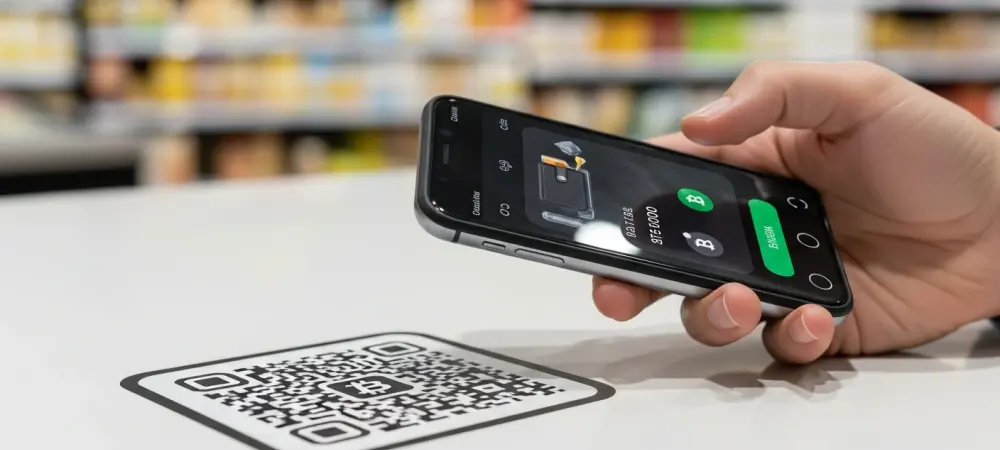
The rapid evolution of digital finance in the Philippines has reached a critical juncture where the line between traditional banking and decentralized assets is becoming increasingly blurred. Imagine a resident in Manila walking into a local grocery store and paying for a week’s worth of supplies by scanning a standardized QR code, not with a bank balance, but with a fraction of a Bitcoin. This scenario has moved from a theoretical possibility to a daily reality as Coins.ph, the nation’s leading licensed crypto platform, officially bridges the gap between high-market-cap digital assets and the national QRPh payment infrastructure. This integration signifies a major shift in how the Philippine economy perceives value, moving away from the idea of cryptocurrency as a mere speculative investment and toward its utility as a functional, liquid medium of exchange for millions of citizens.
Bridging the Gap Between Digital Assets and Daily Commerce
The National Standard: Leveraging the QRPh Ecosystem
The decision to integrate Bitcoin and Ethereum into the QRPh system is a calculated move that leverages the existing regulatory framework established by the Bangko Sentral ng Pilipinas. QRPh serves as the national standard for quick response codes, designed to ensure interoperability between different payment service providers across the archipelago. By tapping into this network, Coins.ph allows its users to interact with over 700,000 participating merchants, ranging from large retail chains to small neighborhood vendors. This massive scale ensures that the utility of digital assets is not confined to a few tech-savvy hubs but is instead accessible to a broad demographic of users who are already familiar with scanning codes for digital payments. The infrastructure provides a level of uniformity that was previously missing in the fragmented crypto payment landscape.
Furthermore, this alignment with national standards reinforces the legitimacy of virtual asset service providers in the eyes of the public and the government. As the Philippines continues to refine its fintech regulations from 2026 to 2028, the inclusion of Bitcoin and Ethereum in the QRPh system serves as a pilot for how decentralized assets can exist within a centralized oversight framework. This synergy helps demystify blockchain technology for the average consumer, presenting it as just another option in their digital wallet. The technical integration ensures that the merchant receives the exact amount in Philippine pesos, regardless of the asset used by the customer. This stability is crucial for merchant adoption, as it removes the risk of price volatility that often deters businesses from accepting digital currencies directly through their own wallets.
Seamless Transactions: The Mechanics of Instant Conversion
The primary hurdle for using cryptocurrency in retail has always been the friction involved in converting those assets into local fiat currency at the point of sale. To address this, the system utilizes a sophisticated real-time conversion engine that executes trades instantly when a transaction is initiated. When a user scans a merchant’s QR code, the platform calculates the necessary amount of Bitcoin or Ethereum based on current market rates and converts it into pesos in the background. This process happens in seconds, providing a checkout experience that is indistinguishable from using a standard debit card or an e-wallet balance. By automating this exchange, the platform eliminates the need for users to manually sell their assets on an exchange and wait for a bank transfer before they can go shopping.
This level of automation is not merely a convenience; it is a fundamental shift in the liquidity of digital assets. For many users in the Philippines, who are often participating in the gig economy or receiving international transfers, holding funds in cryptocurrency offers a way to hedge against local inflation or access global markets. However, that value was previously “locked” until a deliberate exit strategy was executed. With the new QRPh integration, that value is now permanently liquid and ready for use at any moment. The success of earlier trials involving stablecoins like USDT proved that the appetite for crypto-native payments was high, and extending this functionality to the two largest cryptocurrencies by market capitalization is a natural progression of that demand.
Economic Implications and the Future of Remittances
Financial Inclusion: Empowering the Unbanked Population
The Philippines remains one of the world’s most vibrant markets for digital asset adoption, largely driven by a significant population that has historically lacked access to traditional banking services. For many Filipinos, a smartphone and a crypto wallet serve as their first real entry point into the formal financial system. The integration of Bitcoin and Ethereum into the national payment grid provides these individuals with a powerful tool for financial autonomy. Instead of relying on physical bank branches, which can be scarce in rural provinces, users can manage their wealth and conduct transactions entirely through a mobile interface. This democratization of financial tools is a cornerstone of the country’s broader strategy to digitize the economy and reduce the reliance on cash-heavy processes.
Moreover, the psychological impact of seeing “Bitcoin” as an option at a local pharmacy or convenience store cannot be understated. It moves the conversation from the fringes of the internet into the heart of the community. This visibility encourages more people to explore digital assets, knowing they have a practical way to use them. As the ecosystem matures from 2026 onward, the goal is to create a seamless loop where income earned in digital assets can be spent directly on living expenses without ever needing to touch a physical banknote. This closed-loop digital economy reduces the costs associated with cash handling and improves the overall efficiency of the national payment system, benefiting both the consumer and the broader economic landscape.
Remittance Revolution: Streamlining International Capital Flows
Remittances are the lifeblood of the Philippine economy, with tens of billions of dollars flowing into the country annually from overseas workers. Traditionally, these transfers have been bogged down by high fees and lengthy processing times through legacy wire services. Cryptocurrency has already begun to disrupt this sector by offering a faster and cheaper alternative for cross-border movement. However, the “last mile” of the remittance process—getting that money into the hands of a local recipient in a spendable form—has remained a challenge. The QRPh integration solves this by allowing family members in the Philippines to receive Bitcoin or Ethereum and immediately use those funds to pay for bills, groceries, and services across the country.
By bypassing the traditional cash-out centers, recipients save on the additional fees typically charged by pawnshops or local agents. This ensures that a higher percentage of the sent funds actually goes toward the household’s needs. The efficiency gained through this method is expected to drive further adoption among the diaspora, who are constantly looking for more effective ways to support their families back home. As this trend continues, the integration acts as a catalyst for a more interconnected global financial network where geographical boundaries no longer dictate the speed or cost of a transaction. The shift toward digital-native remittances is not just a technological upgrade; it is a vital economic necessity for a nation that depends so heavily on international labor and capital.
Strategic Evolution of Digital Wallets
Redefining Utility: Beyond Simple Asset Storage
The evolution of the digital wallet from a storage container to an active financial instrument is a defining characteristic of this new integration. In the early stages of the crypto movement, wallets were primarily used for “HODLing,” or holding assets in anticipation of price appreciation. However, as the market matures, the focus has shifted toward “Spendability,” which requires a different set of features and a higher level of integration with local commerce. The inclusion of Bitcoin and Ethereum into the QRPh network represents a strategic pivot for service providers. They are no longer just custodians of digital wealth; they are the infrastructure providers for a new type of daily banking that prioritizes flexibility and user choice above all else.
This strategy is built on the realization that for cryptocurrency to survive long-term, it must be useful in the “real world.” By providing a bridge between the decentralized world of Ethereum smart contracts or Bitcoin’s lightning-fast potential and the regulated world of a local grocery store, the platform creates a unique value proposition. It caters to a generation of users who value speed and efficiency and who are increasingly skeptical of the slow-moving traditional banking sector. The goal is to make the underlying technology invisible to the user, focusing instead on the utility of the service. When a transaction is as simple as a scan, the complexities of blockchain become irrelevant to the consumer’s experience, which is the ultimate hallmark of successful technology adoption.
Future Considerations: Scaling the Digital Economy
The integration of high-market-cap assets into the national payment system was a significant milestone that required extensive coordination between private entities and regulatory bodies. Moving forward, the focus should shift toward expanding the variety of supported assets and enhancing the educational resources available to the public. To maximize the benefits of this system, users must understand the tax implications and the security best practices associated with using digital assets for daily payments. Additionally, merchants should be encouraged to explore the data insights provided by digital transactions, allowing them to better understand consumer behavior in a crypto-enabled marketplace. This collaborative approach will ensure that the infrastructure remains robust and capable of handling increasing transaction volumes. Looking ahead, the success of this initiative provides a blueprint for other emerging markets to follow. By embracing a hybrid model that respects both the innovation of decentralized finance and the stability of national payment standards, the Philippines has positioned itself as a global leader in fintech. Stakeholders should now look toward optimizing transaction speeds and reducing the underlying costs of conversion to make these payments even more competitive with traditional fiat methods. The transition to a truly digital economy is well underway, and the next steps involve deepening the integration of these tools into every facet of financial life, from micro-investments to large-scale commercial trade, ensuring that the benefits of blockchain technology are felt by every citizen.