

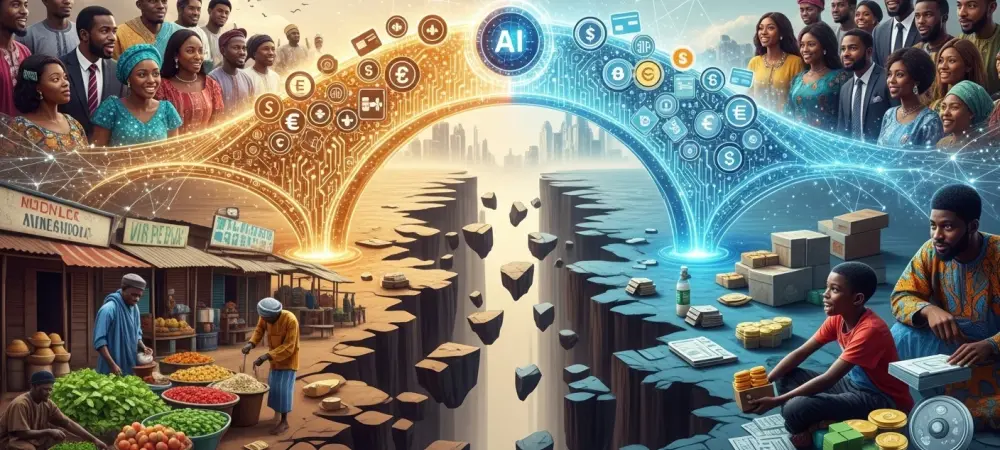
The financial landscape in Nigeria is undergoing a fundamental transformation, shifting away from a decade-long reliance on traditional banking metrics toward a more inclusive, technology-driven model. The core of this evolution lies in the convergence of two structural forces: embedded finance and artificial intelligence. This shift marks the end of an era where credit access was strictly limited to those with formal employment, established credit histories, and physical collateral, moving instead toward a system where financial services are seamlessly integrated into the digital tools Nigerians use every day.
At the heart of this change is the realization that the informal sector, which drives the majority of the national economy, has been systematically ignored by legacy institutions. By merging transactional data with predictive algorithms, the industry is finally addressing the structural credit gap. This evolution is not just about digitizing paperwork; it is about redefining what it means to be creditworthy in a modern, hyper-connected society.
Moving Beyond the Teller Window: The Rapid Obsolescence of Physical Collateral
Small business owners and gig workers across Nigeria are finding that their creditworthiness is no longer defined by the deed to a house or a decade of formal payroll slips. As the traditional banking model reaches its limit, a new era is emerging where financial services are integrated into the apps used for daily commutes, grocery shopping, and salary processing. This shift marks the end of a gatekept financial system and the beginning of an “invisible” credit economy that prioritizes digital engagement over physical assets.
As physical collateral becomes less relevant, the focus has shifted toward the value of consistent cash flow and digital reputation. A merchant’s ability to restock inventory is now powered by their sales history on a digital marketplace rather than their relationship with a local bank manager. This democratization ensures that capital flows to those with active economic presence rather than those who simply have the most established assets.
Why Traditional Lending Metrics Stifled National Economic Growth
For decades, the Nigerian financial landscape was built on a foundation that excluded the majority of its population. Strict requirements for formal employment and established credit histories created a persistent credit gap, leaving millions of unbanked and underbanked individuals without the capital needed to scale businesses or manage personal emergencies. This structural reliance on archaic paperwork didn’t just limit individual opportunity; it acted as a bottleneck for the entire national economy.
By ignoring the financial realities of the informal sector, traditional lenders missed out on the most vibrant parts of the market. The lack of access to capital meant that micro-enterprises remained stagnant, unable to leverage credit for expansion or equipment. Consequently, national productivity remained tethered to a rigid system that rewarded the elite while effectively punishing the entrepreneurial spirit of the common citizen.
Seamless Integration: The Rise of Invisibility in Consumer Lending
Embedded finance is transforming loans from standalone products into features within existing digital ecosystems. By building credit options directly into e-commerce marketplaces and transportation networks, lenders can eliminate high customer acquisition costs and meet borrowers exactly where they spend their time. This integration allows for a frictionless experience where financial support is available at the point of need, whether that involves supply-chain financing for a merchant or “Buy Now Pay Later” options for a consumer.
Moreover, this “invisible” lending model reduces the psychological barrier to debt for many users. When a loan is presented as a simple option to complete a transaction, it feels less like a burdensome financial product and more like a tool for immediate progress. This shift has led to higher adoption rates and a more fluid movement of capital throughout the retail and service sectors.
Alternative Underwriting: How AI Decodes Digital Behavior
The engine behind this inclusivity is artificial intelligence, which allows lenders to evaluate risk without a standard credit score. By analyzing alternative data points—such as mobile phone usage patterns, utility payment consistency, and online transaction history—AI models can build a comprehensive profile of a borrower’s reliability. This democratizes access to capital, allowing those in the gig economy to secure funding based on their actual financial behavior rather than their lack of formal documentation.
Beyond simple risk assessment, AI also provides lenders with the ability to offer personalized financial products. Algorithms can determine the exact amount a borrower needs and can afford to repay, reducing the risk of over-indebtedness. This precision creates a healthier lending environment where the focus remains on the sustainability of the credit relationship rather than the mere volume of loans issued.
Analyzing the DatNigeria’s Projected Path Toward a 2030 Digital Frontier
Industry research indicates that this is not a temporary trend but a fundamental economic shift, with over one-third of Nigerian fintechs already utilizing AI for risk assessment. Projections suggest that by 2030, Nigeria will reach digital finance penetration levels on par with global leaders like Kenya and China. Experts agree that the future of credit will be determined by the depth of user engagement on digital platforms rather than the size of a bank’s physical balance sheet, signaling a move toward a more agile market.
The data further highlights that the growth of supply-chain financing and corporate credit has accelerated since the implementation of these technologies. As the digital frontier expands, the reliance on cash is diminishing, replaced by a ledger system that tracks economic reliability in real-time. This trajectory suggests that the credit gap, once an insurmountable obstacle, will become a relic of the past as technology continues to bridge the divide.
Strategic Pillars for Transitioning to an Embedded Finance Model
The transition toward a fully integrated credit ecosystem required the adoption of strategic pillars that prioritized real-time data over historical records. Financial institutions and fintechs successfully moved away from siloed banking applications and instead fostered partnerships with platforms that facilitated daily economic activity. They focused on the development of AI-driven underwriting tools capable of processing unstructured data, which provided a more nuanced understanding of risk than previous methods ever could.
This successful paradigm shift focused on building credit products that were entirely invisible to the user’s journey. The strategy emphasized that financial services should not be a destination but a background facilitator of broader economic behavior. By standardizing data-sharing protocols and embracing open banking, the industry ensured that credit became a dynamic resource that supported sustainable growth and national economic resilience.