

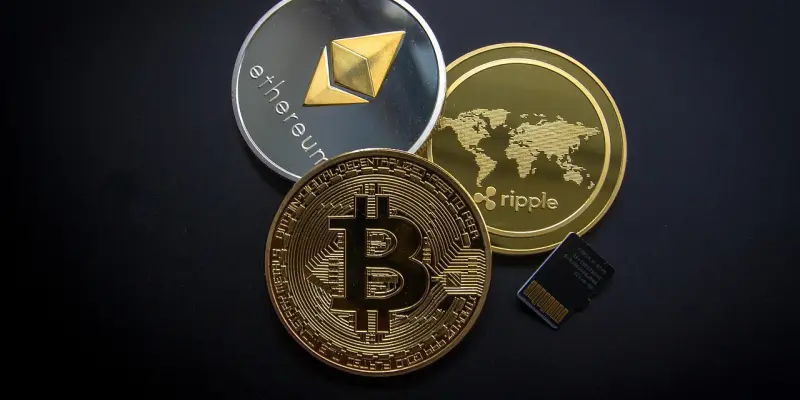
The cryptocurrency market has always been a volatile space, but recent developments have highlighted striking contrasts between certain digital assets. At a time when well-known cryptocurrencies like Cardano (ADA) and Solana (SOL) are encountering significant struggles, BlockDAG (BDAG) has emerged as a standout performer. BlockDAG has captured attention by successfully raising an impressive $213.5 million during its presale while launching a widely praised beta testnet. These achievements underscore a shifting landscape where emergent technologies and innovative platforms are gaining traction amidst market turbulence.
Market Downturns for Established Cryptocurrencies
Cardano Faces Critical Support Levels
Cardano has been under immense pressure to maintain its $0.50 threshold, with indicators pointing to unfavorable trends. The True Strength Index (TSI) and a death cross formed by the 50-day and 200-day Exponential Moving Averages (EMAs) suggest a declining momentum for ADA. If this downward trajectory continues, Cardano could potentially drop to $0.32, adding to the concerns of investors already skittish from broader market fears. However, market analysts have not entirely ruled out the possibility of a rebound, contingent upon Cardano holding its support level. A recovery to $0.66 remains feasible if market conditions stabilize, although the likelihood is currently regarded as slim.
Solana’s Sudden Decline
Solana, another prominent cryptocurrency, has not fared any better. In one drastic instance, SOL experienced an 18% price plunge, falling to $95 within a single day. The steep decline was largely driven by panic selling and the anticipation of upcoming token releases, which have contributed to investor unease. Despite this downturn, Solana retains a measure of investor confidence, evidenced by substantial stakes still held within the ecosystem. Nevertheless, the relative strength index (RSI) indicates Solana might be oversold and facing potential further declines to $80. Analysts suggest that only a rise above $114 could serve as a clear signal for recovery, an outcome viewed with cautious optimism given current conditions.
BlockDAG’s Ascendancy in Crypto Landscape
Innovative No-Code Development Platform
As Cardano and Solana encounter substantial hurdles, BlockDAG has managed to distinguish itself through innovation and practical application. One of the key features of BlockDAG’s beta testnet is its no-code tool designed for creating coins and non-fungible tokens (NFTs). This functionality simplifies the process for non-developers, significantly broadening the potential user base. By minimizing the technical barriers traditionally associated with crypto development, BlockDAG enables a wider range of individuals to participate in the digital asset economy. This accessibility is reflective of broader industry trends toward inclusivity and ease of use, facilitating wider adoption.
Strong Market Reception and User Engagement
BlockDAG’s presale success, with over $213.5 million raised and the distribution of 19.1 billion coins, highlights its growing momentum within the crypto community. This fundraising milestone is notable not only for the capital it has generated but also for the level of interest and confidence it signifies among potential investors. Additionally, BlockDAG’s ecosystem has seen robust engagement, surpassing 110,000 active users. The beta testnet, which includes a $60,000 incentive pool to reward top contributors, has further solidified its practical utility. This blend of innovation and tangible utility sets BlockDAG apart from many cryptocurrencies that rely heavily on speculative hype rather than real-world application.
Implications for the Future of Cryptocurrency
A Shift Toward Practicality and Utility
The contrasting fortunes of Cardano, Solana, and BlockDAG provide a window into larger trends within the cryptocurrency market. While established players are grappling with volatility and economic pressures, new entrants like BlockDAG are forging ahead by emphasizing practical applications and user-centric innovations. This emerging focus represents a significant shift away from merely speculative trading toward a model that prioritizes real-world utility. By offering tools that simplify participation and foster utility-driven demand, BlockDAG exemplifies the evolving landscape where functionality and accessibility take precedence.
Broader Industry Impacts and Considerations
As these dynamics unfold, they carry broader implications for the cryptocurrency industry. Platforms that manage to combine innovative technologies with practical user applications are more likely to achieve sustainable growth. This trend suggests a potential redefinition of success within the crypto market, anchored not solely on market performance but on tangible user engagement and practical benefits. The success of BlockDAG also raises questions about the future sustainability of established cryptocurrencies should they fail to adapt to changing market expectations. Therefore, Cardano and Solana must address their current challenges while exploring ways to integrate more utility-based solutions to regain investor confidence.
Outlook and Future Considerations
The cryptocurrency market is often known for its volatility, and recent events have illustrated sharp contrasts between various digital assets. While established cryptocurrencies like Cardano (ADA) and Solana (SOL) are facing notable difficulties, a new player, BlockDAG (BDAG), has surfaced as a remarkable contender. BlockDAG has drawn significant attention by successfully raising an impressive $213.5 million during its presale phase, as well as by launching a highly acclaimed beta testnet. These accomplishments highlight a changing landscape where emerging technologies and innovative platforms are making their mark amid the market’s upheaval. This dynamic shift indicates that while some cryptocurrencies struggle, others with groundbreaking frameworks and substantial backing can rise to prominence. Overall, the current trend emphasizes that success in the volatile crypto market now increasingly depends on innovation and technological advancements rather than the established reputation. This scenario is a reminder of the rapid change inherent to this digital financial sphere.