

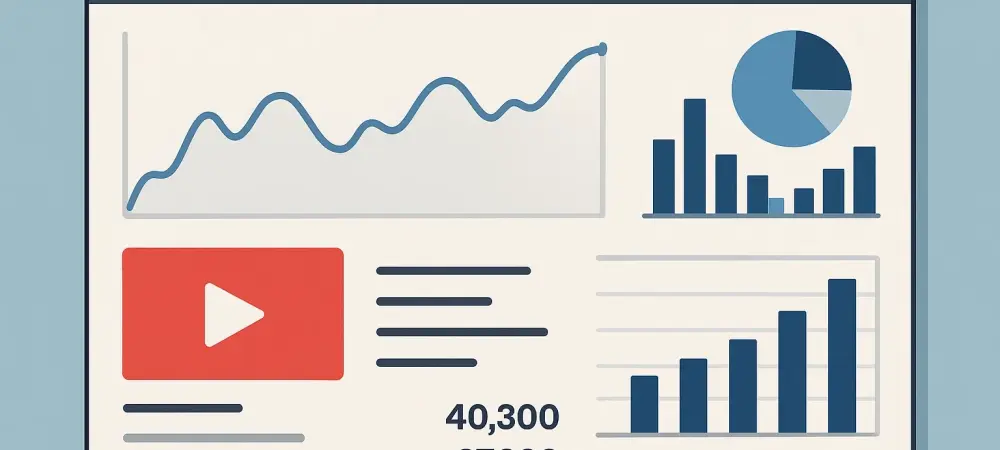
YouTube has unveiled an updated version of its Advanced Mode in Studio Analytics, targeting content creators and marketers who require more efficient methods to access and interpret performance data. This update focuses on enhancing usability by introducing new features such as custom report saving, alongside a streamlined, redesigned layout. A central improvement involves a unified sidebar that simplifies the selection process for filters, breakdowns, and metrics, making data manipulation significantly more accessible. Users now have the ability to save customized report configurations, which eliminates the repetitive task of resetting filters each time they access their analytics. This enables creators to conveniently track specific metrics, like traffic sources, and return to these configurations easily when needed. Additionally, advanced capabilities for smarter search and filtering allow users to locate content efficiently, sorting it by characteristics such as titles, video length, or publishing dates. The combination of these new abilities represents a notable step forward in optimizing performance tracking and comparative analysis without needing constant data reconfigurations.
Custom Reports and Smarter Features
One of the most significant enhancements in YouTube’s updated analytics is the ability to save custom reports. This new feature is designed to streamline the workflow for content creators, who can now lock in specific setups and revisit them at their convenience. By minimizing the repetitive task of re-establishing filters with each session, creators can focus on tracking particular data streams—such as identifying traffic origins—which are crucial for strategic planning. The newly introduced option for multi-metric selection further simplifies data manipulation by allowing the examination of multiple metrics simultaneously. This advancement is particularly beneficial for creators who wish to conduct an in-depth analysis of their content’s performance and refine their strategies accordingly.
In addition to this, the update introduces smarter searching and filtering capabilities, empowering users to more effectively sort content by title, length, and publication date, or any other specified parameter. This improvement aids in the quick retrieval of specific content types, facilitating a more focused analysis process. The changes provide a more organized way to handle extensive libraries of video content, supporting a more precise engagement strategy. These enhancements reflect YouTube’s commitment to equipping creators with the necessary tools to analyze varied metrics and inform their future content strategies robustly.
Simplified Access and Efficient Reporting
YouTube has also redefined how creators engage with common reports by incorporating shortcuts that simplify access to essential analytics insights. By introducing features like first-day performance tracking, audience retention metrics, and comparison tools, YouTube has positioned these tools for easy and quick access. This level of accessibility allows creators to make informed decisions without being overwhelmed by exhaustive data. By having these insights at their fingertips, content creators can adjust their content strategy to align with audience engagement patterns, enhancing performance and potential reach. A broader impact of these updates is observed in YouTube’s ability to encourage experimentation. With an improved, user-friendly interface and efficient data access through bookmarkable analytics configurations, creators are encouraged to explore different formats and approaches, experimenting with audience engagement strategies. The setup not only enhances existing reporting capabilities but also fosters a creative environment where creators can devise innovative content based on analytical insights. As YouTube continues to roll out these updates, creators across the platform are better positioned to harness new efficiencies and insights, enhancing their content by relying on more nuanced and accessible data interpretation.
Future Implications of Enhanced Analytics
YouTube has revamped its Advanced Mode in Studio Analytics, aiming to assist content creators and marketers with more effective methods for accessing and analyzing performance data. The update enhances user experience by incorporating features like custom report saving and a more streamlined, redesigned interface. A key enhancement is the unified sidebar, which simplifies the selection of filters, breakdowns, and metrics, making data handling notably easier. Users can now save custom report setups, thus avoiding the hassle of resetting filters every time they access their analytics. This feature allows creators to track specific metrics, such as traffic sources, effortlessly returning to these settings when necessary. Furthermore, improved search and filtering capabilities enable users to swiftly locate content, sorted by criteria like titles, video length, or publishing dates. These advancements represent a significant improvement in optimizing performance tracking and comparative analysis, minimizing repetitive data adjustments and enhancing workflow efficiency.