

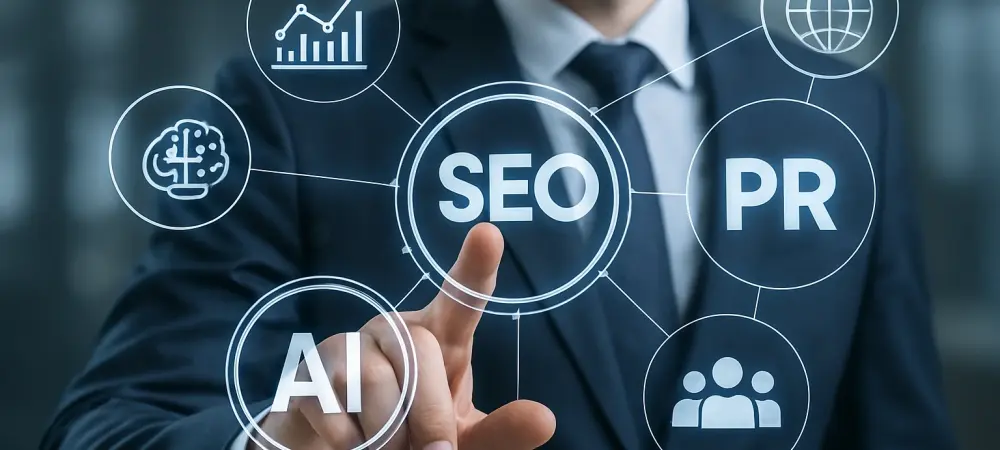
Achieving significant organic visibility has become an increasingly formidable challenge as Google’s search ecosystem evolves into a more complex, dynamic, and AI-driven environment. The era of simple keyword optimization and conventional link-building tactics has decisively ended, replaced by a modern SERP that functions like an intricate marketplace for attention, shaped by AI Overviews, zero-click experiences, real-time entity understanding, and trust-based ranking signals. This new landscape presents both a significant hurdle and a tremendous opportunity for MarTech teams. Success is no longer contingent on mastering isolated SEO techniques but rather on the strategic integration of content, data, and media into a coherent, authoritative whole. The rise of prominent SERP features and AI Overviews, which consume substantial above-the-fold real estate, is one of the most transformative shifts defining the current digital era. The traditional “10 blue links” model has been supplanted by a personalized search journey that incorporates generative summaries, multimodal answers, product comparison modules, interactive carousels, and predictive query suggestions. Consequently, click-through rates have declined across most categories, compelling brands to compete not just for rankings but for relevance within these enhanced search experiences. Even a top position no longer guarantees traffic; visibility now requires a presence across multiple SERP surfaces, entity panels, and AI-generated snippets, demanding a more sophisticated and integrated strategy than ever before.
1. The New Ranking Formula for Algorithmic Trust
For more than a decade, SEO practices were anchored in a familiar set of factors, including keyword density, backlink volume, technical hygiene, and on-page optimization. However, the fundamental architecture of Google’s search has been re-engineered, profoundly altering how rankings are determined—a shift that Martech teams are witnessing in real time. Today’s sophisticated algorithms assign greater weight to user intent, content depth, real-time authority signals, semantic relationships, and the credibility of the sources that constitute a brand’s digital footprint. While traditional SEO signals remain relevant, they are no longer the primary differentiators. Modern machine learning models evaluate far more than simple relevance; they assess whether a brand demonstrates genuine expertise, secures authentic citations from reputable media outlets, and consistently fulfills the underlying needs of its audience. This evolution means Martech leaders can no longer depend on static optimization checklists. Instead, they must implement dynamic, intelligent systems that continuously learn, adapt, and predict, moving from a reactive to a proactive posture in the pursuit of organic visibility. The core of this new paradigm is the “authority web,” a network of interconnected signals that collectively validate a brand’s legitimacy. These signals include expert endorsements, mentions in high-authority media, structured data implementation, entity alignment, credible link contexts, and overall brand-level sentiment.
The prevailing mindset in the search industry has often been that a higher volume of content equates to more ranking opportunities. In today’s AI-powered SERPs, however, the opposite is increasingly true. As Google’s algorithms become more adept at filtering out low-value inputs, brands that prioritize publishing high-quality, well-cited, and deeply authoritative content consistently outperform those focused on sheer quantity. Algorithmic trust, a currency derived from signals of credibility, factual accuracy, and third-party citations, has now surpassed publication frequency as a key determinant of success. A single, meticulously researched report amplified by a strategic Digital PR campaign can generate more organic authority and ranking power than fifty mass-produced, AI-written articles. The Martech ecosystem is pivotal in facilitating this shift by integrating the entire lifecycle of content—from creation and optimization to amplification. Advanced Martech tools enable teams to identify authority gaps, pinpoint high-value PR placement opportunities, and measure the impact of media mentions on brand trust over time. This unified visibility allows brands to build algorithmic trust deliberately and systematically, rather than hoping for it to emerge by chance. When AI SEO is used to accelerate optimization and Digital PR is leveraged to amplify credibility, the combination creates a powerful, self-reinforcing engine for sustainable first-page placement.
2. The Strategic Imperative of an Integrated Operating Model
For many years, organizations treated SEO, content marketing, public relations, brand strategy, and analytics as distinct functions, each operating with its own objectives, toolsets, and measurement frameworks. In Google’s current ecosystem, however, this siloed approach is no longer rewarded and, in fact, has become a significant liability. To achieve prominence in a search environment saturated with AI Overviews, contextual SERP features, and entity-based evaluations, brands must foster cross-disciplinary collaboration rather than pursuing isolated initiatives. This is precisely why strategic Martech leadership has become so critical to modern search success. Instead of having disparate teams executing search, content, brand, and media strategies in parallel, forward-thinking companies are consolidating these efforts under a single, unified strategic framework. SEO teams now collaborate directly with brand and PR counterparts to ensure messaging consistency and thematic alignment. Content creators produce assets designed not just for on-site engagement but also for media relevance and authority-building. Analytics teams merge search data with media intelligence to quantify how mentions, sentiment, and link contexts influence organic rankings. In this integrated model, Martech serves as the operational backbone, enabling seamless cross-functional workflows, centralized data repositories, and the cohesive execution of a holistic search visibility strategy.
Integrated search visibility demands more than just inter-team communication; it requires unified planning centered around shared goals and intelligence. The most successful brands are developing comprehensive topic authority models that map out every relevant content cluster their brand aims to own. These models serve as the single source of truth that informs content creation, PR narratives, thought-leadership angles, and even social media campaigns, replacing fragmented editorial calendars with a cohesive master plan. Media calendars are no longer developed in isolation but are instead aligned with strategic SEO roadmaps. When SEO analysis identifies a high-value topic gap or an opportunity to strengthen a brand entity, the PR team initiates targeted campaigns to secure credible third-party mentions and backlinks. Conversely, when PR secures a high-authority media placement, SEO teams optimize corresponding on-site pages to maximize the ranking benefits. This symbiotic relationship is maintained and scaled through modern Martech stacks that connect content workflows with media outreach platforms and backlink monitoring tools. Similarly, backlink strategies have evolved from a reliance on manual outreach or link-building vendors to become an integral component of a broader authority-building ecosystem, where data-driven assets are created to attract citations naturally.
3. The Transformation of AI Search Engine Optimization
The landscape of SEO has advanced far beyond the automation wave that characterized the previous decade. Today, leading companies are leveraging autonomous SEO systems—sophisticated AI-powered engines capable of identifying content gaps, clustering topics, forecasting opportunities, and prioritizing tasks with minimal human intervention. These systems function less like tools and more like strategic copilots, continuously analyzing user behavior, competitor dynamics, SERP fluctuations, and emerging search intents. This profound shift has empowered marketing teams to move beyond tactical execution and focus on building end-to-end topical ecosystems that adapt in real time to market changes. Modern platforms managed within a Martech framework now integrate data ingestion, content planning, and predictive modeling into a single, cohesive system. This allows human experts to concentrate on higher-value activities such as creativity, domain expertise, and narrative strategy, while the AI handles the complex, data-intensive aspects of optimization. By offloading the manual work of analysis and prioritization, these autonomous systems enable brands to achieve a level of agility and strategic foresight that was previously unattainable, ensuring they remain competitive in a rapidly evolving digital environment.
As Google increasingly shifts toward an entity-first indexing model, brands are no longer ranked based on keywords alone. Algorithms now evaluate entities—people, places, organizations, and concepts—based on their relationships, trustworthiness, and presence across the web. In this context, AI-powered entity optimization has become a critical discipline. Intelligent systems can now meticulously map a brand’s digital identity, identify inconsistencies across various platforms, and recommend structured data enhancements at every touchpoint. Schema strategies have matured from basic markup templates into dynamic, AI-curated knowledge frameworks that help search engines understand a brand’s authority, expertise, and thematic relevance with greater precision. One of the most significant advancements in AI SEO is predictive SERP modeling. Instead of reacting to ranking shifts after they occur, organizations can now anticipate them. Machine learning systems analyze a multitude of variables, including competitor publication velocity, backlink acquisition rates, sentiment trends, and real-time SERP volatility, to forecast future outcomes. These predictive insights enable teams to preemptively update content, amplify PR efforts, and implement technical improvements at the most opportune moments, transforming search from a defensive function into a proactive one.
4. The Critical Role of Digital PR in Modern Search
As Google’s search ecosystem places an ever-greater emphasis on credibility as a core ranking factor, the value of authoritative third-party endorsements has grown exponentially. Search engines have evolved to look beyond what brands say about themselves, instead prioritizing how the broader digital world substantiates those claims. When reputable publications, industry analysts, subject-matter experts, and influential creators mention a brand, it sends powerful signals of trust that algorithms interpret as genuine authority. Consequently, Digital PR has transformed from a brand awareness channel into a primary driver of organic visibility. This evolution aligns perfectly with the capabilities of modern Martech, which allows teams to integrate media intelligence, content performance metrics, and authority tracking into a cohesive, data-driven strategy. By systematically securing high-quality, relevant mentions, Digital PR directly influences how search algorithms perceive a brand’s expertise and trustworthiness, making it an indispensable component of any serious SEO effort. The practice is no longer about just getting the brand name out there; it is about strategically building a verifiable record of credibility that algorithms can recognize and reward with higher rankings and greater visibility across all search surfaces.
In the contemporary ranking framework, Digital PR functions as a direct algorithmic signal. Google’s sophisticated models analyze the quality, context, and source of mentions across the web, using earned citations as strong indicators of expertise and trustworthiness. The objective is no longer to accumulate the maximum number of backlinks but to secure the right links from the right sources. High-authority media mentions, contextual citations within research reports, expert quotes in industry articles, and references in analytical pieces all contribute to strengthening a brand’s entity and perceived legitimacy. Brand authority is also more critical than ever in an era where AI Overviews and Knowledge Panels dominate top-of-SERP real estate. Google’s generative systems prioritize entities that have established a strong, consistent reputation across a diverse set of trusted external sources. Digital PR plays a crucial role in feeding these systems by ensuring a brand is consistently cited in credible contexts and associated with relevant topics. When AI models detect robust authority signals—such as repeated mentions, contributions from recognized experts, and citations of proprietary data studies—they are far more likely to feature the brand in AI-generated summaries, comparison modules, and entity knowledge cards.
5. The AI SEO and Digital PR Integration Model
As Google’s ecosystem continues its progression toward entity understanding, semantic depth, and verifiable authority, brands are increasingly adopting a unified AI SEO and Digital PR approach. What were once two distinct disciplines—technical SEO and public relations—are now converging into a single, interdependent system. This fusion is no longer a strategic option for modern organizations, particularly those investing in integrated Martech stacks; it is an absolute necessity for achieving sustained search visibility, securing a presence in AI Overviews, and building lasting brand trust. The integration model begins with a robust, AI-driven intelligence layer. Advanced Martech platforms now analyze billions of data points, including search behavior, SERP features, competitor content clusters, and evolving entity relationships. Instead of relying on backward-looking keyword data, these AI systems deliver forward-facing predictions, identifying which topics will trend in the coming months, which competitors are gaining authority, and how AI Overviews are reshaping visibility for specific query types. This foundational intelligence allows teams to build strategies based on predictive insights rather than reactive adjustments, representing a fundamental shift in how organic growth is planned and executed.
Guided by this intelligence, the next phase is the creation of high-value content assets, a process where human expertise is augmented by AI. Modern AI systems are no longer just generating text; they are mapping entire content clusters, ensuring semantic completeness, creating multiple variations for different user intents, and verifying citations and factual grounding. This is where brands produce their core assets—long-form guides, proprietary data reports, customer case studies, and multimedia editorial content—that form the backbone of their organic strategy. However, content alone is not enough; it must be amplified through the authority layer, where Digital PR energizes the content engine. Through strategic outreach, brands secure high-value media placements, citations in industry journals, thought-leader interviews, and features based on research-backed data. This layer transforms content from merely “published” to authoritatively “endorsed.” The subsequent experience layer ensures that the authority built through external validation translates into a seamless and trustworthy on-site experience for both users and search engines. This involves optimizing for user experience (UX), demonstrating experience, expertise, authoritativeness, and trustworthiness (E-E-A-T), and consolidating entity signals through structured data. Finally, the model closes with a reinforcement layer—a continuous feedback loop powered by AI monitoring and predictive adjustments—to ensure the strategy remains agile and effective over the long term.
6. Distinguishing Patterns of Successful Teams
The brands that consistently dominate Page One, feature prominently in AI Overviews, and build sustainable organic equity operate on a fundamentally different model than their competitors. Their success is not a matter of luck but the result of highly integrated systems where SEO, content, PR, product marketing, and demand generation teams function as a single, cohesive authority engine. Analysis of these top-performing organizations reveals clear, repeatable behaviors that set them apart. One of the most significant patterns is their investment in creating data-driven stories that attract natural links. These brands dedicate substantial resources to producing research-backed content, such as annual industry reports, sector-specific surveys, trend analyses, and proprietary benchmark studies. These assets inherently attract media mentions, backlinks, and social shares because they offer something most competitors cannot: original, valuable data. Winning teams view data as both a PR and an SEO asset, infusing their content with market statistics, competitive insights, and expert commentary. Search engines reward these pieces for their uniqueness and credibility, while journalists and analysts readily use them as trusted sources, turning them into “link magnets” that accumulate authoritative mentions organically over time. Instead of chasing individual keywords, high-performing teams employ AI-powered cluster modeling to build topic monopolies. They identify entire semantic ecosystems—encompassing primary questions, subtopics, definitions, comparisons, and related problem statements—and then create comprehensive content that addresses every facet in exhaustive detail. AI tools are instrumental in this process, helping them map out topic gaps that competitors have overlooked, identify related entities necessary for ranking, and understand the user intent behind each search cluster. The result is that search engines come to recognize the brand as the definitive authority on a subject. This not only secures traditional rankings but also leads to dominance in AI Overviews, as their content provides the most complete and detailed informational footprint available. Furthermore, winning brands utilize a multi-format PR strategy, extending their digital footprint beyond contributed articles to include podcast interviews, expert quotes for journalists, virtual events, and features in niche publications. This diversified approach amplifies brand visibility across numerous discovery channels, helps Google better understand the brand’s topical expertise, and builds a robust web of authority signals that directly benefit SEO performance.
7. The Essential MarTech Stack for Integrated Success
The demands of the modern search landscape necessitate a deeply integrated, intelligence-driven, and authority-focused technology ecosystem. The days when SEO, PR, and content teams operated in isolation with their own disparate toolsets are over. Today, leading organizations depend on a unified MarTech stack that connects data, insights, content creation, media outreach, and analytics into a single, seamless workflow. The victors in this new era are not those with the most tools, but those with the most orchestrated and interconnected systems. At the heart of every successful digital strategy lies advanced AI SEO and SERP intelligence. These platforms go far beyond traditional keyword research; they predict ranking shifts, cluster keywords thematically, identify emerging search intents, and model competitor behavior across different markets. The most effective systems offer predictive SERP modeling, entity and topic clustering, real-time competitor intelligence, and AI Overview visibility tracking. These tools enable teams to transition from reactive optimization to a proactive strategy, allowing them to anticipate peaks in search demand and create content that will capture future traffic.
With the lines between Digital PR and SEO becoming increasingly blurred, a modern MarTech stack must include tools that unify media outreach, intelligence gathering, and coverage tracking. The new generation of Digital PR platforms features AI-powered journalist recommendation engines, dynamic media databases, automated pitch sequencing, and sentiment-aware news monitoring. These tools empower teams to target journalists with precision, personalize outreach at scale, and quantify the SEO value of each earned media mention. Complementing these are Content AI systems, which have evolved from simple writing aids to comprehensive creative intelligence engines. They assist content teams with intent-driven generation, semantic optimization, brand governance, and fact-verification, ensuring that all content produced aligns with current search opportunities. The analytics ecosystem represents another critical layer, moving beyond basic traffic reports to include multi-touch attribution, entity-level performance tracking, and cross-channel visibility. Finally, workflow and collaboration platforms serve as the orchestration layer, uniting SEO, PR, content, and design teams within a shared system to manage projects, approvals, and timelines. This unified orchestration unlocks the true power of a modern MarTech stack, transforming disparate activities into a cohesive growth engine.
8. Redefining Performance With Modern Measurement
A modern measurement framework must connect SEO, digital PR, content, and revenue operations into a single, cohesive visibility engine. Executives are no longer satisfied with vanity metrics or siloed dashboards; they demand a clear, defensible understanding of how authority is being built and how it translates into tangible business impact. This is where a sophisticated, cross-channel strategy, supported by a connected MarTech ecosystem, becomes indispensable. The traditional focus on classic keyword rankings now represents only a fraction of a successful SEO strategy’s performance. The true indicators of organic strength are found in entity-level authority and discoverability. High-performing teams prioritize metrics such as entity growth within Google’s Knowledge Graph and AI-generated summaries, semantic authority scores reflecting dominance over a topic cluster, and overall SERP share, which measures the total pixel space occupied across all search features. The inclusion rate in AI Overviews is also becoming an increasingly vital KPI, especially for complex, research-intensive queries. These metrics demonstrate not just the ability to rank but the capacity to own a theme, helping SEO leaders better align their efforts with broader brand and PR objectives.
Digital PR must be measured with the same rigor as performance marketing. Instead of merely counting raw mentions, leading teams focus on quantifiable outcomes like brand authority lift, which gauges the perceived increase in a brand’s credibility and expertise. They track citation velocity—the rate at which earned mentions accumulate over time—and analyze the quality of media mentions based on the outlet’s authority, topical relevance, and the journalist’s influence. Contextual link ratios are also monitored to ensure backlinks appear within semantically relevant content. When PR and SEO efforts are integrated, the measurement framework must also evolve to reflect this synergy. Integrated frameworks track the growth of trust signals, such as expert quotes and inclusions in high-authority reports, and use multi-touch attribution models to show how authority-driven content influences the sales pipeline. This is where the right MarTech integrations provide immense value, enabling teams to demonstrate the direct link between authority-building activities and revenue generation. For executive reporting, the new standard involves dashboards that distill this complexity into clear, top-level insights, such as a single roll-up visibility score, a media authority index, and predictive indicators for future SERP changes.
9. Forging a New Path in Organic Dominance
The teams that understood a pivotal truth ultimately owned the future of organic search: it was no longer a contest of keywords but a sophisticated media ecosystem. Google’s evolving architecture, from the rise of AI Overviews to the dominance of entity-based rankings, consistently prioritized brands that demonstrated authentic authority, verifiable trust, and genuine relevance across the entire web. This fundamental change ushered in a new era where integration, rather than the isolated quality of individual channels, became the single most important competitive advantage. In this environment, MarTech leaders found themselves at the epicenter of transformation. They were the orchestrators who aligned data, content, media, and analytics into a single, intelligence-driven system. It became clear that when AI SEO and Digital PR operated independently, their impact was fragmented and limited. However, when they functioned as a unified visibility engine, the organization gained exponential leverage, resulting in smarter insights, more powerful authority signals, and accelerated organic growth. This integrated approach was the key that unlocked a new level of performance.
High-performing teams had learned that neither AI intelligence alone nor sheer content volume could secure a lasting top position. Authority, evidenced by trusted media placements, expert citations, and contextual mentions, had emerged as the most critical currency in the new calculus of organic visibility. This was where Digital PR played its indispensable role. When paired with AI-driven search intelligence, it unlocked a powerful compound effect: the ability to accurately predict demand, strategically shape market narratives, and fundamentally influence how search algorithms perceived a brand. The organizations that ultimately unified their AI-driven SEO workflows, editorial operations, and PR authority programs did not just adapt to algorithmic volatility—they systematically outperformed it. They constructed resilient visibility through clearly defined entities, credible media endorsements, and data-backed content ecosystems that reshaped market perception. The future belonged to these integrated, media-powered search strategies, and it was the MarTech teams who led the charge, defining the next era of organic dominance by weaving intelligence, authority, and experience into a single, unassailable framework.