

Beyond the Hype: Redefining Connection in the Age of AI
The landscape of Business-to-Business (B2B) marketing is on the cusp of a profound transformation, compelling leaders to abandon outdated strategies in favor of a more nuanced, human-centric approach. In a world grappling with economic volatility and the overwhelming noise of AI-generated content, the old playbook of ostentatious budgets and impersonal metrics is rapidly becoming obsolete. The future is not about being louder but smarter; not about automation, but authenticity. This analysis explores the impending strategic shift toward a deeply human-centric approach, where genuine connection, employee empowerment, and memorable experiences become the primary drivers of success. The three pillars of this evolution—a reimagining of celebrity talent, a renewed focus on the workforce, and the rise of immersive brand events—reveal how B2B leaders can build resilience and relevance.
The End of Business as Usual: Why Old B2B Playbooks Are Failing
For decades, B2B marketing operated under the assumption that its audience was purely rational, driven by data, features, and return on investment, leading to a sea of sterile content and predictable tactics. However, recent industry shifts have exposed the flaws in this logic. The initial, unbridled hype around AI as a silver bullet for productivity has given way to a more sobering reality: a flood of emotionally hollow “AI slop” that fails to resonate. Simultaneously, a period of economic uncertainty prompted many companies to reassert control, leading to unpopular return-to-office mandates and a myopic focus on efficiency that damaged morale. These factors created a perfect storm, proving that B2B buyers are not faceless entities but people who crave authenticity and confidence. The old strategies, which often ignored the human element, are no longer sustainable in a market that places an unprecedented premium on genuine connection.
The Three Pillars of a New Human-Centric Strategy
From High-Cost Flex to High-Relevance Fandom: The New Celebrity Playbook
The use of celebrity endorsements in B2B marketing is set to evolve from a demonstration of budget to a carefully calibrated strategic tool. Historically, securing a high-profile A-lister was seen as a “huge flex,” but this approach is fraught with risk, as Salesforce discovered with the public backlash to its multi-million dollar contract with Matthew McConaughey during a period of mass layoffs. The future lies in a “lower wattage, high relevance” model. Instead of shock value, savvy brands will partner with personalities who have a deep, organic connection to a specific audience. Atlassian’s campaign with Zach Woods and Ramp’s collaboration with Brian Baumgartner from The Office are prime examples of this pivot. By tapping into niche fandoms with humor and relatability, they created authentic moments that were more impactful and cost-effective than a blockbuster name could ever be, providing a blueprint for cutting through the noise.
The Human Capital Reinvestment: Empowering Employees as Brand Champions
The pendulum of workplace power, which swung toward employers amid economic fears, is swinging back toward employees. The aggressive push for productivity, often at the expense of well-being, has led to “job hugging”—where employees stay for security, not engagement. Critically, data shows that while AI can increase output, it often correlates with a drop in employee engagement, a metric that costs the global economy trillions. Forward-thinking B2B companies recognize that a disengaged workforce is a critical liability. The current strategy is pivoting from simply making employees more “productive” to making them more “powerful.” This involves investing heavily in proper training and resources, such as hiring AI consultancies to ensure workers can leverage new tools to augment their skills, not just automate their tasks. First-movers like Walmart, S&P Global, and IKEA are already leading this charge, understanding that an empowered, confident workforce is the most valuable asset a brand can have.
Beyond the Booth: Crafting Unforgettable Brand Experiences
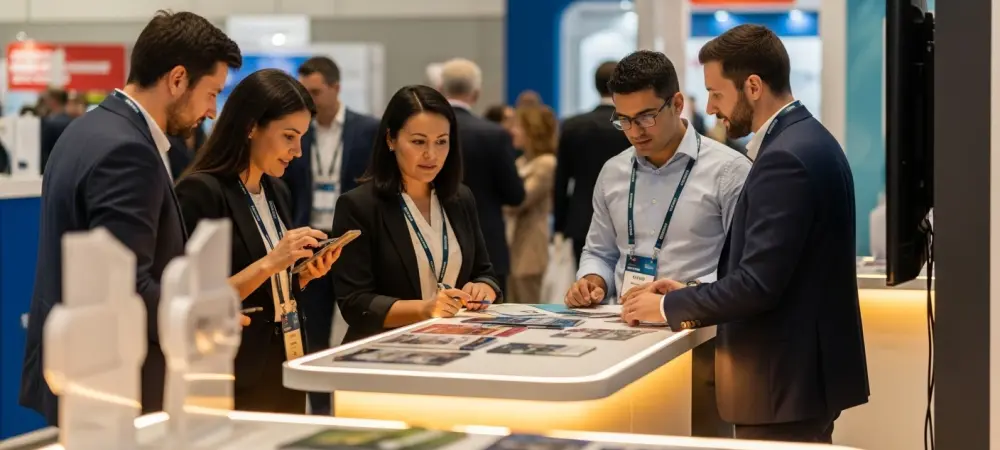
While in-person events have long been a high-ROI channel, B2B marketers are now fully embracing the creative, immersive strategies of their B2C counterparts. The standard conference booth is being replaced by highly engaging, social-media-worthy activations designed to create lasting memories. The core insight is simple: B2B customers are people who respond to the same engaging experiences they enjoy in their personal lives. At the Cannes festival, B2B giants like LinkedIn and Adobe created activations that rivaled any consumer brand. A standout case study is the startup Wiz, which built its reputation with uniquely creative conference booths—featuring scavenger hunts and quirky themes—a strategy that contributed to its eventual $32 billion acquisition. In an uncertain market, these moments of genuine connection are no longer a luxury; they are a powerful competitive advantage that builds stronger relationships and makes a brand unforgettable.
Looking Ahead: The Competitive Edge in a Human-First Future
The convergence of these trends points to a clear reality: human-centricity is now the primary competitive differentiator in B2B marketing. Technology like AI will not replace human connection but rather increase its value, serving as a backdrop that makes authentic interactions stand out even more. The companies that thrive are those that move beyond marketing product features and instead build a brand ethos centered on trust, confidence, and genuine relationships. The ability to make a customer feel understood, an employee feel empowered, or an event attendee feel delighted is more valuable than any algorithm. This shift requires a fundamental change in mindset, from transactional to relational, where every touchpoint is an opportunity to build human capital. The market leaders of tomorrow are defined by their capacity to foster this connection today.
Putting People First: Actionable Strategies for 2026 and Beyond
To navigate this evolving landscape, B2B leaders must move from theory to action, as the key takeaways from this analysis point to clear, actionable strategies. First, rethinking celebrity partnerships by auditing an audience’s niche interests to find relevant, authentic voices, not just famous faces, is paramount. Second, investing directly in people by hiring experts to train the workforce transforms new technology from a perceived threat into a tool for empowerment. Finally, revolutionizing event strategy by dedicating budget to one unforgettable “wow” moment rather than a large, generic presence offers a higher return on engagement. These steps are not just marketing tactics; they are fundamental investments in the human relationships that define brand loyalty and drive sustainable growth in the years ahead.
The Unshakeable Truth: Humanity Is the Ultimate Differentiator
Ultimately, the future of B2B marketing has proven to be a return to a foundational truth: business is, and always has been, human. In an era increasingly dominated by automated systems and digital noise, the ability to create genuine moments of connection, levity, and confidence is no longer a soft skill but a hard-edged competitive advantage. The most successful brands today are those that understand that their greatest asset is not their technology or their budget, but their people—both their employees and their customers. The ultimate call to action remains clear: marketers who stopped marketing to companies and started connecting with the people inside them found the most durable path to success.