

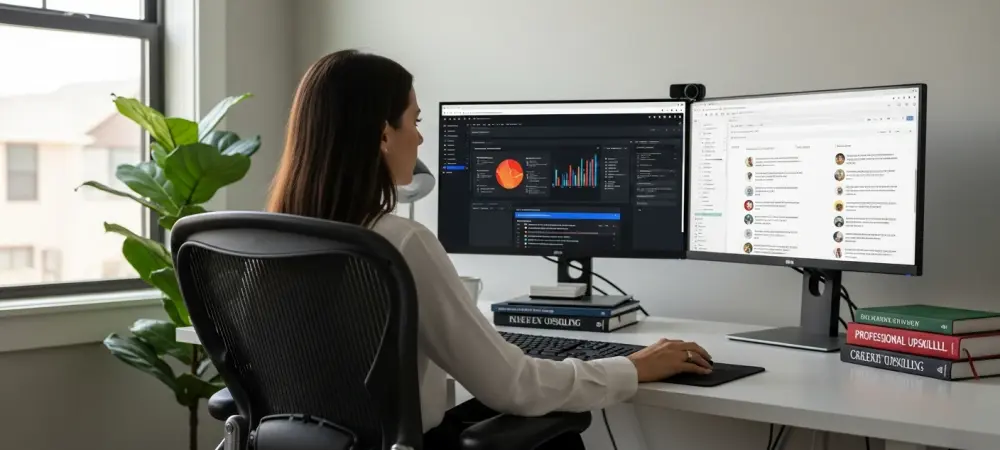
The traditional trajectory of a B2B marketing career is being dismantled by a cohort of women who refuse to wait for institutional permission to lead or for corporate training to catch up with technological reality. While the industry was once defined by rigid hierarchies and linear progression, the contemporary landscape reflects a more fluid, self-determined model of professional development. This transformation is not merely a byproduct of remote work or digital tools; it represents a fundamental shift in how female professionals perceive their value and their time. As the marketing sector grapples with the integration of complex automation and shifting buyer behaviors, women are positioning themselves at the forefront by embracing a more holistic, community-centric approach to career longevity. This analysis examines the specific mechanisms driving this change and how they are reshaping the future of the B2B workforce.
The Rise of the Proactive Marketer and Community-Driven Growth
Data on Upskilling: The “Work After Work” Phenomenon
Modern professional development has moved far beyond the confines of the annual performance review or the occasional corporate seminar. Recent industry observations suggest a stark disparity in how learning is conducted, with approximately 70% of professional growth now occurring through self-directed initiatives outside of standard business hours. This “work after work” trend is particularly prevalent among female marketers who recognize that staying competitive requires a mastery of tools that internal training programs often overlook. The mental load associated with this constant state of education is significant, as professionals balance full-time roles with the intensive labor of staying current in a field that never pauses for breath. The rapid adoption of Artificial Intelligence has catalyzed this pressure, forcing early-career women to move beyond tactical execution toward high-level strategic oversight. In this environment, the ability to prompt a machine is less valuable than the ability to interpret its output and align it with complex business goals. However, the financial burden of this continuous education often falls on the individual. There is a growing consensus that corporate structures must evolve to provide tangible support, such as stipends for specialized courses and conferences, to prevent burnout and ensure that the most talented individuals are not priced out of the skills they need to lead.
Moreover, the physical and cognitive exhaustion resulting from this dual-layered workday cannot be ignored. When a professional finishes a standard eight-hour shift only to begin another three hours of intensive research or technical training, the risk of “generational fatigue” becomes a tangible threat to the industry’s talent pipeline. Organizations that fail to recognize this effort or provide the necessary resources are likely to see their most ambitious female employees migrate toward more supportive environments. The shift toward self-reliance is a testament to the resilience of these marketers, but it also highlights a systemic failure in traditional corporate education models that require immediate rectification.
Digital Networks: The Evolution of Niche Mentorship
As traditional, formal networking events fade into obsolescence, they are being replaced by dynamic, digital-first communities that prioritize immediate value and genuine connection. Slack groups and LinkedIn collectives, such as “Women-in-Tech SEO,” have become the new boardrooms for women navigating the B2B space. These platforms offer more than just technical troubleshooting; they provide a space for “informal mentorship” that bridges the gap between theoretical marketing concepts and the messy, unpredictable reality of daily operations. In these digital hubs, a junior marketer can gain direct access to the insights of a global expert, bypassing the gatekeeping often found in local corporate structures.
Visibility within these specialized spaces is a critical driver for upward mobility. By observing female leaders in action—how they negotiate, how they solve problems, and how they share their failures—early-career professionals can visualize their own potential for success. This visibility acts as a powerful antidote to the isolation many women feel in male-dominated technical sectors. Furthermore, these networks facilitate a rapid exchange of information that traditional mentorship programs simply cannot match. A question posted in a community channel can receive a dozen diverse perspectives within minutes, providing a multifaceted learning experience that is both practical and psychologically reassuring.
Moreover, the transition to niche digital communities reflects a broader desire for authenticity over artifice. In contrast to the forced interactions of legacy networking, these digital spaces allow for a more natural flow of ideas and support. They create a “proof of concept” for leadership, demonstrating that authority can be built through contribution and transparency rather than just tenure. For the modern female marketer, these communities are not just optional extras; they are essential infrastructure for a career built on continuous growth and mutual support.
Insights from Industry Professionals and Early-Career Leaders
The consensus among professionals at organizations such as Shell, DSMN8, and Teemill points to a growing “generational fatigue” that is fundamentally altering career ambitions. Many women in the early stages of their journey are moving away from the idea of tying their entire identity to a corporate title. Instead, there is a clear trend toward maintaining a professional distance that prioritizes personal well-being over the pursuit of a corner office at any cost. This shift does not indicate a lack of ambition, but rather a more sustainable definition of success that accounts for the reality of the modern workplace and its inherent pressures.
There is also a notable divergence in how career progression is experienced across different organizational scales. In large-scale corporations like Shell, the path forward often involves structured rotation programs that offer a broad, horizontal view of the business, providing stability and a clear roadmap. Conversely, the startup and small-business sector demands a “career mutation” where roles shift and evolve in real-time to meet the needs of a volatile market. While the latter offers faster growth and more diverse experience, it can also lead to professional fragmentation, requiring a high degree of adaptability and a willingness to pivot without warning.
Expert leaders emphasize that the “psychological reassurance” provided by female-led professional hubs is a vital component of retention. In environments where the path forward feels uncertain, knowing that others have successfully navigated similar challenges provides the necessary confidence to stay the course. By fostering environments that prioritize both technical skill and emotional intelligence, businesses can create a more inclusive and resilient marketing force that is better equipped to handle the complexities of the B2B world.
The Future of B2B Marketing: Non-Linear Paths and Sustainable Ambition
The long-term health of the B2B marketing industry will likely depend on its ability to integrate “career switchers” who bring diverse perspectives from unrelated fields. Professionals entering marketing from backgrounds like archaeology or education possess unique transferable skills—such as complex data interpretation and high-level communication—that are becoming increasingly valuable as the industry becomes more automated. Hiring managers who prioritize these non-linear backgrounds are finding that these individuals often possess a higher degree of resilience and a broader intellectual curiosity, making them more adept at navigating the “human-led strategy” era of marketing.
Ambition itself is being redefined by a focus on quality and personal authenticity rather than rigid five-year plans. Many women are adopting a “day-by-day” approach, seeking fulfillment in the quality of their work and the integrity of their professional relationships. This shift away from the traditional “hustle culture” is a response to the technological velocity of the industry, where the fear of being left behind is constant. By focusing on sustainable growth and personal values, female marketers are creating a more balanced professional life that can withstand the pressures of rapid digital evolution.
The “family horizon” remains a significant point of consideration for many women, particularly as the speed of industry change creates a fear of the “motherhood penalty.” Senior female visibility is the most effective way to combat this anxiety, as it provides a tangible demonstration that work-life integration is possible at the highest levels. When junior professionals see leaders successfully managing both high-stakes careers and personal lives, the prospect of a long-term future in B2B marketing becomes much more attractive. The future of the industry will be defined by its ability to accommodate these multifaceted lives through flexible structures and a human-centric approach to management.
Summary of Findings and Forward-Looking Perspectives
The investigation into the professional lives of women in B2B marketing revealed a landscape where resilience and self-reliance were the primary drivers of success. It was observed that the burden of upskilling shifted significantly toward the individual, creating a gap between corporate expectations and the support provided to meet them. The rise of digital-first communities was identified as a critical factor in providing the mentorship and psychological safety necessary for navigating an industry in constant flux. These findings suggested that the most successful professionals were those who prioritized community over competition and strategic oversight over mere execution.
The analysis further indicated that the distinction between the structured progression of large corporations and the volatile mutation of startup roles created two very different experiences of career growth. It was clear that the industry benefited immensely from the inclusion of professionals with non-linear backgrounds, as their unique perspectives fostered a more creative and adaptable marketing environment. The shift toward a more sustainable definition of ambition was also prominent, reflecting a collective desire for professional lives that did not come at the expense of personal identity or well-being.
Business leaders were encouraged to recognize the unique value of these diverse career paths and to invest in the tangible support systems that female marketers clearly required. By moving away from treating women as a monolithic group and instead addressing their multifaceted needs as individuals, the B2B sector moved toward a more innovative and sustainable future. The conclusion reached was that the integration of human-led strategy and technological proficiency would be the hallmark of the next generation of marketing leadership, provided that the current structural barriers were addressed with urgency and intent.