

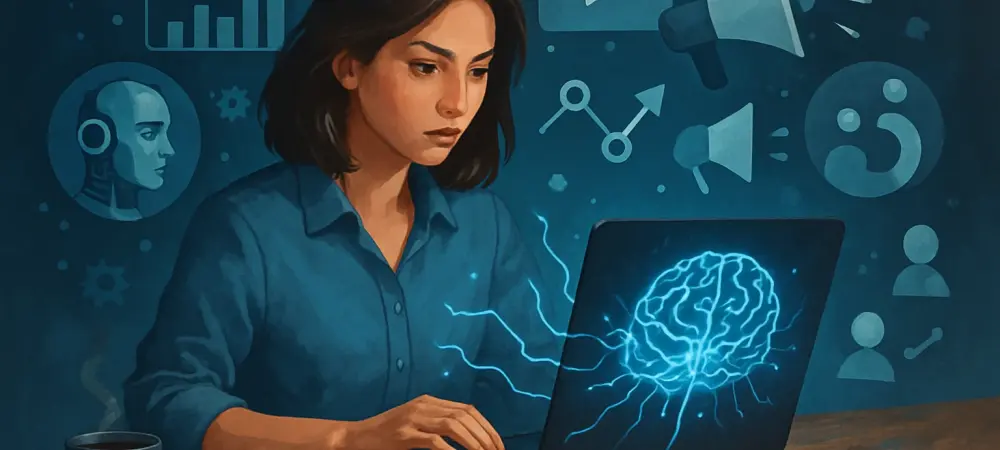
In an era where technology reshapes business landscapes at lightning speed, digital marketing stands as a powerful catalyst for growth, even for the smallest enterprises. Consider a local bakery that, through targeted social media ads and personalized email campaigns, triples its customer base in mere months. This is no anomaly but a testament to how digital tools, fueled by advancements like artificial intelligence (AI), are transforming outreach and engagement. Yet, with rapid innovation comes the challenge of keeping pace in a tech ecosystem that evolves daily. This analysis delves into the latest breakthroughs in digital marketing, exploring key trends, real-world applications, and expert insights while offering actionable strategies to stay ahead, driving traffic, leads, and conversions.
Emerging Innovations in Digital Marketing
Growth Trends and Adoption Statistics
Digital marketing is witnessing an unprecedented surge in innovation, with AI-powered tools leading the charge. According to recent data from Statista, the number of voice assistant users in the U.S. is projected to exceed 157 million by 2026, underscoring the growing importance of voice search optimization. Meanwhile, Jasper’s latest industry report reveals that 63% of marketers currently leverage AI, with 78% reporting enhanced return on investment (ROI) and productivity. These figures highlight a clear shift toward automation and data-driven strategies, fundamentally altering how campaigns are crafted and executed.
Beyond AI, predictive analytics is gaining traction as a game-changer for anticipating consumer behavior. Adoption rates for such tools have climbed steadily in recent years, with many businesses integrating them to refine ad targeting and improve forecasting accuracy. The rise of these technologies signals a broader trend: digital marketing is no longer just about creativity but about harnessing data for precision and impact, reshaping the industry’s core dynamics.
Real-World Applications and Case Studies
The practical impact of these innovations is evident in how businesses deploy AI for hyper-personalized campaigns. Retail giants and small enterprises alike use tools like HubSpot to analyze customer data in real time, tailoring messages that adapt to individual preferences and behaviors. For instance, an e-commerce brand might dynamically adjust email offers based on browsing history, resulting in higher click-through rates and sales conversions, demonstrating the power of customization at scale.
Voice search optimization also plays a pivotal role in capturing modern audiences. Companies optimizing content for platforms like Google Assistant have seen significant upticks in local search traffic, especially in industries like hospitality and retail. A restaurant chain, for example, might prioritize phrases like “best pizza near me” to align with voice queries, effectively reaching a growing base of hands-free searchers.
Additionally, social media ad targeting powered by big data offers another compelling application. Tools such as Google Ads and Hootsuite enable precise segmentation, allowing businesses in sectors like fashion to target ads based on user demographics and interests. A sportswear brand leveraging these insights can achieve better engagement by focusing on fitness enthusiasts, illustrating how data transforms broad outreach into pinpoint accuracy.
Expert Insights on Digital Marketing Shifts
Industry leaders featured in publications like Search Engine Journal and Marketing Week emphasize the transformative potential of generative AI in content creation. Experts note that such technology enables rapid production of tailored blogs, ads, and social posts, saving time while maintaining relevance. However, they caution against over-reliance, stressing the need to preserve authentic customer engagement amid automation, a balance critical for long-term trust.
Privacy-first marketing emerges as another focal point in expert discussions. Thought leaders, including those on platforms like Neil Patel Digital, highlight the importance of zero-party data and transparent practices as global regulations tighten. Their advice centers on building strategies that respect user consent while still delivering value, a nuanced challenge requiring both ethical commitment and technical adaptation.
Finally, sustainable marketing practices gain attention as a priority for forward-thinking brands. Experts advocate for campaigns that minimize digital carbon footprints and align with consumer values, urging marketers to integrate eco-conscious messaging. Navigating data privacy compliance alongside these goals demands a proactive stance, with leaders recommending regular policy reviews and stakeholder education to ensure alignment with evolving standards.
Future Outlook for Digital Marketing Innovations
Looking ahead, AI is poised to deepen its influence on digital marketing through advancements in natural language processing and machine learning. These developments promise even greater personalization, enabling campaigns that predict needs before they are expressed. Yet, the challenge of balancing such automation with genuine human connection looms large, as over-dependence on tech risks diluting emotional resonance in brand interactions.
Augmented reality (AR) and cookieless tracking also stand on the horizon as transformative forces. AR could redefine experiential marketing by offering immersive product previews, while cookieless solutions adapt to privacy demands, ensuring targeting accuracy without invasive data collection. The potential benefits, like improved ROI through streamlined processes, must be weighed against risks such as missteps in privacy compliance that could erode consumer trust.
The broader implications for industries are significant, spanning retail, healthcare, and beyond. Enhanced forecasting accuracy might optimize supply chains, while personalized outreach could improve patient engagement in medical sectors. However, tightening global privacy laws may complicate cross-border campaigns, requiring marketers to adopt agile frameworks that anticipate regulatory shifts while capitalizing on technological gains.
Staying Ahead: Practical Takeaways and Final Thoughts
Reflecting on the journey through digital marketing’s cutting-edge landscape, key innovations like AI analytics, voice search optimization, and social listening stand out as indispensable. Marketers who embrace online publications, podcasts, and LinkedIn networking find themselves better equipped to track shifts and apply new tactics. Continuous learning proves essential, as the tech-driven environment demands adaptability to maintain a competitive edge.
Looking back, the challenge of integrating automation with authentic engagement was a recurring hurdle that successful brands navigated through strategic experimentation. The path forward involves allocating resources to test emerging tools, from AR applications to privacy-first platforms, ensuring budgets support innovation without neglecting proven methods. Monitoring social mentions and competitor activity also offers critical insights, guiding decisions on where to amplify presence.
Ultimately, the era of digital marketing innovation calls for a mindset of curiosity and resilience. Marketers are encouraged to delve into AI-powered analytics for deeper consumer understanding while grounding efforts in fundamental principles of trust and value. The next step is clear: select a new tool or tactic discussed, pilot its application, and analyze outcomes to refine future strategies, ensuring sustained growth in an ever-evolving digital realm.